Dynamic IR scene projectors for system-level testing
Simulated infrared scenes for system-level testing
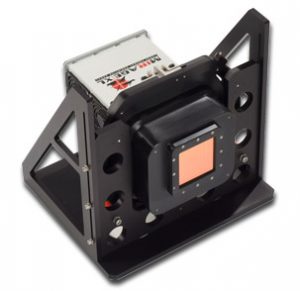
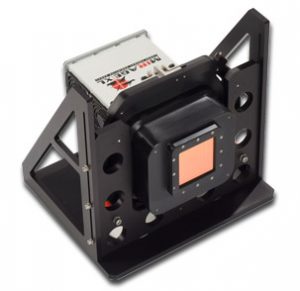
Dynamic IR scene projectors provide programmable infrared scenes for testing cameras, sensors, algorithms, and complete imaging systems under controlled but realistic conditions. Unlike a blackbody, which provides a stable reference for calibration, a scene projector can introduce spatial and temporal changes to test how a system responds to moving targets, changing temperatures, and more complex thermal environments.
This makes them particularly useful when laboratory calibration needs to be taken a step further into system-level validation. They can help engineers evaluate detection, tracking, image processing, and decision-making performance before moving into costly or difficult real-world testing. Selection typically depends on the complexity of the scenes required, spatial and temporal resolution, and how closely the test environment needs to reproduce the intended application.
Do you want to know more about this technology? Try out our new Chatbot!
Why our portfolio is right for you
We support the selection of dynamic IR scene projectors from specialist manufacturers for advanced imaging development and system-level validation. Our team can help you define the required scene characteristics, resolution, radiometric performance, synchronisation, and software capabilities around your specific test objectives.
Our portfolio provides solutions for simulating controlled, time-varying infrared scenes, allowing engineers to test cameras, detection algorithms, tracking systems, and complete imaging solutions before deployment in the field. Where real-world testing is expensive, difficult, or difficult to reproduce consistently, programmable scene simulation can provide a more controlled way to identify and resolve performance issues.
By combining specialist test equipment with practical engineering support, we help you build validation environments that are relevant to the final application while remaining repeatable and manageable in the laboratory.
Discover our dynamic IR scene projectors and speak to our experts about creating realistic thermal testing environments for your project.
Key selection factors
-
Scene complexity: Consider the range of spatial and temporal variation the projector needs to reproduce, including moving objects, changing temperatures, and complex backgrounds.
-
Resolution and accuracy: The projected scene should provide enough spatial detail and radiometric accuracy to properly exercise the camera, sensor, or algorithm being tested.
-
Synchronisation requirements: Applications involving multiple sensors, tracking systems, or external equipment may require precise timing and synchronisation between the projected scene and the test system.
-
Software control and flexibility: Check how easily test scenarios can be created, modified, repeated, and automated. Software capability can have a significant impact on how useful the system is during development.
-
Integration complexity: More capable simulation systems can introduce additional hardware, software, synchronisation, and configuration requirements. These should be considered alongside the benefits of more realistic testing.
-
Application boundary vs blackbody systems: Use a scene projector when you need to test system behaviour against changing or complex infrared scenes. For basic calibration and stable reference measurements, an IR blackbody is generally the more appropriate tool.
Technical overview
Dynamic IR scene projectors generate programmable infrared scenes that can represent a range of real-world thermal conditions. Depending on the system, these may include moving targets, changing thermal signatures, backgrounds, and other spatial or temporal effects.
The ability to control the scene allows engineers to repeat the same test conditions, vary individual parameters, and evaluate how an imaging system or algorithm responds. This is particularly valuable for developing and validating detection, tracking, image-processing, and autonomous imaging systems.
Unlike IR blackbodies, which provide a controlled and generally uniform reference source, scene projectors are designed to introduce controlled variation. They therefore sit further up the validation process, helping to bridge the gap between basic camera calibration and testing under real-world operating conditions.
Integration notes
Integrating a dynamic IR scene projector involves both the physical test setup and the software used to create and control the simulated scenes. Optical alignment with the camera or sensor is important, while the projector and test system may also need to be synchronised with other equipment.
The test environment should be controlled sufficiently to ensure that external factors do not compromise the results. Depending on the application, this can include managing ambient temperature, unwanted radiation, reflections, and the geometry between the projector and the sensor.
Scenario definition is another important part of the integration process. A technically capable projector is only as useful as the test scenarios it can support, so it is worth defining the required targets, backgrounds, thermal variations, motion, and test sequences early in the project.
A common pitfall is underestimating the time required to develop realistic and repeatable scenarios. Building a clear test methodology alongside the hardware can make system-level validation much more effective.
FAQ’s
Dynamic infrared scene projectors generate controlled, time-varying infrared scenes for testing and validating infrared cameras, sensors, tracking systems, and image-processing algorithms. They allow engineers to reproduce repeatable scenarios without relying exclusively on live targets or field tests.
An IR blackbody typically provides a controlled thermal reference or uniform radiance source for calibration and characterisation. A dynamic scene projector is designed to generate spatially and/or temporally varying infrared content. The two technologies can therefore serve complementary roles within an imaging test and validation workflow.
Depending on the system, scene projectors can reproduce controlled spatial patterns, moving targets, changing backgrounds, and programmed temporal sequences. The achievable scene complexity depends on factors such as spatial resolution, spectral range, radiometric control, frame rate, and projection technology.
Scene fidelity depends on the projector’s spatial, temporal, spectral, and radiometric performance. A high-fidelity system can reproduce specific characteristics of real-world infrared imagery, but engineers should evaluate whether the projector accurately represents the target signatures, backgrounds, dynamics, and spectral conditions relevant to their application.
Typical applications include:
- infrared sensor and camera testing
- target detection and tracking validation
- image-processing and AI algorithm development
- seeker and guidance-system testing
- hardware-in-the-loop testing
- performance characterisation
- system verification and validation
Important specifications include spectral range, spatial resolution, frame rate, radiometric accuracy, dynamic range, latency, scene size, projection distance, optical configuration, and supported interfaces. The required performance should be matched to the sensor and test scenario being validated.
Radiometric accuracy is critical when the test depends on realistic infrared signal levels or quantitative sensor response. The projector should be evaluated for its ability to generate and control the required infrared radiance across the relevant spectral range and operating conditions.
Yes. Software is typically used to create, control, sequence, and reproduce test scenarios. Integration capabilities such as APIs, external triggers, scenario control, data logging, and compatibility with existing test frameworks can be important when building automated validation systems.
Yes. Programmable infrared scenes can be used to evaluate detection, classification, tracking, and other computer-vision algorithms under repeatable conditions. Controlled scenarios also make it easier to test specific edge cases and compare algorithm performance across software versions.