MWIR cameras for R&D
Midwave infrared imaging for high-sensitivity thermal analysis
MWIR cameras are designed for applications where high sensitivity, fast response, and precise thermal analysis are important. Operating in the midwave infrared band, they can detect subtle differences in emitted thermal radiation and capture rapid changes that may be difficult to resolve with uncooled LWIR systems.
They are often selected when the performance of an uncooled LWIR camera is no longer sufficient for the application. The main trade-off is increased system complexity, as MWIR cameras commonly use cooled detectors to achieve the required sensitivity and low noise. Unlike SWIR cameras, which are primarily used to analyse reflected radiation, MWIR systems are well suited to measuring emitted thermal radiation and transient thermal behaviour.
Do you want to know more about this technology? Try out our new Chatbot!
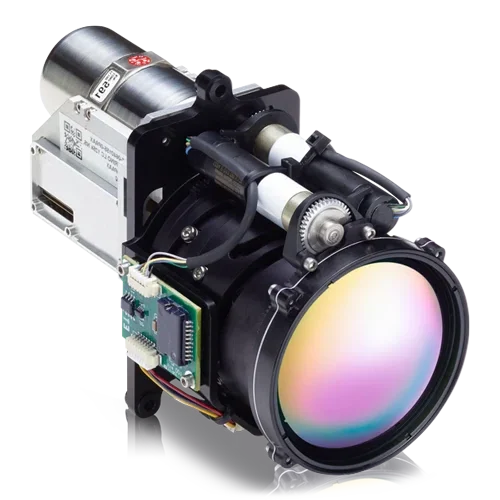
Why our portfolio is right for you
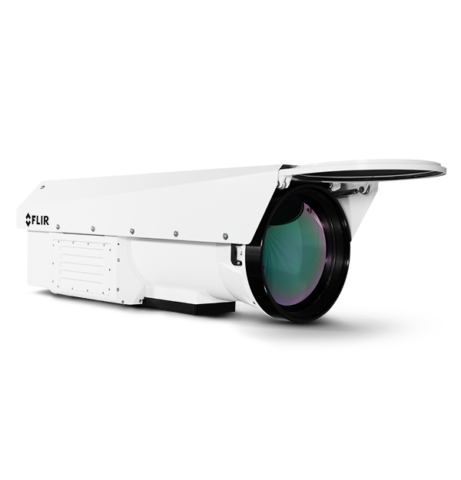
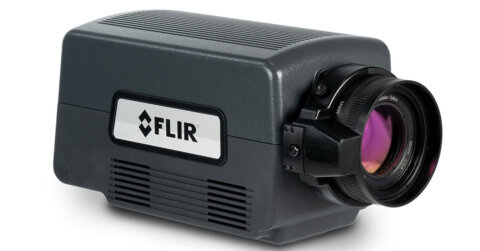
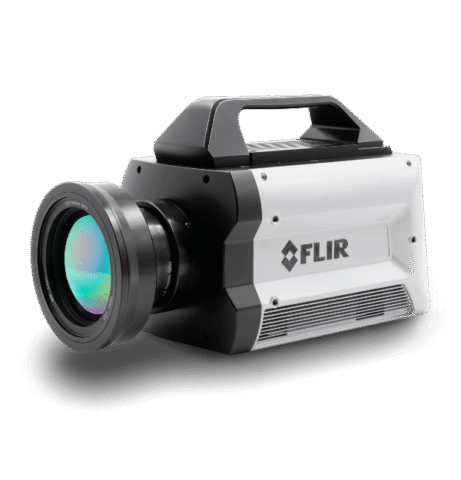
We work with leading MWIR camera suppliers to support demanding R&D and thermal-analysis applications, including systems based on cooled detectors. Our portfolio covers high-sensitivity and high-speed MWIR solutions for applications where precise thermal measurement and rapid response are critical.
Our technical team can help you assess the trade-offs between detector performance, cooling requirements, optical configuration, data rates, and overall system complexity. This allows you to select an MWIR camera that is matched to the measurement task rather than simply specifying the highest available performance.
Whether you are developing an aerospace test system, analysing combustion, investigating materials, or capturing fast thermal events, we can help define a practical MWIR solution that delivers the required thermal data while keeping integration requirements under control.
Discover our MWIR cameras and contact our experts to discuss your application requirements.
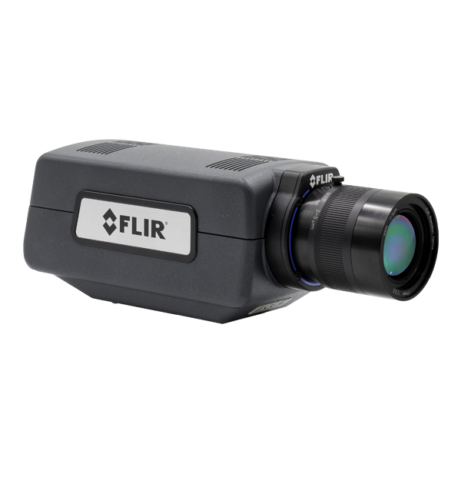
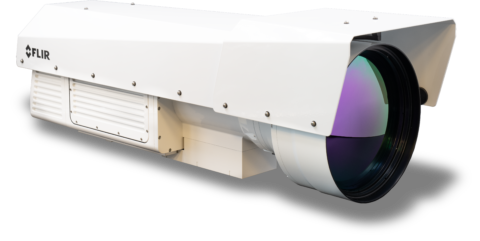
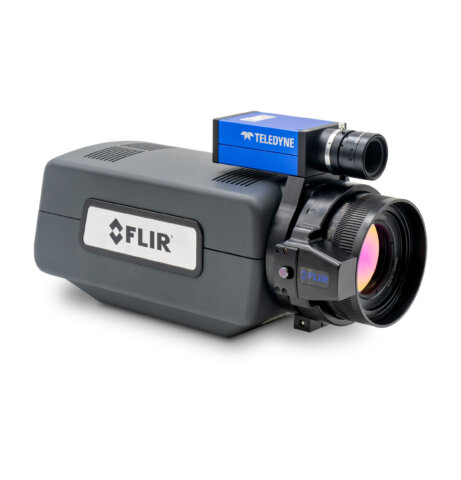
Key selection factors
-
Sensitivity requirements: MWIR is particularly useful when the application requires detection of small thermal differences or low levels of emitted radiation.
-
Cooling system implications: Detector cooling can improve sensitivity and reduce noise, but adds power, thermal management, mechanical, and maintenance considerations to the overall system.
-
Temporal resolution: MWIR cameras are well suited to fast transient events where high frame rates and rapid thermal response are important.
-
System footprint: Cooling hardware can increase the size, weight, and power consumption compared with uncooled LWIR systems, which should be considered early in the design.
-
Application threshold: One of the key decisions is determining whether the additional performance of a cooled MWIR system justifies the added complexity compared with an LWIR solution.
-
Spectral positioning vs SWIR: MWIR is generally selected for thermal-emission measurements, while SWIR is more commonly used for reflected-light imaging and material analysis.
Technical overview
MWIR cameras typically operate in the 3–5 µm wavelength range and commonly use cooled detectors to improve sensitivity and reduce noise. This makes them particularly useful for applications where small temperature differences, rapid thermal changes, or high-speed events need to be measured with precision.
Compared with LWIR cameras, MWIR systems can provide higher sensitivity and faster temporal performance in demanding applications, although the benefits come with additional cooling, power, and integration requirements. They are used across areas such as aerospace testing, combustion analysis, materials research, and high-speed thermal events.
MWIR and SWIR cameras serve different imaging requirements. MWIR primarily captures emitted thermal radiation, while SWIR is generally used to analyse reflected radiation. Broadband or multispectral IR systems may cover overlapping wavelength regions, but they introduce different optical, detector, and system-design considerations.
Integration notes
MWIR cameras require more consideration at system level than typical uncooled LWIR platforms, particularly because of the detector cooling system. Stable power, thermal management, mechanical mounting, and heat rejection all need to be accounted for during integration.
Cool-down and warm-up behaviour may also affect how the system is operated, while mechanical isolation can be important where vibration or movement could affect measurements. High-speed data interfaces may be required when capturing high frame-rate imagery or rapid thermal events.
A common pitfall is to focus on detector performance without accounting for the additional system requirements introduced by a cooled platform. Power, cooling, physical footprint, data handling, and maintenance should all be considered alongside sensitivity and image performance.
FAQ’s
MWIR cameras can offer advantages in sensitivity, temporal response, and imaging of high-temperature objects or processes. The appropriate choice depends on the target temperature, spectral characteristics, measurement environment, and required imaging performance.
Most high-performance MWIR cameras use cooled infrared detectors. Cooling reduces detector noise and enables high sensitivity and stable performance, particularly for demanding scientific, industrial, and high-speed imaging applications. Uncooled MWIR technologies also exist for some specialised applications.
MWIR cameras are commonly used for demanding thermal imaging applications such as combustion and flame analysis, aerospace and defence testing, high-temperature process monitoring, semiconductor inspection, gas imaging, and high-speed thermal events.
Cooling can significantly reduce detector noise and improve sensitivity. It also enables more consistent performance for precision measurements and high-speed imaging. The trade-offs include increased system complexity, power consumption, cooling requirements, and cost.
Yes. High-performance cooled MWIR cameras can provide excellent thermal sensitivity, making them suitable for detecting subtle temperature variations. Actual measurement performance depends on detector characteristics, optics, calibration, integration time, and the application environment.
MWIR imaging can be particularly effective for higher-temperature targets because their thermal radiation shifts toward shorter infrared wavelengths as temperature increases. This makes MWIR useful for applications involving hot objects, combustion, furnaces, and rapidly changing thermal phenomena.
Important specifications include spectral response, detector type, resolution, frame rate, thermal sensitivity (NETD), integration time, dynamic range, cooling technology, optical compatibility, calibration requirements, and interface options. The required measurement range and target characteristics should guide camera selection.
Engineers should account for detector cooling, power consumption, heat rejection, mechanical integration, optical compatibility, environmental conditions, and camera-to-system interfaces. For high-speed applications, data bandwidth and synchronisation can also be critical.
A common mistake is selecting a camera based on a single specification such as resolution or NETD. Camera performance is determined by the complete imaging system, including detector, optics, cooling, acquisition settings, target characteristics, and processing. The camera should be selected against the actual measurement requirements rather than specifications in isolation.