Infrared optics and lenses
High-performance optics and lenses are critical to unlocking the full potential of any thermal imaging system.
From maximising transmission in the infrared spectrum to optimising field of view, focal length and resolution, the right optical design ensures accurate temperature measurement, enhanced image clarity and reliable performance in demanding environments. Whether for industrial inspection, medical diagnostics, security, transportation or defence applications, selecting the correct lens configuration is essential to achieving consistent, high-quality thermal data.
We offer a comprehensive portfolio of infrared optics and thermal imaging lenses to support a wide range of applications. Our range includes fixed and motorised lenses, custom optical assemblies, wide-angle and telephoto solutions, and specialist materials optimised for long-wave and mid-wave infrared performance. Working in partnership with leading global manufacturers, and supported by our in-house technical expertise, we help engineers select and integrate the right optical solution for their specific thermal imaging requirements.
Our team can also advise on design trade-offs, lens coatings, and environmental considerations to ensure your system performs reliably in real-world conditions.
Do you want to know more about this technology? Try out our new Chatbot!
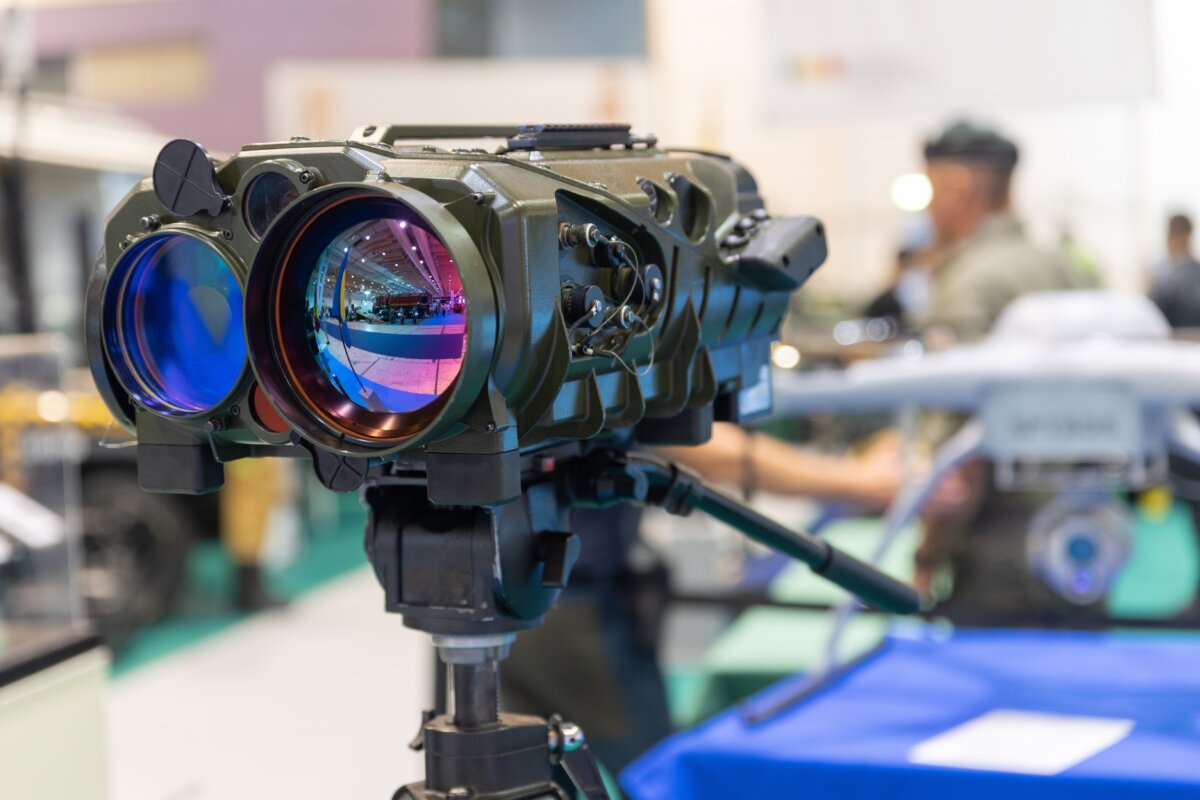
Catagory overview
Infrared optics are designed around the wavelength range, detector, and operating environment of the target system. LWIR optics commonly use materials such as germanium because of their high transmission in the 8–14 µm range, while MWIR and SWIR systems use materials such as chalcogenide glass or silicon that are better suited to their respective wavelength bands.
Compared with visible optics, IR lenses have additional design considerations. Thermal expansion and changes in refractive index with temperature can affect focus and image quality, particularly across changing operating conditions. Optical coatings are also selected to maximise transmission and reduce reflection losses, while the lens geometry needs to match the detector resolution, pixel pitch, and required field of view.
As a result, IR optics are closely tied to the camera module they are designed for. Material choice, coatings, optical geometry, and thermal behaviour all need to be considered together to achieve the required image quality, sensitivity, and reliability.
If you are developing a new thermal imaging system or looking to optimise an existing design, our experts are here to help. Get in touch with Acal BFi to discuss your application and discover how our optics and lenses portfolio can enhance your next project.
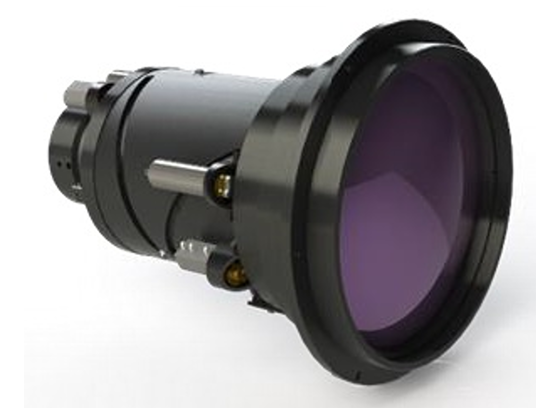
Key selection factors
-
Spectral compatibility: The optics must match the camera’s wavelength range. LWIR, MWIR, and SWIR systems require different optical materials and coatings, and an incorrect match can significantly reduce transmission.
-
Material selection: Germanium is widely used for LWIR, while materials such as chalcogenide glass and silicon are used across other infrared bands. The right choice depends on the spectral range, operating environment, and optical requirements.
-
Thermal behaviour: Temperature changes can cause mechanical expansion and shifts in refractive index, affecting focus and image quality. This needs to be considered as part of the lens design rather than treated as an afterthought.
-
Field of view and focal length: Optical geometry should reflect the application, balancing the area that needs to be covered against the level of detail required at the target.
-
Environmental durability: IR optics may need to withstand temperature cycling, humidity, contamination, and other environmental conditions without compromising transmission or image quality.
-
Integration with detector: The lens needs to be matched to the detector size and pixel pitch. Poor optical-to-detector matching can limit effective resolution and reduce overall system performance.
Our team can also advise on optical trade-offs, material and coating selection, and environmental considerations, helping you choose an IR optic that is well matched to the camera and intended operating conditions.
FAQ’s
Infrared optics use different materials and coatings because standard glass does not transmit IR wavelengths effectively. They must also account for thermal effects and wavelength-specific behaviour. This makes them more specialised than visible optics.
Germanium offers high transmission in the LWIR range and good optical performance. It is widely used in thermal imaging systems due to its compatibility with microbolometer detectors. However, it is heavier and more expensive than some alternatives.
No, each spectral range requires different materials and designs: • LWIR: typically germanium-based optics • MWIR: different materials optimised for mid-wave IR • SWIR: optics closer to visible-light systems Using the wrong lens significantly reduces performance.
Challenges include managing thermal expansion, maintaining transmission efficiency, and ensuring durability in harsh environments. Optical coatings must also be carefully designed to minimise losses.
Temperature changes can alter the refractive index and physical dimensions of the lens. This can lead to focus shifts and image degradation if not properly managed. Thermal compensation is often required.
Yes, but they must be designed for environmental exposure. Protective coatings and housings are often used to prevent damage from moisture, dust, and temperature fluctuations.