Germanium optics & lenses for LWIR and thermal imaging
High-transmission IR optics for long-wave infrared systems
Germanium is one of the most widely used materials for infrared optics, particularly in long-wave infrared (LWIR) systems. Its strong transmission across the 8–14 µm band, combined with good mechanical properties, makes it well suited to thermal imaging applications in industrial monitoring, research, security, and other precision environments.
Because germanium optics are closely linked to LWIR camera modules, material properties need to be considered alongside the detector, optical design, and mechanical arrangement. Transmission, temperature-dependent refractive index, coating performance, weight, and mounting all play a role in achieving consistent image quality. Compared with MWIR and SWIR optics, germanium is specifically suited to longer wavelengths and has its own thermal and environmental considerations.
We offer a range of germanium imaging lenses and windows with short delivery times and no export licence restrictions, helping to simplify procurement and reduce project lead times. Whether you are developing a new thermal imaging system or refining an existing design, our team can advise on material selection, coatings, optical configuration, and system integration to help you achieve the required imaging performance.
Do you want to know more about this technology? Try out our new Chatbot!
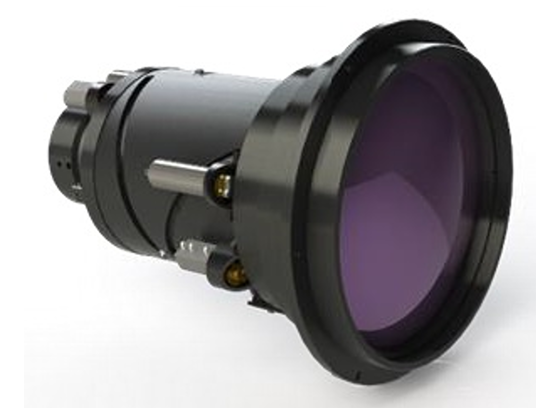
Why our portfolio is right for you
Our portfolio includes fixed and motorised lenses, wide-angle and telephoto configurations, and custom assemblies to suit different LWIR imaging requirements. This allows the optical solution to be selected around the camera module and application rather than forcing the system to fit a fixed optical configuration.
Our engineering team can support you with material and coating selection, optical geometry, detector matching, mechanical integration, and environmental requirements. By combining germanium optics with practical engineering support, we help you develop thermal imaging systems that are well matched to their operating conditions and deliver consistent, usable image data.
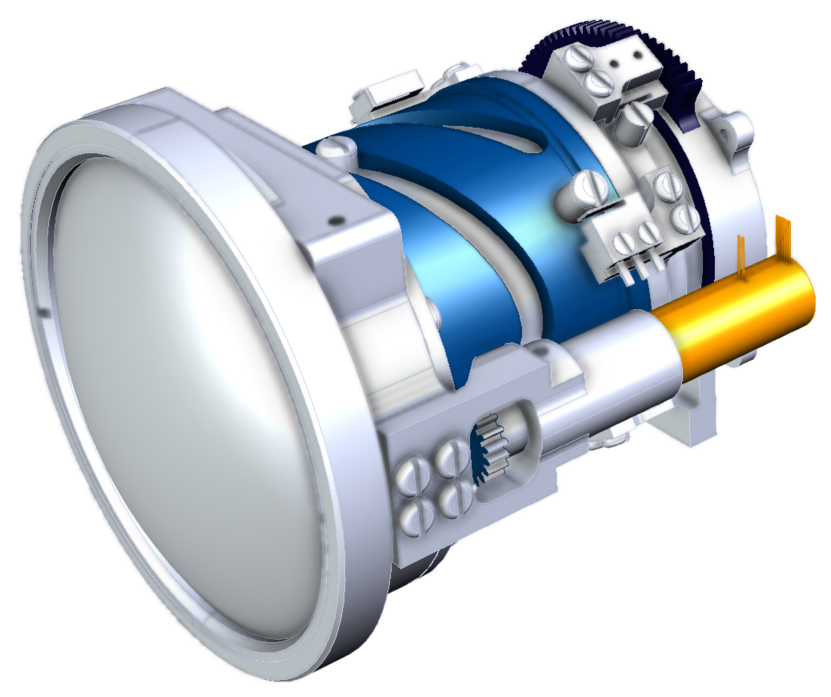
Key selection factors
-
Spectral alignment with LWIR systems: Germanium is primarily suited to LWIR camera modules and should not be treated as interchangeable with optics designed for MWIR or SWIR applications.
-
Transmission efficiency and coatings: Anti-reflective coatings help maximise transmission and minimise reflection losses. Coating selection should also consider the operating environment and expected service life.
-
Thermal behaviour: Germanium’s refractive index changes with temperature, which can introduce focus shifts and affect image quality if the optical design does not account for the expected temperature range.
-
Mechanical constraints: Germanium is relatively dense, so lens weight can become an important consideration in compact, mobile, PTZ, or gimbal-mounted systems.
-
Surface durability and protection: Germanium surfaces can be susceptible to scratching and environmental damage, making suitable coatings and protective measures important for demanding applications.
-
System-level optical matching: The lens should be matched to the detector resolution, pixel pitch, sensor format, and required field of view to make effective use of the camera’s imaging capability.
Technical overview
Within the wider range of infrared optics and lenses, germanium is widely used for LWIR applications because of its high refractive index and strong transmission in the thermal infrared band. It is commonly integrated with LWIR camera modules, including systems using uncooled detectors, where efficient and consistent transmission is important to overall image quality.
Germanium behaves differently from materials used in visible and shorter-wave infrared systems. It is opaque in the visible spectrum and is selected specifically for its infrared transmission characteristics. Compared with MWIR optics, it provides strong performance in the LWIR band but has a relatively high density and a refractive index that varies with temperature. These properties need to be considered during optical and mechanical design.
Anti-reflective coatings are typically used to improve transmission and reduce reflection losses, particularly in multi-element lens assemblies. The complete optical design should also take account of detector size, pixel pitch, focal length, and field of view so that the optics and detector work effectively as a matched system.
Integration notes
Germanium optics require careful alignment with the detector to maintain image quality and calibration stability. The mechanical mounting should provide consistent positioning while allowing for the effects of temperature on the optical assembly. In applications exposed to moisture, dust, or contamination, suitable sealing and protection may also be required to maintain the condition of the lens and its coatings.
Temperature changes are particularly important in outdoor and industrial systems, where focus stability can be affected as the system moves between operating conditions. This should be considered during the optical and mechanical design rather than addressed only during final integration.
Compared with optics designed for MWIR camera modules, germanium provides a well-established solution for LWIR imaging but still requires attention to thermal behaviour, weight, and environmental protection. It is generally not suitable for SWIR applications because the relevant spectral ranges and optical material requirements are different.
FAQ’s
They are primarily used in LWIR thermal imaging systems to transmit and focus infrared radiation. Common applications include surveillance, industrial inspection, and condition monitoring. Their properties make them well suited for long-wave infrared imaging.
Germanium offers high transmission in the LWIR range and a high refractive index, enabling compact and efficient optical designs. It is widely used with microbolometer-based systems. These characteristics make it a standard material for thermal imaging optics.
No, germanium is optimised for LWIR wavelengths and is not suitable for SWIR systems. MWIR systems typically use different materials depending on the design. Using germanium outside its optimal range reduces performance.
Typical limitations include: • High weight due to material density • Sensitivity to temperature changes • Requirement for protective coatings These factors must be considered during system design.
Coatings reduce reflection losses and improve transmission efficiency. They also provide protection against environmental damage. Without proper coatings, optical performance can degrade significantly.
Temperature changes can alter the refractive index and physical dimensions of the lens. This can lead to focus shifts and reduced image quality. Thermal compensation is often required in precision systems.
Yes, but they require appropriate coatings and protective housings. Exposure to moisture, dust, or abrasion can damage unprotected surfaces. Proper integration ensures long-term reliability.