Edge AI embedded imaging
On-device processing for real-time image analysis
Edge AI embedded imaging combines image capture and AI processing directly within the imaging system. Instead of sending image data to a remote server or cloud platform for analysis, these systems process information locally, allowing decisions to be made quickly and with less reliance on external infrastructure.
Processing data at the point of capture can reduce latency, lower bandwidth requirements, and improve power efficiency. The way the processing is built into the system – whether as an all-in-one solution, a separate computing module, or software running on existing hardware – also has an important impact on system design and integration.
Edge AI imaging is used in applications such as industrial automation, quality inspection, smart surveillance, robotics, and autonomous systems. It is particularly useful where fast decisions are important or where network connectivity is limited or unreliable.
When choosing an edge AI imaging solution, key factors include processing performance, power consumption, supported AI models and frameworks, response time, and compatibility with existing hardware and software.
Do you want to know more about this technology? Try out our new Chatbot!
Catagory Overview
Edge AI embedded imaging combines image sensors, computing hardware, and software to process tasks such as object detection, classification, tracking, and anomaly detection directly on the device.
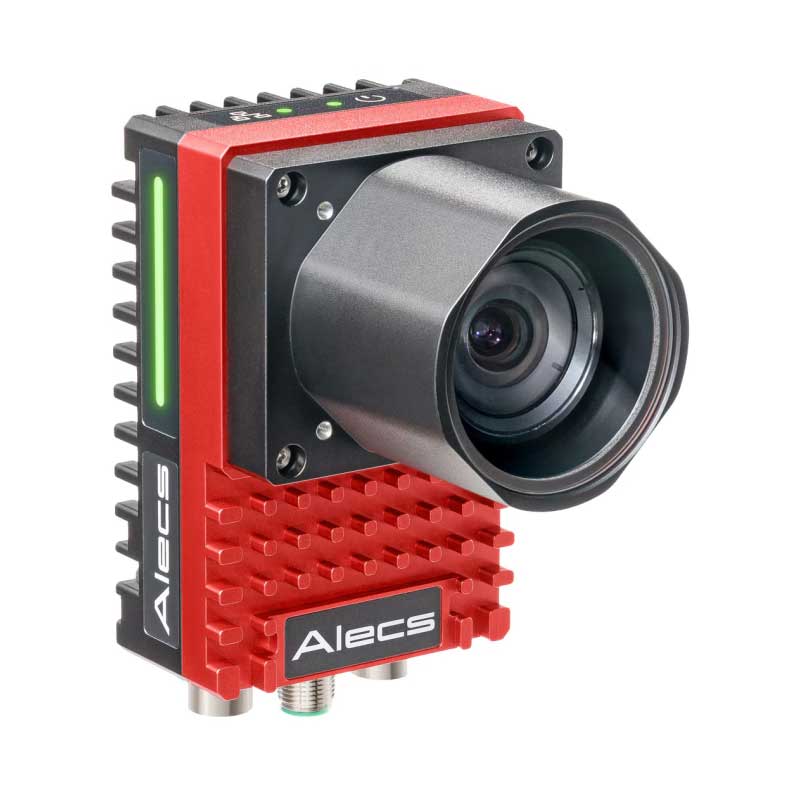
Smart cameras integrate the camera, processor, and software in one unit, making them easy to deploy but less flexible. Edge AI embedded computers use a modular approach, separating processing from the camera to provide greater flexibility, performance, and scalability. Edge AI embedded software supplies the algorithms and frameworks that enable these machine-vision functions.
By processing data locally, edge AI systems reduce latency, bandwidth use, and reliance on cloud or central processing. This makes them well suited to industrial automation, robotics, surveillance, quality inspection, and other applications requiring fast, reliable decisions.

Key selection factors
- **System architecture (integrated vs modular): Smart cameras offer simplicity, while edge AI embedded computers provide flexibility and scalability.
- **Processing performance vs power consumption: Higher performance enables more complex models but increases power and thermal requirements; balancing this is a common trade-off.
- **Latency requirements: Edge processing reduces latency compared to cloud or central systems, which is critical for real-time applications.
- **Software ecosystem and compatibility: Edge AI embedded software must align with hardware capabilities; a common pitfall is choosing incompatible frameworks.
- **Scalability and upgradeability: Modular systems allow easier upgrades compared to fully integrated smart cameras.
- **Environmental and deployment constraints: Industrial environments require robust hardware and reliable operation under varying conditions.
We provide embedded imaging solutions with integrated AI capabilities, supporting edge processing across a range of applications. Our expertise includes hardware selection, AI integration, and system optimisation, enabling efficient deployment of intelligent imaging systems.
Explore our edge AI imaging solutions, review available platforms, or contact us to discuss your embedded vision requirements.
FAQ’s
It is used for real-time image analysis directly at the source, without relying on cloud processing. Applications include industrial inspection, robotics, and surveillance. This enables faster decision-making and reduced data transfer.
The main difference is system integration:
- Smart cameras: integrated sensor and processing
- Edge AI embedded computers: separate compute platform
The choice depends on flexibility and scalability requirements.
It provides the algorithms and frameworks for image analysis, such as object detection or classification. It runs on both smart cameras and embedded computers. Software selection is critical for system performance.
Low latency enables real-time responses in applications such as robotics or automation. Edge processing reduces delays compared to cloud-based systems. This improves system efficiency and reliability.
Integration complexity depends on the architecture. Smart cameras are easier to deploy, while modular systems require more design effort. Software integration adds additional complexity.
Edge AI processing can generate significant heat and require higher power. Efficient thermal management is essential. System design must balance performance and energy consumption.
Yes, modular systems using edge AI embedded computers are easier to scale. Integrated systems are more limited in upgradeability. Scalability depends on system architecture.
Typical issues include:
- Choosing insufficient processing capability
- Ignoring software compatibility
- Underestimating thermal requirements
These can limit system performance if not addressed early.