Smart Cameras for Edge AI
Integrated vision systems with onboard processing
Smart cameras combine image capture, processing, and software in a single device, providing a compact solution for edge AI and machine vision. Because the main imaging and processing components are integrated, they can reduce system complexity, wiring, and development time compared with systems built from separate cameras and computers.
This integrated approach makes smart cameras particularly useful for applications where straightforward deployment, real-time processing, and reliable operation are more important than maximum hardware flexibility. The trade-off is that processing capacity, interfaces, and upgrade options are generally more constrained than with a modular embedded computer.
When selecting a smart camera, engineers should consider the required image resolution and frame rate, processing performance, supported AI frameworks, interfaces, power consumption, environmental conditions, and the ability to support future application requirements.
Do you want to know more about this technology? Try out our new Chatbot!
Why our portfolio is right for you
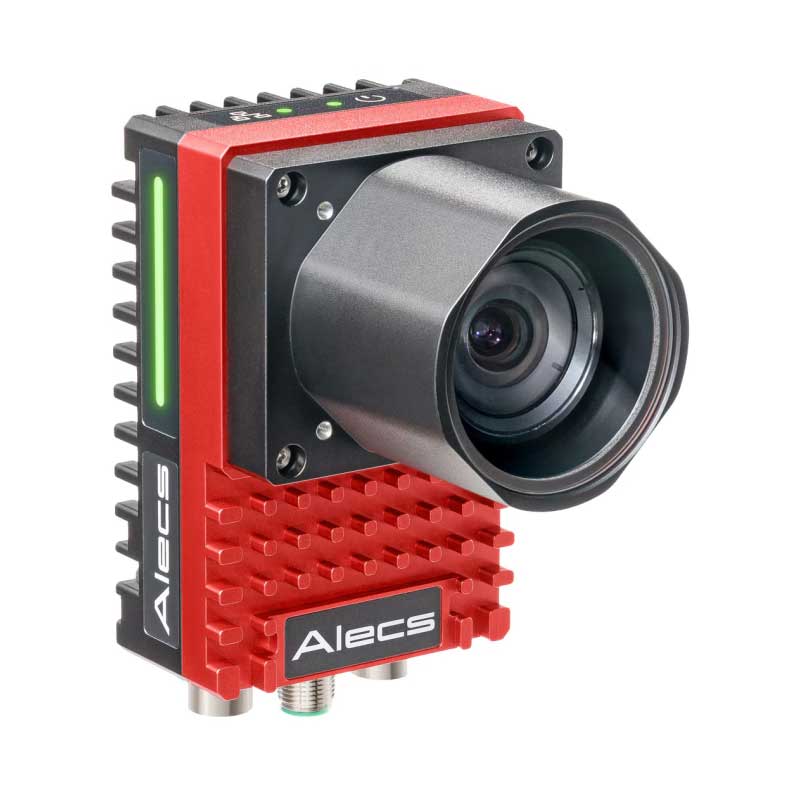
Our smart cameras provide an integrated platform for image capture and edge AI processing, helping engineers build compact and reliable vision systems with fewer separate components.
With onboard processing, flexible connectivity, and support for real-time image analysis, they can be configured for applications ranging from inspection and measurement to detection, classification, and automation. The integrated design helps reduce system complexity while providing the processing capabilities needed for demanding imaging applications.
Key selection factors
-
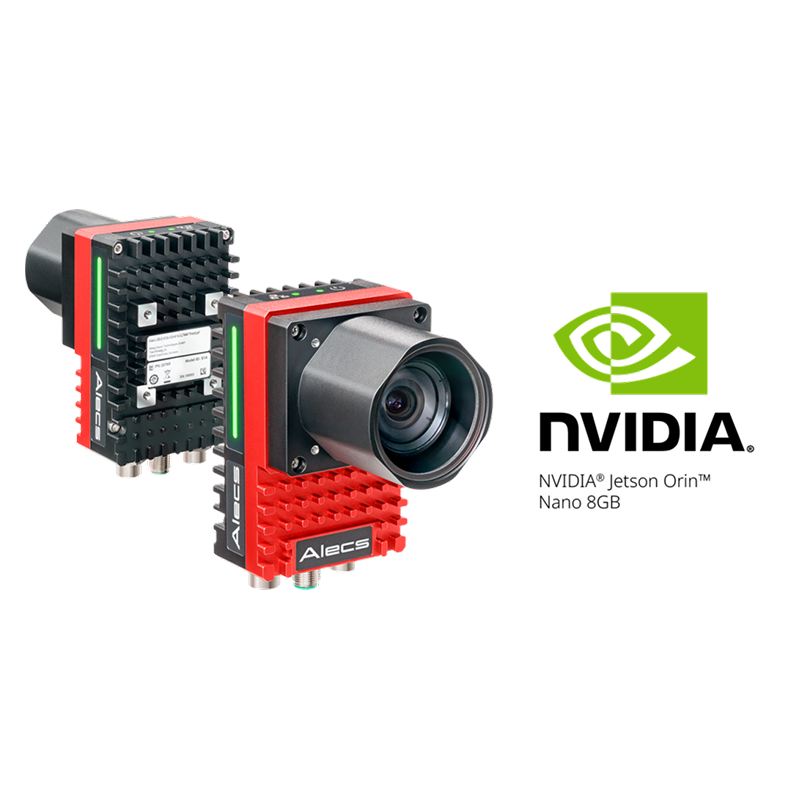
Processing performance: Ensure the processor can handle the required resolution, frame rate, AI model, and number of simultaneous tasks.
-
AI and software support: Check compatibility with the required frameworks, models, development tools, and operating environment.
-
Camera interfaces: Consider connectivity, triggering, synchronisation, network bandwidth, and integration with PLCs or other control systems.
-
Integration and deployment: An all-in-one architecture can reduce wiring, configuration, and commissioning time.
-
Scalability: Consider whether the platform can support additional cameras, more complex models, or future application requirements.
-
Environmental performance: For industrial installations, check temperature range, ingress protection, vibration resistance, and long-term reliability.
-
Power and thermal requirements: Processing-intensive AI workloads can increase power consumption and heat generation, particularly during continuous operation.
Technical overview
Within edge AI imaging, a smart camera combines an image sensor, processor, and software in a single platform. Depending on the system, onboard processing can support functions such as object detection, classification, measurement, tracking, and anomaly detection without sending image data to a separate computer or cloud service.
Unlike an edge AI embedded computer, which normally requires an external camera and separate system integration, a smart camera provides a more self-contained architecture. This can simplify installation and reduce latency, but it also means that the available processing power, interfaces, and software environment are tied more closely to the camera platform.
The software layer is particularly important. Some smart cameras support established AI frameworks and custom models, while others rely on proprietary development environments or pre-configured analytics. Engineers should therefore assess not only current performance, but also how easily the platform can be configured, updated, and maintained over the lifetime of the application.
Smart cameras are widely used in industrial inspection, automation, logistics, robotics, and other applications where image analysis needs to happen locally and reliably.
Integration notes
Smart cameras are generally simpler to integrate than separate camera-and-computer architectures. Depending on the platform, they may provide network, I/O, triggering, and industrial communication interfaces for connection to existing automation systems.
The main integration challenge is ensuring that the camera’s processing, connectivity, and software capabilities match the application. Engineers should consider image data rates, trigger timing, network bandwidth, model execution time, and communication with PLCs or other control hardware.
It is also worth considering how the system will be maintained after deployment. Access to software updates, model management, diagnostics, and configuration tools can be just as important as the initial installation.
FAQ’s
A smart camera is often the better choice when simplicity, compactness, and straightforward deployment are priorities. An embedded computer is generally more suitable when you need to select cameras and processing hardware independently, use higher-performance AI models, or plan to scale and upgrade the system over time.
This depends on the platform. Some support custom models and established AI frameworks, while others provide a more restricted software environment. Before selecting a camera, check supported model formats, accelerator capabilities, development tools, and whether models can be updated after deployment.
This depends on the imaging workload rather than AI processing alone. Resolution, frame rate, number of cameras, model complexity, inference rate, and other image-processing tasks all affect the required performance. Benchmarking the complete workload is usually more useful than comparing processor specifications in isolation.
Consider how the camera will receive and transmit image data and how it will communicate with the rest of the system. Depending on the application, this may include GigE Vision, USB, MIPI, digital I/O, hardware triggering, synchronisation, or industrial communication protocols.
Yes. Local processing allows the camera to analyse images as they are captured, making smart cameras well suited to applications such as defect detection, dimensional checks, presence/absence inspection, and classification. The achievable inspection rate depends on image acquisition, processing time, and the complexity of the analysis.
The main limitation is the reduced flexibility compared with a modular camera-and-computer system. Processing resources, interfaces, software environments, and upgrade paths may be tied to the camera platform. These limitations become more important as AI models, image resolutions, or system requirements increase.
Some platforms allow software, firmware, or AI models to be updated, but hardware upgrades are usually more limited than with a modular embedded computer. If future processing requirements are uncertain, it is important to check the platform’s available processing headroom and upgrade options before deployment.
Latency is the time between image acquisition and the availability of the processing result. For high-speed automation, robotics, and closed-loop control, both image acquisition and AI inference need to be considered. Local processing can reduce communication delays, but the overall system latency still depends on the camera, model, interfaces, and control architecture.