Pan and tilt positioners
Motorised platforms for precise pan and tilt movement
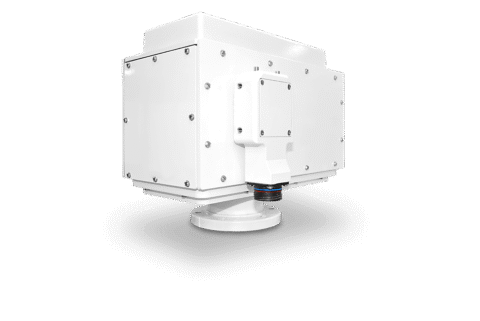
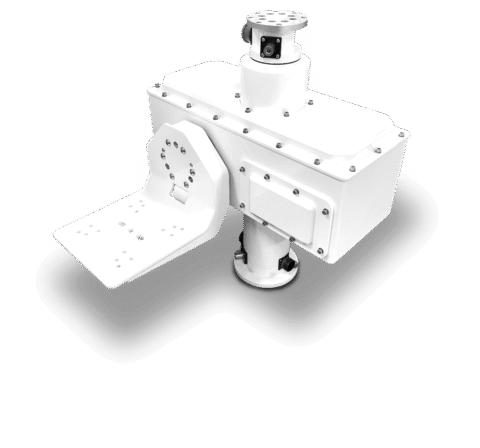
Pan and tilt positioners provide precise, motorised control over the movement of cameras, sensors and other payloads. They allow you to position, monitor and track targets accurately, while making it possible to automate and repeat movements as part of a wider control system.
Designed for active two-axis movement, pan and tilt units offer smooth, responsive positioning without the need to build a motion system from individual components. This makes them a practical solution when you need reliable control over a payload, whether you’re monitoring a large area, inspecting a manufacturing process or carrying out field-based research.
Fast pan speeds and precise positioning can help improve visibility and responsiveness, while integration with automated control systems can reduce manual intervention and support safer, more efficient operation. Where required, gyro-stabilised configurations can also help maintain a more stable image in applications where vibration or movement is a consideration.
Key engineering considerations include payload weight and torque, positioning accuracy, movement speed, environmental conditions and compatibility with your control system. Compared with industrial camera tripods, pan and tilt positioners provide active, automated movement; compared with servo drives and gears, they offer a complete positioning subsystem rather than individual motion components.
Do you want to know more about this technology? Try out our new Chatbot!
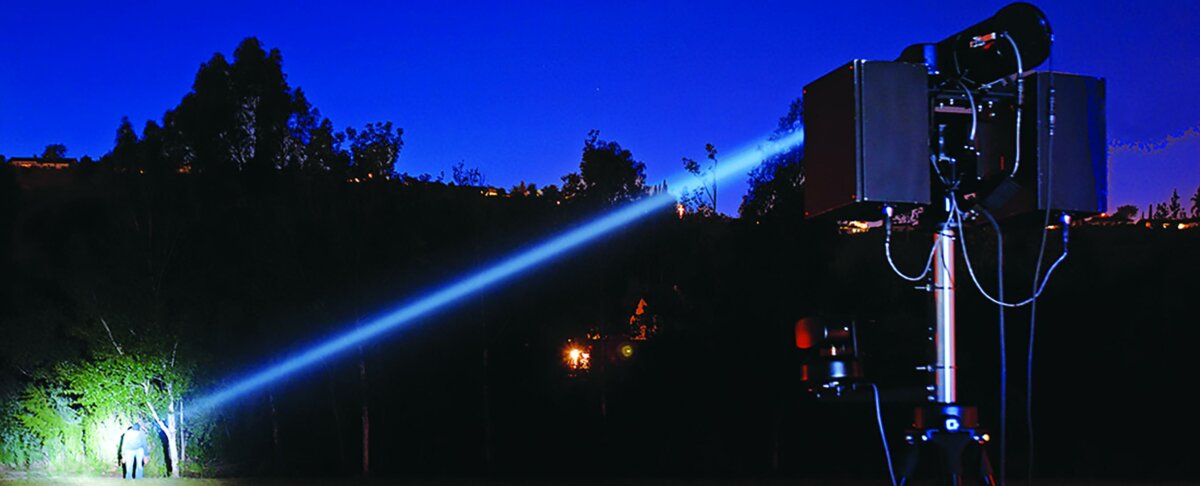
Why our portfolio is right for you
Our range of pan and tilt positioners is designed to give you precise, reliable control over cameras, sensors and other payloads across a wide range of applications. From surveillance and security to manufacturing, research and field monitoring, our systems make it easier to position equipment accurately and integrate movement into your wider system.
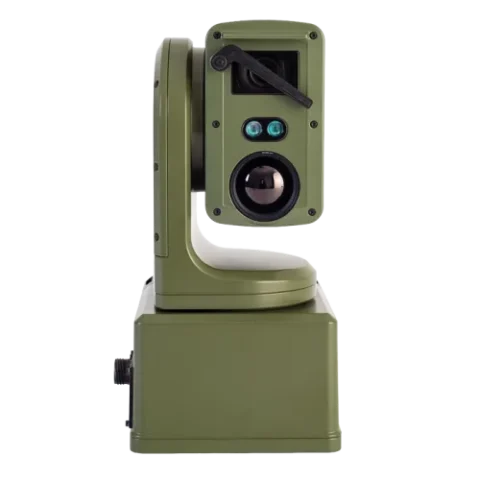
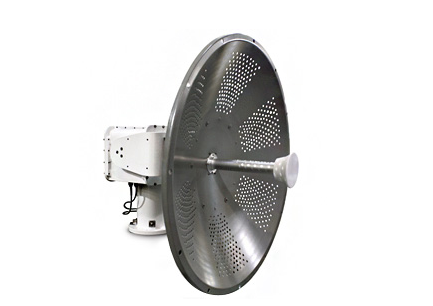
We offer high-performance standard and customisable solutions, supporting a broad range of payloads including infrared imaging cameras, laser rangefinders and antennas. Where your application requires more than conventional positioning, gyro-stabilised options can provide additional image stability in environments where vibration or movement is present.
For applications where active movement isn’t required, our tripod units provide a simple and stable way to install instruments in the field.
Our team of experienced infrared imaging engineers can work with you throughout the project — from selecting the right positioning solution and payload capacity through to integration and deployment. By understanding your application, performance requirements and budget, we help you build a system that is fit for purpose and delivers reliable results in the field.
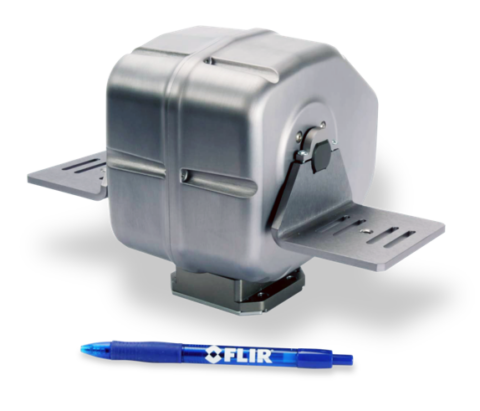
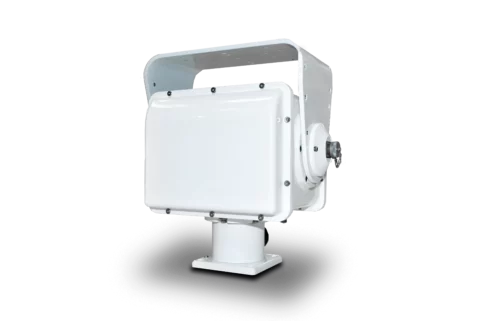
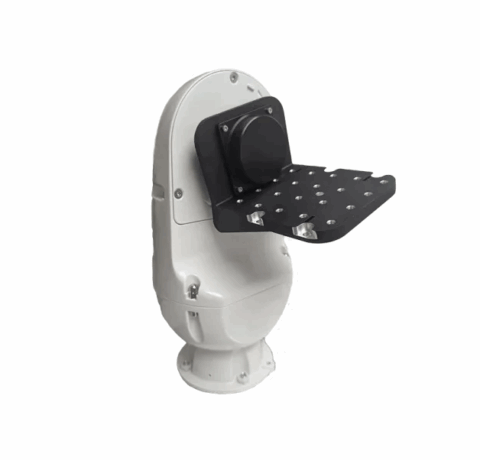
Key selection factors
-
Payload and torque capacity: The positioner needs to handle the weight, size and centre of gravity of the complete payload. This is particularly important for larger optical systems or equipment mounted at a distance from the axis.
-
Positioning accuracy and repeatability: Accurate movement is essential when the system needs to return to known positions, follow targets or integrate with automated control software. Pan and tilt speed: The required movement speed depends on the application. Fast response may be important for tracking, while slower, controlled movement can be preferable for inspection and measurement.
-
Control and system integration: Consider how the positioner will communicate with your existing control architecture. Compatible interfaces and straightforward integration can make automation and system development significantly easier.
-
Environmental conditions: Outdoor and field applications may expose the unit to rain, dust, temperature changes, vibration and other environmental stresses. The mechanical construction and environmental protection should match the intended operating conditions.
-
Stabilisation requirements: If the mounting platform is subject to movement or vibration, a gyro-stabilised configuration may be appropriate. For a fixed installation, a conventional pan and tilt positioner may provide all the control and precision required.
-
Fixed mounting vs active positioning: If the instrument only needs to be securely mounted in a known location, a tripod unit can provide a simple and stable solution. Where automated movement or tracking is required, a motorised pan and tilt positioner provides greater flexibility.
Technical overview
Pan and tilt positioners combine motorised pan and tilt axes with the mechanical and control interfaces needed to accurately position a payload. Depending on the configuration, they can support a wide range of equipment, including visible and infrared imaging cameras, laser rangefinders, antennas and other sensing or communications equipment.
The two-axis design provides controlled movement in both horizontal and vertical directions, allowing a payload to be directed precisely towards a point of interest. Position feedback and computer-controlled operation can be used to automate movements, return to known positions and integrate the unit into a wider tracking or monitoring system.
Performance depends on factors such as payload mass, centre of gravity, required speed and positioning accuracy. Selecting the right unit therefore involves looking beyond payload weight alone and considering the complete mechanical and operational requirements of the application.
For applications requiring additional image stability, gyro-stabilised configurations can help compensate for movement and vibration. This extends the capabilities of a conventional pan and tilt system where maintaining a steady line of sight is important.
For simpler field installations where active movement is not required, tripod units provide a straightforward way to mount an instrument securely and maintain a fixed, stable position.
Integration notes
Pan and tilt positioners are designed to integrate into wider camera, sensing and control systems. Mechanical integration focuses on providing a secure mounting interface and ensuring the payload is correctly balanced, while electrical and software integration provides control over movement and, where available, position feedback.
The mounting structure should be sufficiently rigid to prevent unwanted movement or vibration, particularly when using long-range optics or high-magnification cameras. Payload balance should also be considered during installation, as an uneven load can affect motor performance and positioning accuracy.
Control integration can enable automated scanning, preset positions, target tracking and coordinated operation with other system components. For applications involving infrared cameras or other precision sensors, the positioner’s accuracy and repeatability can have a direct impact on the quality and usefulness of the resulting imagery.
Where the application requires a simple, fixed field installation, tripod units offer an alternative with minimal integration requirements – providing a stable platform for instruments without introducing motorised movement.
FAQ’s
They are used to control the orientation of cameras or sensors in applications such as surveillance, inspection, and testing. They enable automated and repeatable movement. This improves flexibility and efficiency in imaging systems.
The main difference is automation: • Pan tilt positioners: motorised, programmable movement • Industrial camera tripods: manual adjustment, static positioning The choice depends on whether automation is required.
Servo drive gears are often part of the internal mechanism, translating motor output into controlled movement. They determine torque, speed, and precision. High-quality gearing improves system performance.
Yes, many are designed for outdoor and industrial environments. They require protection against weather, dust, and temperature variations. Proper sealing and materials are important.
Typical challenges include: • Control system integration • Managing mechanical backlash • Ensuring stable mounting These factors affect positioning accuracy.
Positioning accuracy is critical for applications such as tracking or inspection. Small errors can lead to significant misalignment, especially at long distances. Precision directly impacts system effectiveness.
Yes, they can support visible, thermal, or multi-sensor systems. The key is matching load capacity and mounting interfaces. Proper balance is also important.
Typical issues include: • Underestimating payload weight • Ignoring control compatibility • Overlooking environmental requirements These can lead to performance issues if not addressed early.