Visible camera housings
Protective enclosures for visible-spectrum camera deployment
Visible camera housings protect camera modules from the conditions they encounter in industrial, outdoor and field environments, while keeping the optical path clear for high-quality imaging.
A good housing needs to strike the right balance between environmental protection and optical performance. The window must transmit visible light without introducing unnecessary distortion, while the enclosure protects the camera from dust, moisture, temperature changes, vibration and other environmental stresses.
Key considerations include window material, ingress protection, thermal management, mechanical durability and mounting compatibility. Compared with IR camera housings, visible camera housings offer greater flexibility in window material selection, but the optical and environmental requirements still need to be carefully matched to the application.
Do you want to know more about this technology? Try out our new Chatbot!
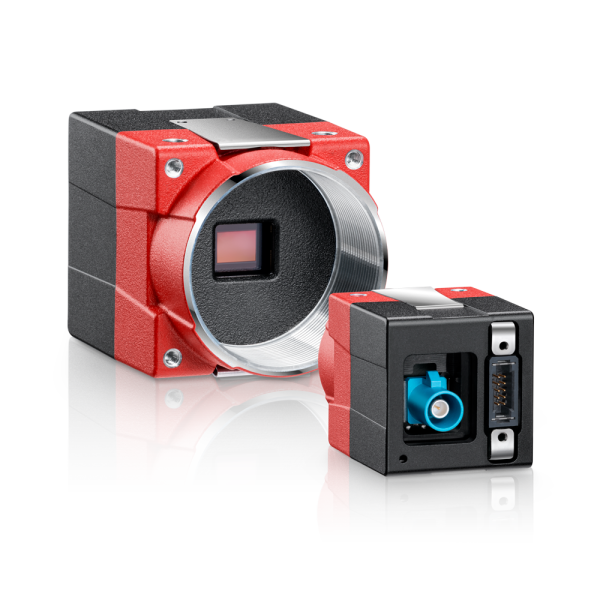
Why our portfolio is right for you
Our visible camera housings are designed to protect imaging systems in demanding environments while maintaining the optical performance you need. From outdoor monitoring and surveillance to industrial inspection and field applications, they provide a practical way to protect your camera without adding unnecessary complexity.
We offer configurable housing solutions to accommodate different camera sizes, mounting arrangements and environmental requirements. Options for sealing, thermal management and mounting can be selected to suit the conditions your system will operate in.
Our engineering team can help you select and integrate the right housing for your camera and application — taking into account optical performance, environmental protection, thermal requirements and system integration. The result is a solution designed to keep your camera protected and your imagery clear, reliable and consistent in the field.
Explore our visible camera housings, refine your options through product search, or speak to our team about your protection and environmental requirements.
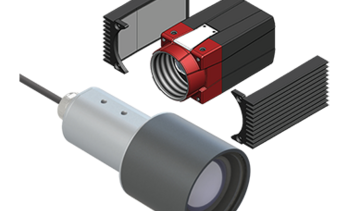

Key selection factors
-
Window material and optical clarity: The window should provide high visible-light transmission while minimising distortion, reflections and other effects that could reduce image quality. The choice of material should also reflect the mechanical and environmental demands of the application.
-
Ingress protection (IP rating): The required protection level depends on the operating environment. Dust, rain, water exposure and industrial contaminants should all be considered when specifying the enclosure.
-
Thermal management: The housing needs to keep the camera within its specified operating temperature range. Depending on the environment, passive thermal management may be sufficient, while more demanding applications may require heating, cooling or ventilation.
-
Mechanical strength and durability: The enclosure should protect the camera from vibration, impact and other mechanical stresses without compromising the camera’s alignment or optical performance.
-
Mounting and compatibility: The housing needs to accommodate the camera securely and interface correctly with the wider mounting or positioning system. Weight and dimensions should also be considered where the housing is mounted on a pan and tilt unit or gimbal.
-
Application-specific requirements: Outdoor and industrial applications may introduce additional requirements, such as condensation control, anti-fogging, corrosion resistance, sun protection or protection from continuous vibration.
Technical overview
Visible camera housings are designed to enclose and protect camera systems while maintaining clear transmission across the visible spectrum. Depending on the application, the housing window may use optical glass, polycarbonate or another suitable material selected for its combination of optical clarity, durability and environmental resistance.
Unlike IR camera housings, visible camera housings do not require specialised infrared-transmitting materials such as germanium. This gives engineers more flexibility when selecting window materials based on factors such as optical performance, impact resistance and cost.
Thermal management is primarily focused on keeping the camera electronics within their operating temperature range. Depending on the environment and camera specification, this may involve passive heat dissipation or additional features such as heaters, cooling or ventilation.
The enclosure may also incorporate sealing gaskets, mounting brackets, cable interfaces and other features needed for integration into the wider system. These details can have an important impact on long-term reliability, particularly in outdoor or industrial installations.
Integration notes
Visible camera housings are generally installed around an existing camera module, with the lens carefully aligned to the housing window. The enclosure needs to provide a secure mechanical fit while maintaining the required field of view and optical performance.
Environmental sealing is an important part of the installation. Gaskets, cable entry points and access panels should all be considered to ensure the specified level of protection is maintained once the housing is integrated.
Condensation can also be an issue when equipment moves between different temperatures or operates outdoors. Appropriate ventilation, heating or other moisture-control measures can help maintain a clear optical path and prevent degradation of image quality.
Where the housing is integrated with a positioning system, the overall payload weight, centre of gravity and mounting interface should be considered alongside the camera itself. This helps ensure that the housing does not adversely affect positioning accuracy or system performance.
Compared with IR camera housings, visible housings provide greater freedom in material selection, but optical alignment, environmental sealing and thermal management remain important considerations for reliable long-term operation.
FAQ’s
They are used to protect visible-light cameras in environments where dust, moisture, or temperature variations are present. Applications include surveillance, inspection, and outdoor monitoring. They ensure reliable operation over time.
The main difference is the window material: • Visible housings: glass or polycarbonate • IR housings: specialised materials like germanium Visible housings are less constrained by spectral requirements.
Yes, if poorly designed. The window must maintain optical clarity and minimise distortion. Proper material and coating selection are essential.
Typical challenges include: • Ensuring proper alignment • Maintaining sealing integrity • Managing condensation These factors affect performance.
Yes, especially in high-temperature environments. Overheating can affect camera performance and lifespan. Cooling solutions may be required.
Yes, as long as mounting and size compatibility are ensured. Standard interfaces make integration flexible. Proper fit is important.
Typical issues include: • Ignoring environmental requirements • Choosing low-quality window materials • Overlooking thermal conditions These can lead to reduced performance or failure.