AccuTube+ Rollable Ribbon Loose Tube Cable
- Technology
- Data centre & communications
- Partner
- Lightera (formerly OFS)
The AccuTube+ range combines a rollable ribbon fibre arrangement with a loose tube cable format. It is intended for optical network projects where ribbon organisation and loose tube construction form part of the cable selection criteria. The rollable ribbon format can support organised fibre handling, although its exact geometry and splicing compatibility must be confirmed for each configuration. Engineers can consider the range for telecommunications and fibre infrastructure projects once the required installation environment has been matched to the relevant variant. Fibre count, cable dimensions, mechanical ratings and environmental limits must be confirmed before the cable is specified. Joint closures, splice equipment, ducts, pulling accessories and handling procedures should also be checked against the selected cable construction.
Range features
A high level overview of what this range offers
- Rollable ribbon fibre arrangement – Can support organised ribbon handling while retaining a flexible ribbon format.
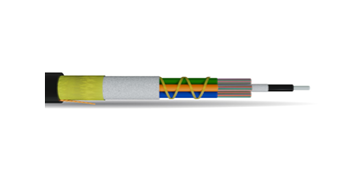
- Loose tube cable construction – Can provide structured fibre routing and protection, depending on the selected cable design.
- AccuTube+ range designation – Provides a defined cable family reference for technical and procurement discussions.
- Ribbon-based fibre organisation – May support mass-fusion workflows when matched with compatible preparation and splicing equipment.
Downloads
for AccuTube+ Rollable Ribbon Loose Tube Cable
What’s in this range?
All the variants in the range and a comparison of what they offer
| Specification | Status |
|---|---|
Fibre count | Requires confirmation |
Ribbon configuration | Requires confirmation |
Tube count | Requires confirmation |
Cable diameter | Requires confirmation |
Cable mass | Requires confirmation |
Tensile rating | Requires confirmation |
Crush resistance | Requires confirmation |
Bend radius | Requires confirmation |
Temperature limits | Requires confirmation |
Attenuation performance | Requires confirmation |
Installation classification | Requires confirmation |
FAQs
for AccuTube+ Rollable Ribbon Loose Tube Cable
The confirmed product description identifies a rollable ribbon arrangement within a loose tube optical fibre cable. This establishes the general cable technology but does not define the number of tubes, fibres per ribbon, ribbon pitch, strength-member arrangement or water-blocking system. Those details affect cable preparation, routing and compatibility with jointing hardware. Before specifying the cable, engineers should obtain the construction drawing and verify that the selected variant can be accommodated by the planned closures, glands, ducts and termination equipment.
A confirmed fibre-count range and ribbon configuration are not available for selection at this stage. The product range name alone does not establish how many fibres are grouped into each ribbon, how many ribbons are placed in each tube or which total fibre counts can be ordered. These values directly affect splice-tray capacity, closure selection, cable diameter and restoration planning. A project bill of materials should therefore identify the exact cable configuration rather than relying only on the AccuTube+ family name.
No installation environment can be assigned with confidence from the confirmed product description alone. A loose tube format does not automatically establish suitability for duct installation, direct burial, aerial deployment or indoor routing. The relevant variant must carry appropriate ratings for tensile loading, moisture exposure, UV resistance, flame behaviour, impact and the intended temperature range. Engineers should match the complete installation classification to the route conditions before choosing pulling equipment, supports, glands or protective ducting.
The essential values are maximum installation tensile load, permitted long-term load, crush resistance, impact resistance and minimum bend radius under loaded and unloaded conditions. Cable diameter and mass are also required when calculating duct occupancy, drum handling, pulling tension and support spacing. Exceeding any of these limits can place stress on the fibres or alter optical performance. Installation documentation should therefore use the values for the exact ordered variant, with suitable controls for pulling tension, sheave diameter and cable handling.
The rollable ribbon arrangement may support mass-fusion splicing, but compatibility cannot be assumed solely from the product name. Engineers need to confirm the number of fibres in each ribbon, fibre pitch, ribbon dimensions, coating arrangement and the preparation method required to form a spliceable ribbon. The fusion splicer, fibre holder, cleaver and thermal stripper must match those parameters. A representative cable sample and a documented splice trial can help validate preparation time, splice loss, ribbon handling and tray organisation before field deployment.
The operating, installation and storage temperature ranges must be confirmed for the chosen cable variant. Projects may also require evidence covering water penetration, temperature cycling, flame performance, smoke and halogen characteristics, UV exposure or material compliance, depending on the route and market. These details influence whether the cable can be installed indoors, outdoors or across mixed environments. Procurement specifications should state every required environmental test and regulatory classification explicitly rather than treating the cable family designation as evidence of compliance.