Ultron Series – Three-Phase UPS Systems, 20–2100 kVA
- Technology
- AC-AC uninterruptible power supplies
- Partner
- Delta Electronics
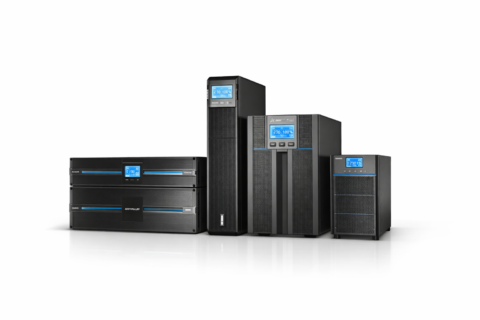
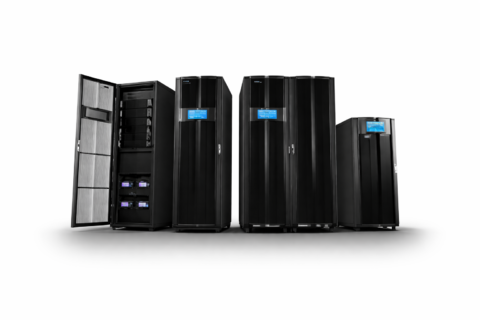
The Ultron Series three-phase UPS solutions offer robust, continuous power protection for organisations of all sizes – from small server rooms to large hyperscale data centres. Each UPS in the series is engineered for online double-conversion operation, delivering clean and stable power output even under harsh electrical conditions. The Ultron family spans a broad capacity range (20 kVA to 2100 kVA), giving users the flexibility to protect everything from individual equipment racks to entire buildings or factories with a unified product range. Reliability is paramount: Ultron UPS models incorporate features like N+X parallel redundancy, internal bypass arrangements, and rigorous component monitoring to ensure maximum uptime for critical systems. At the same time, they achieve high efficiency (up to ~97% in online mode, and ~99% in energy-saving ECO mode on select models), helping reduce energy losses and operating costs. A variety of models are available to suit different needs – including transformer-based designs for galvanic isolation in industrial settings, and compact transformerless units for high-density IT environments – all sharing a common emphasis on high power quality, low harmonics, and intelligent management features. With their combination of scalable architecture, flexible battery configurations, and user-friendly controls, the Ultron Series UPSs are ideal for applications ranging from data centres and telecom hubs to manufacturing lines, medical facilities, transportation infrastructure, and beyond.
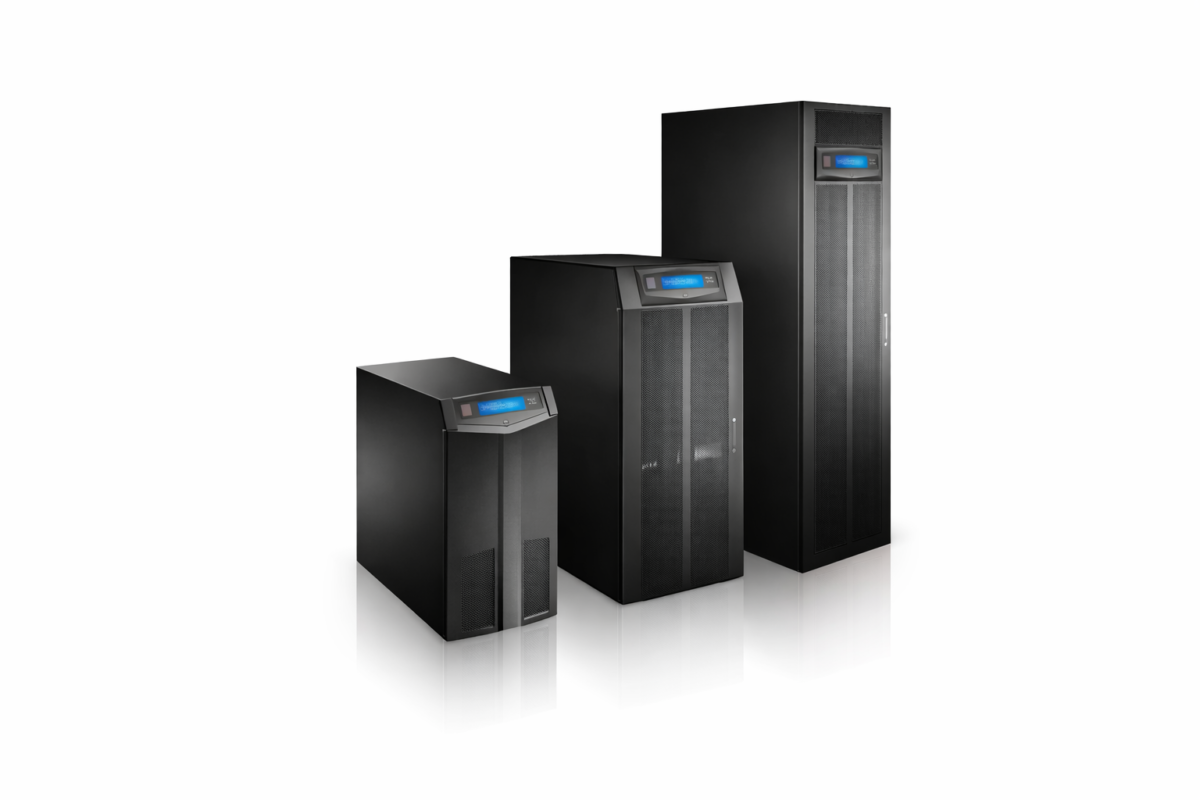
Range features
A high level overview of what this range offers
- Wide power range (20–2100 kVA) – Supports everything from small computer rooms to large hyperscale data centres within one UPS family, simplifying planning and deployment.
- High double-conversion efficiency – Operates at up to 96–97% efficiency in online mode (and up to ~99% in ECO bypass mode on certain models), minimizing energy waste and reducing cooling requirements.
- Scalable N+X redundancy – Allows paralleling of multiple UPS units (up to 4 or 8 units depending on model) for capacity expansion or redundant backup, improving fault tolerance and ensuring critical loads remain powered even if a unit is offline.
- Fully rated output power (unity power factor) – Many Ultron models deliver kVA = kW (power factor 1.0) output, meaning no de-rating is required for modern IT loads and you get the maximum usable power capacity from each UPS.
- Low input harmonics & high PF – Active front-end design (PFC) achieves input THDi typically < 3% and input power factor > 0.99, which avoids stressing upstream generators and transformers, reduces installation costs, and improves compliance with power quality standards.
- Flexible battery configuration – Supports a wide DC bus range (e.g. 30–46 battery blocks) and is compatible with various battery types including traditional VRLA and modern lithium-ion options, allowing users to optimize backup duration and footprint for their specific requirements.
- Industrial-grade options – Certain models (such as the Ultron IPT series) include built-in isolation transformers and optional high ingress protection (up to IP42/IP43), providing galvanic isolation and enhanced tolerance to dust, humidity, and vibration for reliable performance in factory or harsh environments.
- Intelligent monitoring & control – Features like large colour touchscreen displays, multi-language LED/LCD status panels, SNMP and Modbus remote monitoring, and comprehensive event logging/predictive diagnostics enable easy management and proactive maintenance. These help technicians quickly identify issues (e.g. via alarm histories or self-diagnosis of key components) and minimize system downtime.
- Ease of installation & service – Ultron UPS systems are designed for practical integration, with models offering front-access servicing, top-and-bottom cable entry options, compact footprints, integrated maintenance bypass breakers, and even caster wheels on smaller units. This simplifies setup and maintenance, shortening mean time to repair (MTTR) and reducing disruption when servicing is required.
Downloads
for Ultron Series - Three-Phase UPS Systems, 20–2100 kVA
What’s in this range?
All the variants in the range and a comparison of what they offer
| Specification | HPH Gen2 Series (20–40 kVA) | IPT Series (20–200 kVA) | NT Series (20–500 kVA) | HPH Series (60–120 kVA) | HPH Series (160–200 kVA) | DPS Series (300–1200 kVA) | DPM Gen2 Series (250–1750 kVA, 400 V) | DPM Gen2 Series (300–2100 kVA, 480 V) |
|---|---|---|---|---|---|---|---|---|
Capacity Range | 20, 30, 40 kVA | 20–200 kVA (in steps) | 20–500 kVA (multiple steps) | 60, 80, 100, 120 kVA | 160, 200 kVA | 300, 400, 500, 600, 800, 1000, 1200 kVA | 250, 500, 750, 1000, 1250, 1500, 1750 kVA | 300, 600, 900, 1200, 1500, 1800, 2100 kVA |
Output Power Factor | 1.0 (unity) | 0.9 (lagging) | 0.8 (lagging) | 1.0 (unity) | ~0.94 (160 kVA model), 1.0 (200 kVA) | 1.0 (unity) | 1.0 (unity) | 1.0 (unity) |
Efficiency (Online/ECO) | Up to 96% / 99% | Up to ~95% / – | ~93% / – | Up to 96% / 99% | Up to 96.5% / 99% | Up to 96.5% / 99% | Up to ~97.3% / 99% | Up to 97.5% / 99.2% |
Parallel Capability | Up to 4 units (N+X) | Up to 4 units (N+X) | Up to 8 units (N+X) | Up to 4 units (N+X) | Up to 8 units (N+X) | Up to 8 units (N+X) | Up to 8 units (N+X) | Up to 8 units (N+X) |
Isolation Transformer | No (transformerless design) | Yes (built-in output transformer) | No (optional input harmonic filters) | No (transformerless design) | No (transformerless design) | No (transformerless design) | No (transformerless design) | No (transformerless design) |
FAQs
for Ultron Series – Three-Phase UPS Systems, 20–2100 kVA
Within the Ultron UPS family, transformer-based models (for example, the Ultron IPT series) include an internal isolation transformer on the output. This provides galvanic isolation and makes them very robust when handling heavy-duty or unbalanced industrial loads, and it can offer better protection against certain electrical disturbances. However, these units tend to be larger and a little less efficient due to the transformer’s losses. On the other hand, transformerless models (such as the HPH, DPS, and DPM series) rely on electronic conversion without a large output transformer. They typically achieve higher efficiency and power density – which is ideal for space-constrained data centres – while still maintaining excellent output voltage regulation. The choice usually depends on the application: industrial sites often prefer transformer-based UPS for the extra isolation and durability, whereas data centres and IT environments favour transformerless UPS for their efficiency and compact size. All Ultron UPSs, regardless of type, are true online (double-conversion) systems, so they provide consistent power conditioning; the main difference is in physical design and suitability for certain environments.
The Ultron series is designed for high efficiency to minimise energy consumption. In normal online mode (double conversion), most Ultron UPS models reach efficiencies around 94–97% at rated load. For instance, some smaller units achieve around 96% efficiency, while the latest high-capacity Ultron DPM Gen2 can go up to ~97.5%. This means very little power is wasted as heat during the AC–DC–AC conversion process. Additionally, many Ultron UPS units offer an “ECO mode” (sometimes called economy or bypass mode). In ECO mode, the UPS operates in a more energy-saving state by feeding mains power directly to the load through a bypass (as long as the input power is within acceptable limits) – this boosts efficiency to about 98–99%. The UPS will still monitor power quality and can instantly switch to double-conversion mode if it detects a problem. The benefit is significantly reduced electricity use when power conditions are good. However, the trade-off is that the load isn’t getting conditioned power during normal operation in ECO mode, so critical systems that require the absolute highest power quality often stay in online mode. In summary, Ultron UPS systems run very efficiently in standard mode and give the option to save even more energy with ECO mode when appropriate.
Yes. The Ultron series supports parallel operation (N+X) for both capacity scaling and redundancy. Most models can be connected in parallel with up to 4 units (for smaller models) or up to 8 units for larger systems like the NT, DPS, and DPM series. By running UPS modules in parallel, you have two main advantages:
- Capacity Expansion: If one UPS is not enough to handle your total load, you can parallel multiple units to act as a single larger UPS. For example, two 500 kVA units can supply a 1 MVA load together. This is useful if you anticipate growth – you can start with one UPS and add more later to increase capacity.
- Redundancy (N+1 or N+X): You can also configure the system so that the total capacity is met with one extra unit as a spare. For instance, if you need 300 kVA and have two 300 kVA UPS units in parallel, that’s an N+1 configuration – one UPS could carry the load if the other fails. This greatly improves reliability because even if one UPS is taken down for maintenance or suffers a fault, the remaining unit(s) seamlessly keep the critical load powered.
The Ultron UPS units communicate and share load when paralleled, ensuring balanced operation. They also have built-in controls to safely manage synchronization and bypass in a parallel array. It’s important that all UPSs in a parallel group are the same model and type. In practice, many large facilities use parallel UPS sets both to reach the required power rating and to provide high fault tolerance.
Absolutely – the Ultron series is designed to work well with backup generators and poor grid conditions. These UPS units have wide input voltage and frequency windows, meaning they can tolerate significant fluctuations without immediately draining the batteries. For example, the UPS will typically accept a broad range of input voltages (e.g. from ~300 V up to 478 V line-to-line for a 400 V system) before it needs to intervene. This is helpful when a generator starts up or when the utility supply isn’t very stable. Additionally, Ultron UPS models incorporate active power factor correction and produce very low current harmonic distortion (THDi). In practice, this means the UPS draws a nearly sinusoidal current from the source – so it puts less strain on a generator. A high input power factor (close to 1) and THDi often <3% ensure that the generator isn’t overloaded by reactive currents or harmonics, allowing a smaller generator to support a larger UPS than would otherwise be the case. Some high-end Ultron models (like the DPM Gen2) also have features to actively support the grid or generator: for instance, they can regulate their demand (even provide brief support through battery discharge) to assist with frequency stability. This capability is sometimes called generator “power walk-in” or even “grid support” mode. Overall, Ultron UPS systems are very generator-friendly – during installation, you can program parameters like gradual load ramp-up to coordinate with generator output. Whether your site runs on diesel gensets, renewable energy sources, or just experiences voltage dips, the UPS will condition that power and work hand-in-hand with the source to keep your critical loads protected.
The Ultron series is quite flexible in terms of battery configurations. All models support traditional VRLA (valve-regulated lead-acid) battery banks, which are the most common for UPS backup. Depending on the UPS model, you can adjust the number of battery cells in series – for example, many Ultron systems let you configure anywhere from 30 up to 46 twelve-volt battery blocks (for a roughly 360 V to 552 V DC link), so you can tailor the DC voltage and runtime to your needs. This flexibility helps optimise the battery investment – you aren’t forced into a one-size-fits-all bank, but can choose the capacity and autonomy (backup time) that fits your application. Importantly, newer Ultron models (like the DPS and DPM Gen2 series) are lithium-ion battery ready. This means their charging circuitry and controls are fully compatible with Li-ion battery cabinets, which have different characteristics (higher energy density, different charging algorithm, etc.). Li-ion batteries can offer a longer service life and smaller footprint, though at a higher upfront cost – and these UPS systems can take advantage of that if desired. Some Ultron UPSs even allow an external battery management system to integrate with the UPS’s interface, so you can monitor individual battery health on the UPS screen. In summary, yes – you can definitely use lithium-ion batteries with many Ultron series UPS models, and you have wide latitude in configuring battery quantity and type. Just be sure to follow the manufacturer’s guidelines or use approved battery systems so that the UPS and battery work safely together.
Ultron series UPS units include a number of features to make maintenance and monitoring as straightforward as possible – crucial for high-uptime environments. Firstly, most models are designed with full front access to all critical components (power modules, batteries, bypass switches, etc.). This means inspections or part replacements can be done without needing rear or side access, which is ideal in crowded equipment rooms and helps shorten service time. Some units even have hot-swappable or modular components – for example, the DPS series has user-replaceable fans and a modular internal design for key parts – reducing the mean time to repair (MTTR) since a technician can quickly swap a module rather than troubleshoot down to the component level. For monitoring, Ultron UPS systems feature intuitive local displays, typically large colour touchscreens (5” or 10”) that provide a wealth of information: real-time status, input/output readings, battery status, and alarm/event logs. The interface is menu-driven and often multi-language, making it easy for on-site staff to get a clear overview. All events and parameters (voltage, current, temperature, etc.) are continuously logged, and many models can store thousands of event records – extremely useful for diagnosing intermittent issues or performing root cause analysis. On the connectivity side, Ultron UPSs support remote monitoring via standard interfaces: they offer RS-232/RS-485 serial connections, dry contact relays, and typically an SNMP/web interface option (sometimes built-in by default). This allows the UPS to integrate into network management systems so you can receive alerts or check status remotely on a computer or phone – and even execute automated safe shutdown of protected servers during extended outages. Additionally, some Ultron models provide advanced battery management integration – for instance, they can work with battery monitoring software or an external BMS to predict battery health and alert on issues before a failure occurs. Finally, nearly all Ultron systems include maintenance bypass options (either built-in or via external switchgear), allowing you to isolate the UPS for servicing without cutting power to the load. In short, the Ultron series is very service-friendly: it’s built to notify you of any developing issues (with self-diagnostics on components like fans and capacitors) and to allow engineers to fix those issues swiftly with minimal disruption.
The Ultron Series covers a broad spectrum of UPS models, each optimised for certain application areas, so there’s a suitable model for almost any industry requiring reliable power backup. Here are some general guidelines:
- Small/Medium Data Centres & IT Rooms: The Ultron HPH Gen2 (20–40 kVA) and HPH series up to 200 kVA are a great fit here. They have a compact footprint, high efficiency, and unity power factor output – ideal for server rooms, telecom closets, and mid-sized data centre pods. They support typical IT load profiles and can be paralleled for redundancy in enterprise server farms or hospital IT facilities.
- Large Enterprise & Colocation Data Centres: The high-power Ultron DPS (300–1200 kVA) and DPM Gen2 series (up to 2100 kVA) shine in large data centre environments. These are suited for cloud service providers, colocation hosting facilities, and central data centres of banks, governments, or telecom networks. They can provide massive capacity (multi-megawatt) with several units in parallel, and they emphasize efficiency (to cut electricity costs at scale) and advanced management features (for integration with facility monitoring and grid support). Hyperscale facilities, for instance, might deploy multiple DPM Gen2 UPS units for distributed protection across their server halls.
- Industrial and Manufacturing Operations: The Ultron IPT series (20–200 kVA) and Ultron NT series (20–500 kVA) are especially well-suited for industrial environments – factories, automation lines, chemical plants, mining operations, etc. The IPT’s built-in transformer and optional IP42/IP43 protection make it robust against dust, moisture, and the heavy load machinery that can cause electrical noise or imbalances. The NT series is known for its durability in harsh conditions (wide input tolerance, strong overload handling) and can be configured for various industrial power setups. These units can safeguard process control systems, motors, and instrumentation from power disruptions.
- Infrastructure & Public Sector: Facilities like airports, rail systems, hospitals, and public data hubs often use a mix – smaller Ultron units (20–200 kVA range) for localized equipment and larger ones (500 kVA and above) for central infrastructure. For example, a hospital might use an Ultron HPH or NT for specific equipment like imaging machines or lab systems, and Ultron DPS 800 kVA units for the whole building’s essential loads. The Ultron series’ compliance with stringent electrical standards and options for redundancy make them reliable for life-safety and continuous-process applications.
- Financial and Commercial Buildings: Banks, insurance data centers, and large office complexes typically need very reliable power for their data centers, trading floors, or building systems. Ultron UPS models across the range are deployed here – smaller ones securing communication rooms and point-of-sale networks, bigger ones keeping entire building systems (lighting, HVAC controls, security) online during outages. The series’ high efficiency is attractive in the commercial sector to reduce operating costs while ensuring uptime.
In essence, each Ultron model targets a niche: HPH for high-performance medium capacity needs, IPT/NT for rugged industrial use, DPS/DPM for large-scale and high-end power protection. The breadth of the Ultron lineup means Acal BFi can help match the right UPS model to a customer’s specific requirements, considering factors like load size, environment, runtime, and future growth.