Low Smoke Zero Halogen (LSZH) Cables
- Technology
- Fibre optic cables, connectors and assemblies
- Partner
- Lightera (formerly OFS)
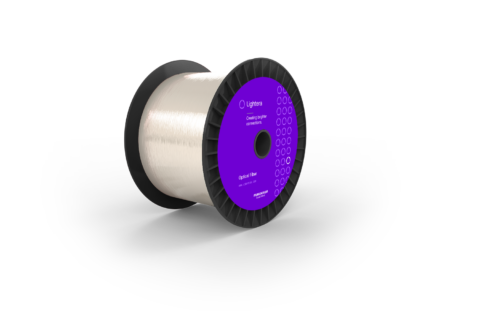
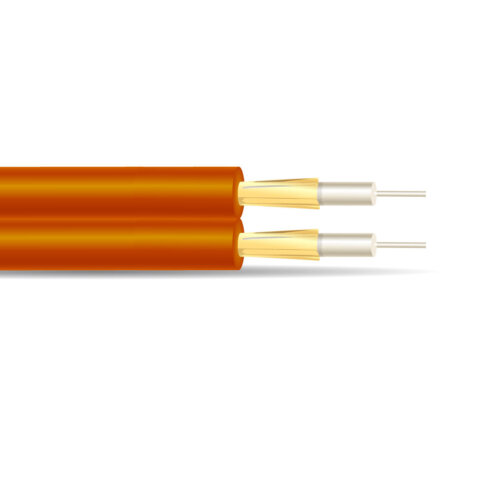
LSZH fibre optic cables are a specialised range of industrial optical cables with fire-safe, halogen-free jackets. Each cable in this range contains high-strength HCS or GiHCS fibres that support dependable data transmission over medium distances while remaining immune to electromagnetic interference. The LSZH jacket produces minimal smoke and no toxic halogens if burned, making these cables well suited to enclosed installations such as substations, power plants, tunnels, and offshore platforms. Using crimp-and-cleave termination techniques, technicians can install standard connectors on-site in minutes without epoxy or polishing. This makes the range practical even for teams with limited fibre optic experience. The combination of rugged fibre construction, fast field termination, and industrial durability makes these cables a strong fit for factory automation, smart grid systems, substation automation, industrial control networks, and other safety-critical communications environments.
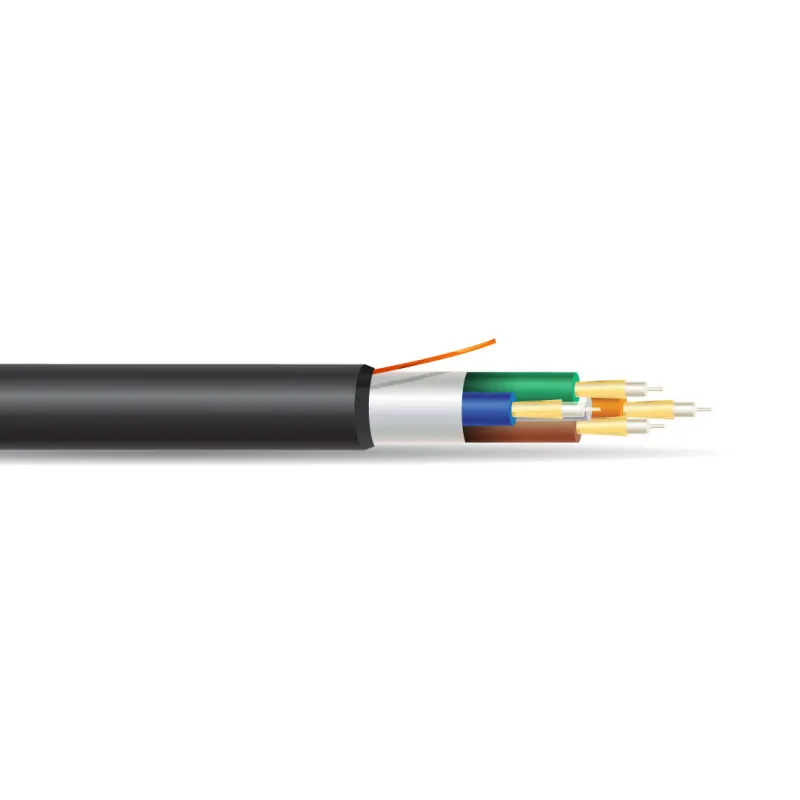
Low smoke zero halogen fibre optic cables are designed for installations where both network reliability and fire safety matter. By combining HCS and GiHCS fibre technologies with halogen-free jackets, this range supports industrial communications in enclosed, harsh, or safety-sensitive areas. Typical applications include substations, smart grid infrastructure, factory automation, transportation hubs, offshore platforms, and other environments where immunity to EMI/RFI and dependable field termination are essential.
Range features
A high level overview of what this range offers
- Halogen-free LSZH jacket: Emits very low smoke and no corrosive halogen gases in the event of fire, helping improve safety in confined public or industrial spaces.
- Rugged HCS fibre construction: Hard-Clad Silica fibres offer strong mechanical performance with good resistance to abrasion, vibration, and bending in demanding environments.
- High-bandwidth GiHCS options: 50/200 µm and 62.5/200 µm graded-index variants support higher-speed industrial data links, including Fast and Gigabit Ethernet applications.
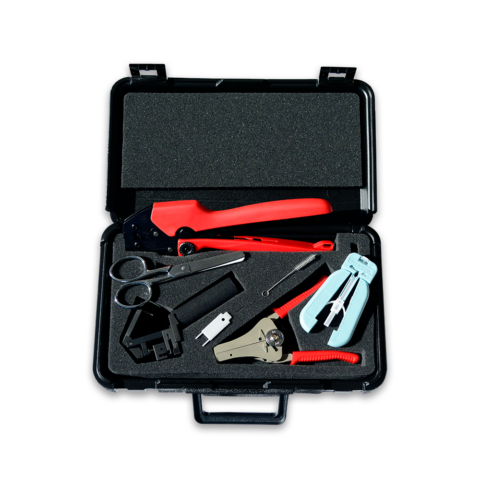
- Quick crimp-and-cleave termination: Standard connectors can be fitted on-site without epoxy or polishing, reducing installation time and simplifying repairs.
- Multiple cable formats: Available in simplex, dual-fibre zip-cord, and multi-fibre breakout constructions to match different installation needs.
- Industrial-grade durability: Suitable for challenging environments with versions designed for indoor or indoor/outdoor use, including water-blocked breakout options.
- EMI/RFI immunity: All-dielectric fibre construction prevents signal degradation from electromagnetic noise and eliminates ground loop concerns.
- Minimal training required: Straightforward termination methods allow technicians with limited fibre experience to achieve consistent results quickly.
Fibre options
- HCS step-index fibre for rugged industrial links
- GiHCS graded-index fibre for higher bandwidth
- Choice of 200 µm, 50/200 µm, and 62.5/200 µm formats
Installation advantages
- Crimp-and-cleave field termination
- No epoxy or polishing required
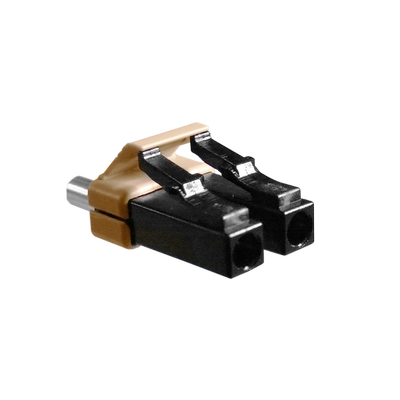
- Compatible with connector kits such as LC and ST
Deployment environments
- Factory automation and industrial controls
- Smart grid and substation automation
- Harsh, enclosed, or electrically noisy locations
What’s in this range?
All the variants in the range and a comparison of what they offer
| Specification | LSZH A-Series HCS | LSZH V-Series HCS | LSZH V-Series GiHCS | LSZH A-Series GiHCS |
|---|---|---|---|---|
Simplex cable available | Yes (indoor) | Yes (indoor) | No | No |
Zip-cord (dual-fibre) cable | Yes (indoor) | Yes (indoor) | Yes (indoor) | Yes (indoor) |
Breakout cable (multi-fibre) | 2 / 4 / 6-fibre (indoor/outdoor) | 2 / 4 / 6-fibre (indoor/outdoor) | 2 / 4-fibre (indoor/outdoor) | 2 / 4-fibre (indoor/outdoor) |
Armoured breakout option (glass yarn strength) | 2 / 4 / 6-fibre (indoor/outdoor) | 2 / 4 / 6-fibre (indoor/outdoor) | No | No |
Fibre core/cladding size (µm) | 200 (Step-index multimode) | 200 (Step-index multimode) | 50/200 & 62.5/200 (Graded-index) | 50/200 & 62.5/200 (Graded-index) |
Example cable part number | C21055 | C21062 | C26135 | C26646 |
FAQs
for Low Smoke Zero Halogen (LSZH) Cables
LSZH stands for Low Smoke Zero Halogen. Cables with LSZH jackets release very little smoke and no harmful halogen gases if exposed to fire. This improves safety in confined or poorly ventilated spaces such as power plants, data centres, tunnels, or transport infrastructure, while also helping protect nearby equipment from corrosive smoke damage.
HCS (Hard-Clad Silica) is a rugged multimode optical fibre with a 200 µm silica core and durable polymer cladding, suited to robust industrial links. GiHCS (Graded-Index HCS) uses a graded-index design in 50/200 µm or 62.5/200 µm formats to support higher bandwidth and faster industrial Ethernet communications. Together, these options let users choose between maximum toughness or greater transmission performance.
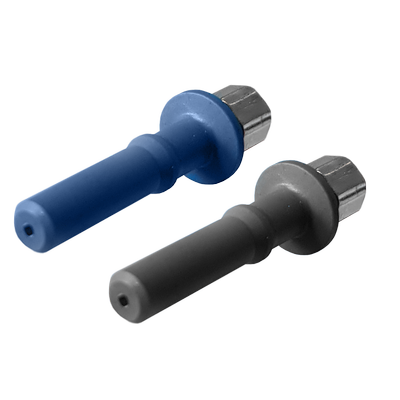
The two series mainly differ by the connector families they are designed to support. A-Series cables are suited to ST and older SMA 905/906 connector styles used in some legacy industrial, sensing, or specialist systems. V-Series cables are intended for V-pin connectors and are also compatible with LC connector termination methods. Both series use LSZH cable constructions and industrial optical fibre designs, but they are optimised for different connection standards.
Depending on the cable series, these cables can be terminated with connectors such as LC, ST, SMA, and V-pin types. Installation uses a crimp-and-cleave process in which the prepared fibre is mechanically secured into the connector and then precision-cleaved to create the optical end face. No epoxy or polishing is required, which makes on-site assembly and maintenance much faster than traditional termination methods.
Yes, selected versions are intended for indoor/outdoor and harsh-environment deployment. Breakout constructions can include water-blocking elements and rugged jackets, while some variants add glass yarn armouring for additional crush resistance, tensile strength, and rodent protection. These features make them suitable for factory floors, substations, renewable energy sites, and other mechanically demanding installations.
Yes. Because these cables transmit data over optical fibre and use non-metallic dielectric construction, they are immune to EMI and RFI. This makes them ideal for electrically noisy environments such as industrial plants, substations, and transport systems, while also eliminating issues such as ground loops and induced surge conduction.