LWIR cameras (R&D infrared cameras)
Longwave infrared imaging for ambient thermal measurement
LWIR cameras are widely used in R&D applications for measuring thermal radiation from objects at or near ambient temperatures. Most systems use uncooled detectors, making them simpler to deploy and integrate than cooled MWIR cameras and providing a practical starting point for thermal analysis.
They are well suited to applications where thermal behaviour changes relatively gradually, such as electronics testing, building analysis, process monitoring, and general research. When compared with MWIR cameras, LWIR systems typically offer lower sensitivity and slower response, but with significantly less system complexity. Unlike SWIR cameras, which primarily analyse reflected radiation, LWIR cameras measure emitted thermal radiation directly.
Do you want to know more about this technology? Try out our new Chatbot!
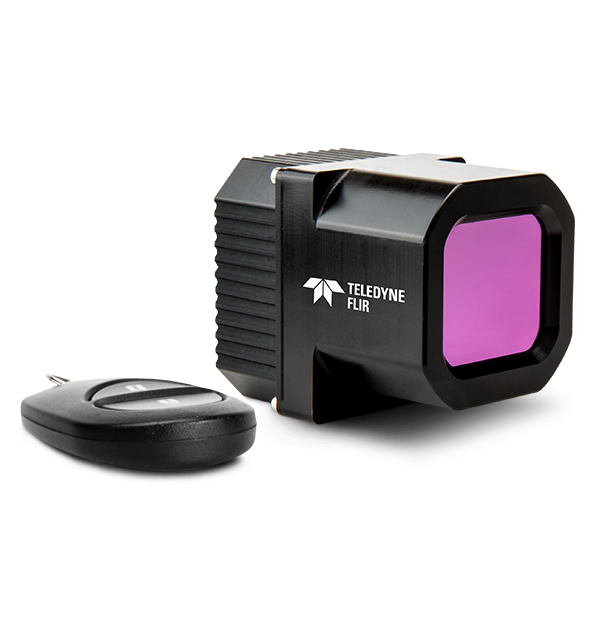
Why our portfolio is right for you
We provide LWIR camera solutions for R&D and industrial applications where practical integration, reliable thermal imaging, and straightforward deployment are important. Our selection covers uncooled systems suited to applications ranging from early-stage research and electronics testing to process monitoring and general thermal analysis.
Our technical team can help you select a camera around the measurement range, sensitivity, resolution, frame rate, optics, and integration requirements of your application. This helps ensure you choose an LWIR system that provides the required thermal information without adding unnecessary complexity.
For projects where simplicity, accessibility, and dependable ambient-temperature thermal imaging are the priority, LWIR provides a practical foundation for building a reliable measurement system.
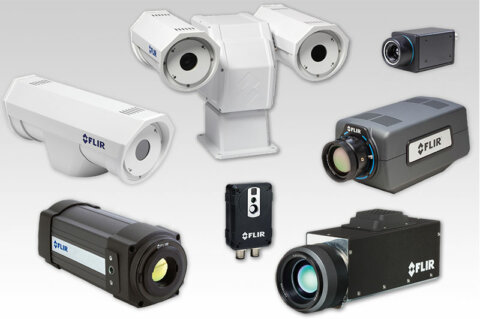
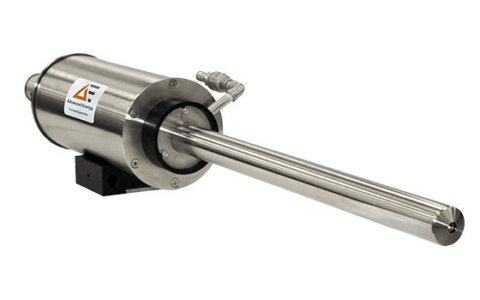
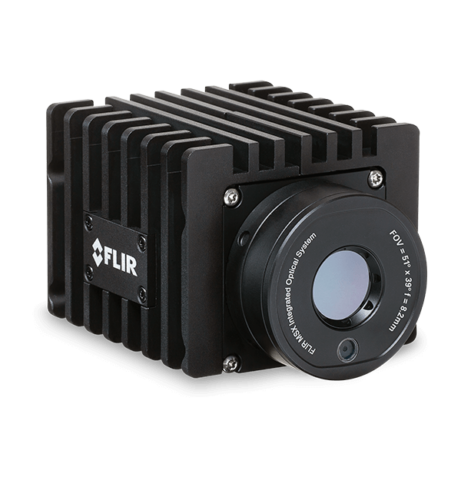
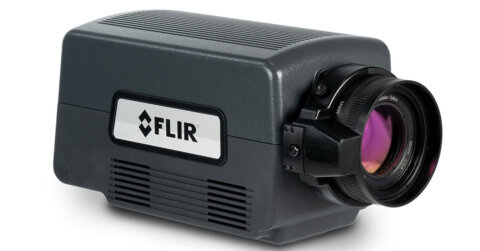
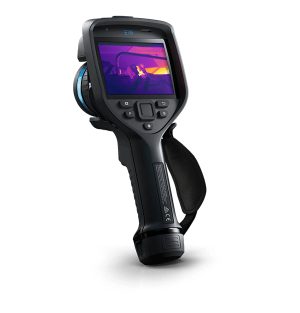
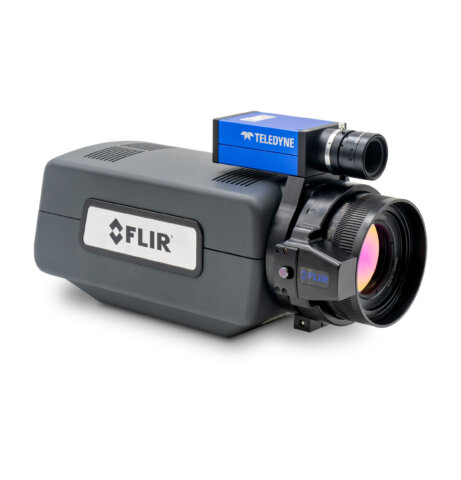
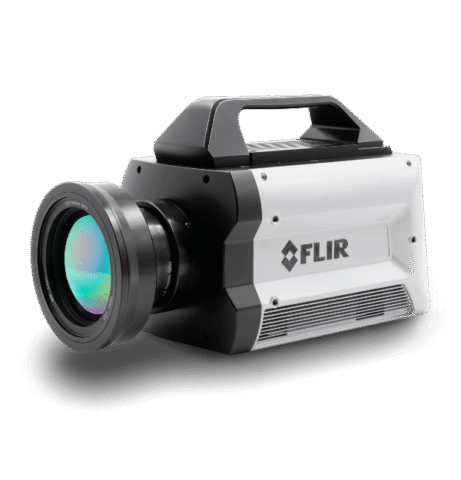
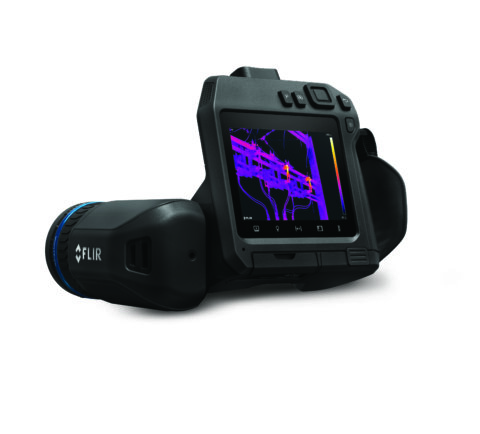
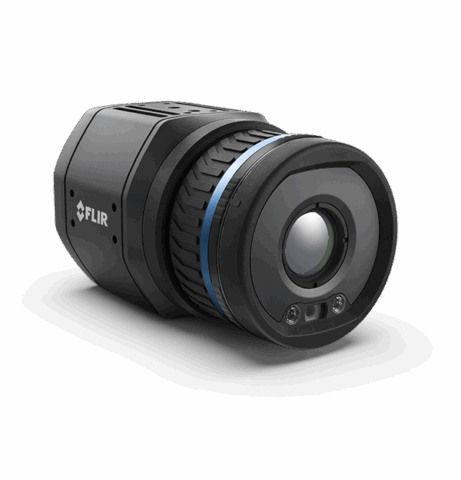
Key selection factors
- Temperature range alignment: LWIR cameras are ideal for ambient to moderate temperature measurements.
- System simplicity: No cooling required, making integration easier than MWIR cameras.
- Response speed: A common trade-off is slower response compared to MWIR systems.
- Emissivity considerations: Accurate measurement depends on correct emissivity settings and environmental control.
- Cost vs performance: LWIR systems are often more accessible but may lack sensitivity for advanced applications.
- Application boundary: If higher sensitivity or speed is needed, MWIR cameras may be the better choice.
Technical overview
LWIR cameras operate in the 8–14 µm range and are commonly based on uncooled microbolometer detectors . They are optimised for measuring emitted radiation from objects at typical environmental temperatures. Compared to MWIR cameras, they are less sensitive and slower but significantly simpler to integrate. SWIR cameras differ fundamentally by relying on reflected light instead of thermal emission. Broadband IR cameras may include LWIR coverage but add complexity in multi-band interpretation. LWIR systems are widely used in electronics testing, building analysis, and general thermal research.
Integration notes
LWIR cameras are relatively straightforward to integrate, with fewer mechanical and electrical constraints than cooled systems. However, measurement accuracy depends heavily on environmental control and calibration. Reflections and emissivity variations can significantly affect results. Compared to SWIR cameras, lighting is not required, but scene setup becomes critical. A common pitfall is assuming readings are absolute without accounting for these factors.
FAQ’s
LWIR (long-wave infrared) cameras are widely used for non-contact thermal imaging and temperature measurement. R&D applications include electronics testing, materials research, thermal characterisation, mechanical testing, building and energy studies, and monitoring of thermal processes.
LWIR cameras typically operate in the long-wave infrared region, commonly around 8–14 µm, although the exact spectral response depends on the detector and camera design. The spectral band should be considered when selecting a camera for a specific material, temperature range, or measurement environment.
LWIR and MWIR cameras operate in different infrared spectral bands and have different performance characteristics. LWIR systems are commonly available with uncooled detectors, which can simplify system integration and reduce cost and power requirements. Cooled MWIR cameras can provide advantages in sensitivity, speed, and imaging of higher-temperature or rapidly changing targets.
Yes. Accurate quantitative temperature measurement requires appropriate calibration and consideration of factors such as emissivity, reflected radiation, atmospheric transmission, camera-to-target distance, and environmental conditions. Calibration should be appropriate for the intended measurement range and application.
Yes. LWIR cameras can capture dynamic thermal events, provided the detector, frame rate, integration time, and data interface meet the requirements of the application. For extremely fast events or applications requiring very short exposure times and high temporal resolution, cooled MWIR cameras may offer advantages.
Emissivity describes how efficiently a surface emits thermal radiation compared with an ideal blackbody. Because thermal cameras infer temperature from detected infrared radiation, an incorrect emissivity setting can result in significant temperature measurement errors. Surface condition, material properties, viewing angle, and reflections should therefore be considered.
LWIR cameras detect emitted and reflected infrared radiation. Reflections from nearby hot or cold objects can therefore affect the apparent temperature of a surface, particularly when the target has low emissivity. Controlling the measurement geometry and accounting for reflected radiation can improve measurement accuracy.
Yes. LWIR cameras can be used for high-temperature measurements, but suitability depends on the detector, optics, calibration range, spectral response, and measurement conditions. For very high temperatures or applications involving rapidly changing thermal signatures, MWIR may provide advantages.
Key specifications include detector type, spectral response, resolution, frame rate, NETD, temperature measurement range, integration time, lens options, calibration accuracy, interface, and software capabilities. The camera should also be evaluated against the target’s temperature, emissivity, size, distance, and required measurement accuracy.
Yes. LWIR cameras can provide quantitative temperature measurements when properly calibrated and when relevant environmental and surface properties are accounted for. For demanding R&D applications, measurement uncertainty and calibration methodology should be evaluated alongside the camera’s headline specifications.