Infrared R&D cameras
Precision thermal imaging for measurement and analysis
R&D infrared cameras are designed for research, development, and testing where accurate thermal measurement and detailed analysis are essential. They offer high sensitivity, resolution, and radiometric accuracy, allowing engineers and researchers to understand how heat behaves within materials, components, and systems.
Unlike industrial thermal cameras, which often prioritise ruggedness and ease of deployment, R&D systems typically focus on measurement flexibility, calibration options, high-quality data, and access to raw or radiometric information.
These cameras are used in areas such as materials research, electronics testing, aerospace, and product development. They can be used for both qualitative thermal imaging and quantitative thermography, depending on the application.
Choosing the right camera largely depends on the required spectral range. SWIR, MWIR, LWIR, and broadband IR cameras each operate in different wavelength regions and offer different combinations of sensitivity, resolution, speed, and measurement capability. Other factors, including frame rate, cooling, radiometric output, calibration, and integration options, also need to be considered.
Our thermal imaging specialists can help you select and integrate the right solution, ensuring accurate, reliable thermal measurements and successful project outcomes.
Do you want to know more about this technology? Try out our new Chatbot!
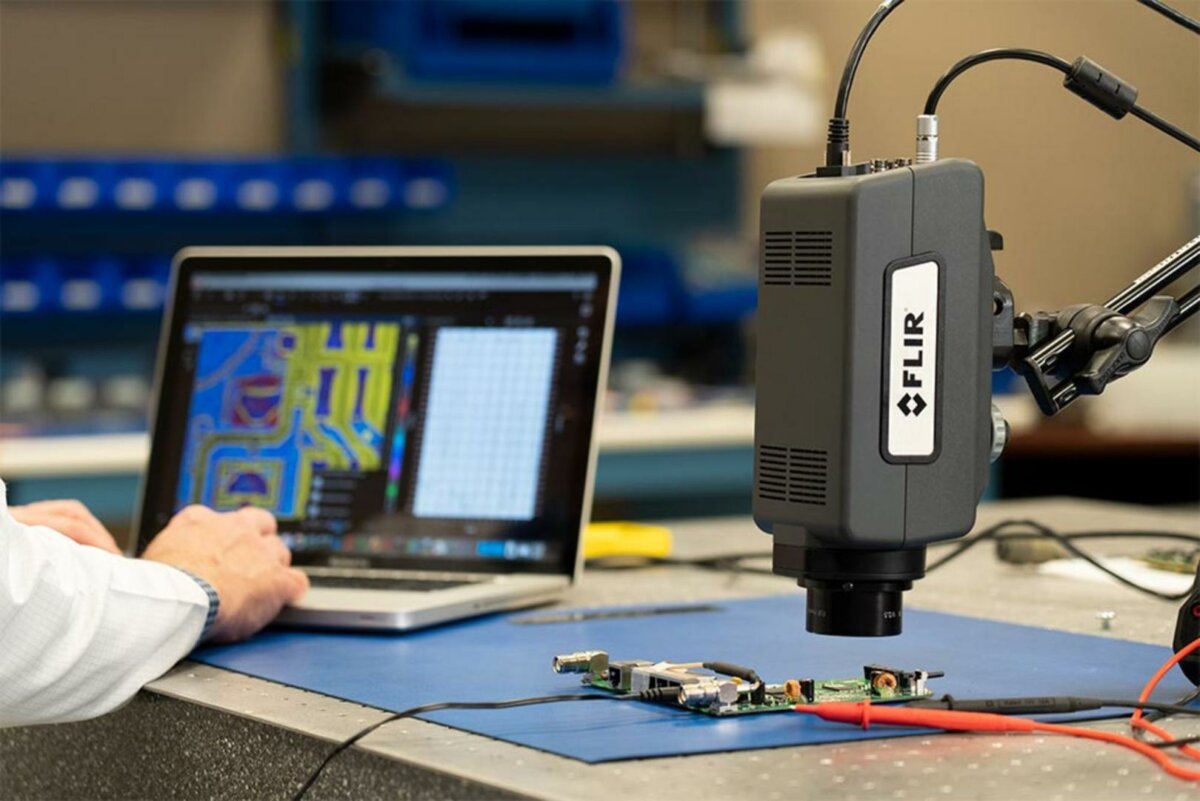
Catagory overview
R&D infrared cameras combine an infrared detector, optics, and calibration system, with cooling used in some designs to improve sensitivity and performance. The detector technology and spectral range have a direct impact on what the camera can measure and how it performs.
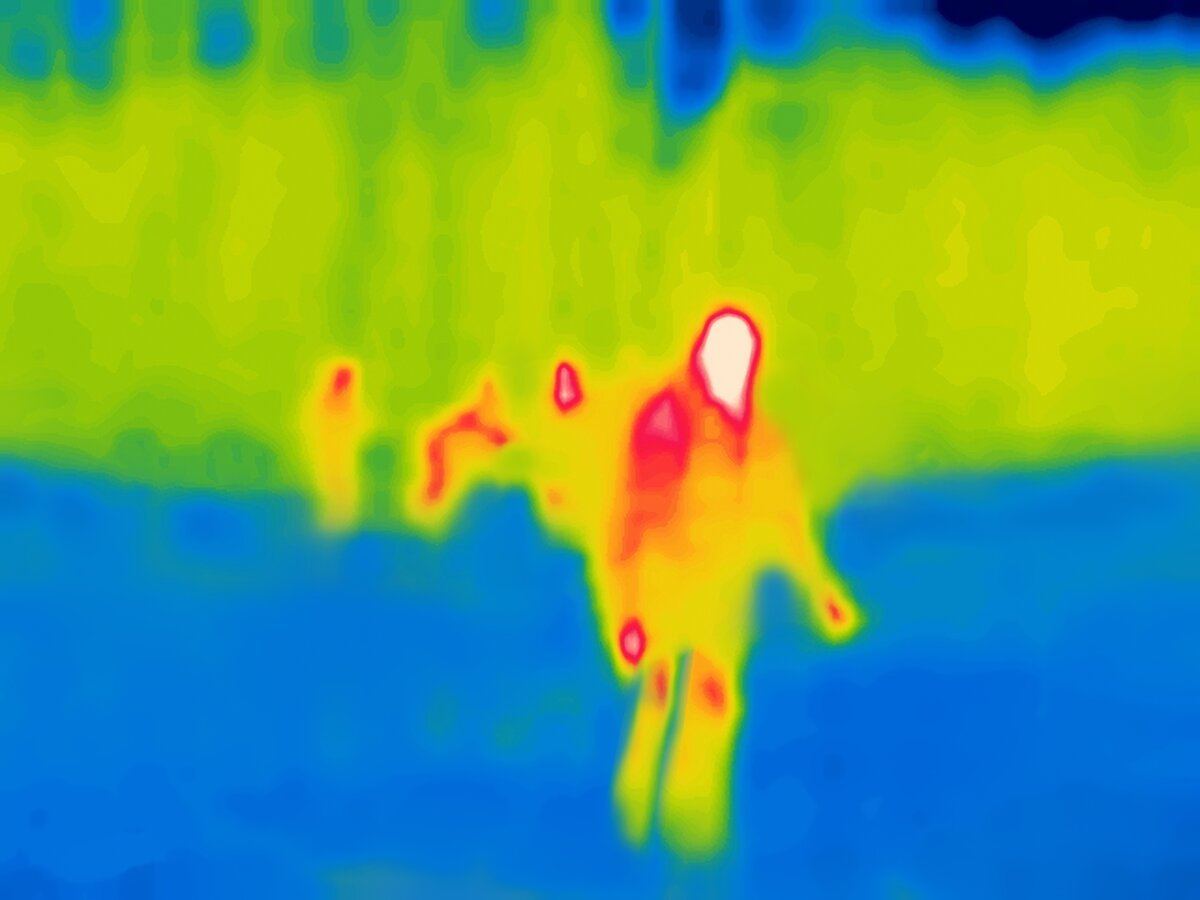
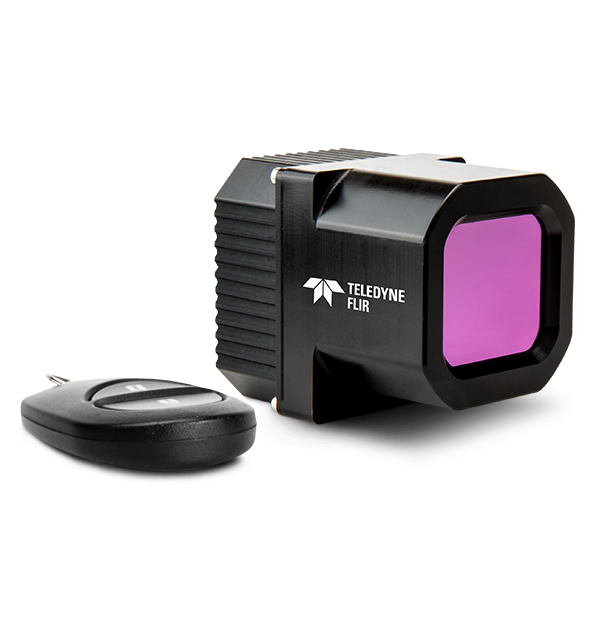
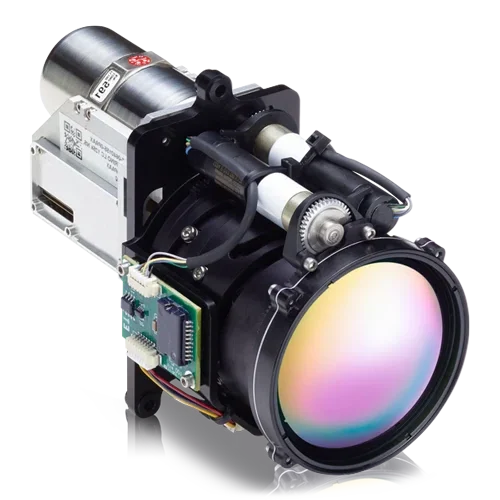
SWIR cameras are often used in applications involving reflected infrared radiation and can behave similarly to conventional visible-light cameras. MWIR cameras commonly use cooled detectors, providing high sensitivity and fast response for demanding measurement and research applications. LWIR cameras are typically based on uncooled detectors and are widely used for measuring thermal radiation from objects in ambient environments.
Broadband IR cameras cover a wider range of infrared wavelengths and can be useful when materials or processes exhibit different spectral characteristics that cannot be captured effectively in a single band.
These different camera types involve practical trade-offs between sensitivity, spectral selectivity, frame rate, cooling requirements, cost, and application flexibility. Selecting the right combination ensures that the camera provides meaningful and reliable thermal data for the research or engineering task.
Key selection factors
- Match spectral band to the physics: SWIR cameras are suited to reflected light and surface features, while LWIR cameras are used for emitted heat; MWIR cameras sit between them for higher temperature or fast-changing thermal events.
- Cooling vs system complexity: MWIR cameras typically require cooling, which improves sensitivity but adds power, size, and maintenance considerations compared to uncooled LWIR systems.
- Measurement depth vs simplicity: Broadband IR cameras provide wider spectral insight, but they also introduce more complex calibration and data interpretation compared to single-band systems.
- Temporal behaviour of the target: If you are capturing fast transients or pulsed events, MWIR cameras are often the better fit; for steady-state thermal mapping, LWIR cameras are usually sufficient.
- Optics compatibility and materials: A common pitfall is assuming lenses are interchangeable—SWIR, MWIR, and LWIR require different materials and coatings, which directly affect system performance.
- Application-driven pathway: If your work involves laser interaction or semiconductor inspection, SWIR cameras are typically the starting point; if the focus shifts to heat generation or dissipation, LWIR or MWIR becomes more appropriate.
We support R&D teams with high-end infrared cameras tailored for scientific applications. Our portfolio includes leading technologies with expert support for system configuration, ensuring accurate and reliable measurement capabilities.
Discover our R&D infrared cameras, explore detailed specifications, or contact us to discuss your research requirements.
FAQ’s
It usually comes down to what you are trying to observe rather than the camera itself. SWIR cameras are used when reflected light or material properties are the focus, while LWIR cameras are better for measuring emitted heat at or near ambient temperatures. MWIR cameras become relevant when you need higher sensitivity or are working with fast or high-temperature processes.
SWIR cameras are not thermal in the conventional sense – they detect reflected light rather than emitted heat. This makes them useful for inspecting surfaces, coatings, or semiconductor structures where thermal contrast is not the primary signal. They are often chosen when visible imaging falls short but thermal imaging is not appropriate.
MWIR cameras are typically selected when measurement sensitivity or temporal resolution becomes a limiting factor.
They are well suited for:
- fast transient thermal events
- high-temperature targets
- low signal or low contrast conditions
Not always. They become useful when a single spectral band cannot capture the full behaviour of a material or process. In many cases, a well-chosen SWIR, MWIR, or LWIR camera is simpler and more effective.
A frequent issue is assuming temperature readings are absolute without considering emissivity. Reflections from surrounding objects can also distort measurements. Careful calibration and controlled conditions are essential for reliable results.
Calibration is central to getting meaningful data, especially in research environments. Unlike industrial systems, R&D setups often require repeatable and traceable measurements. This means calibration needs to be maintained and verified over time, not just set once.
Yes, and in some cases this provides valuable insight.
For example:
- SWIR can reveal surface or optical behaviour
- MWIR can capture thermal response
Combining both can help correlate cause and effect in complex systems.
MWIR cameras introduce additional system requirements due to cooling and sensitivity. You need to account for power stability, warm-up time, and mechanical isolation. LWIR cameras are easier to deploy but require more attention to measurement conditions such as emissivity and environmental reflections.