NIR Spectrometer
- Technology
- Spectrometers
- Partner
- ARCoptix
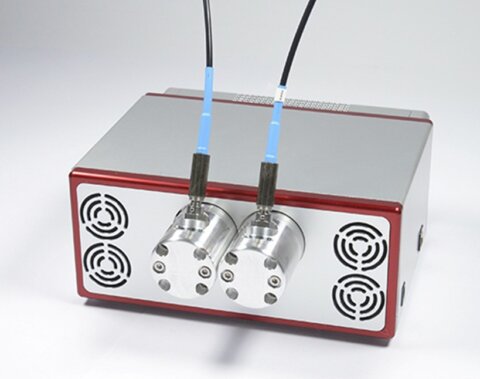
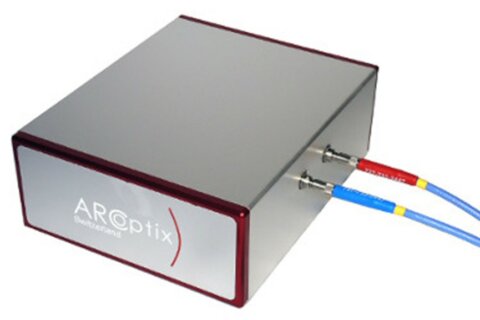
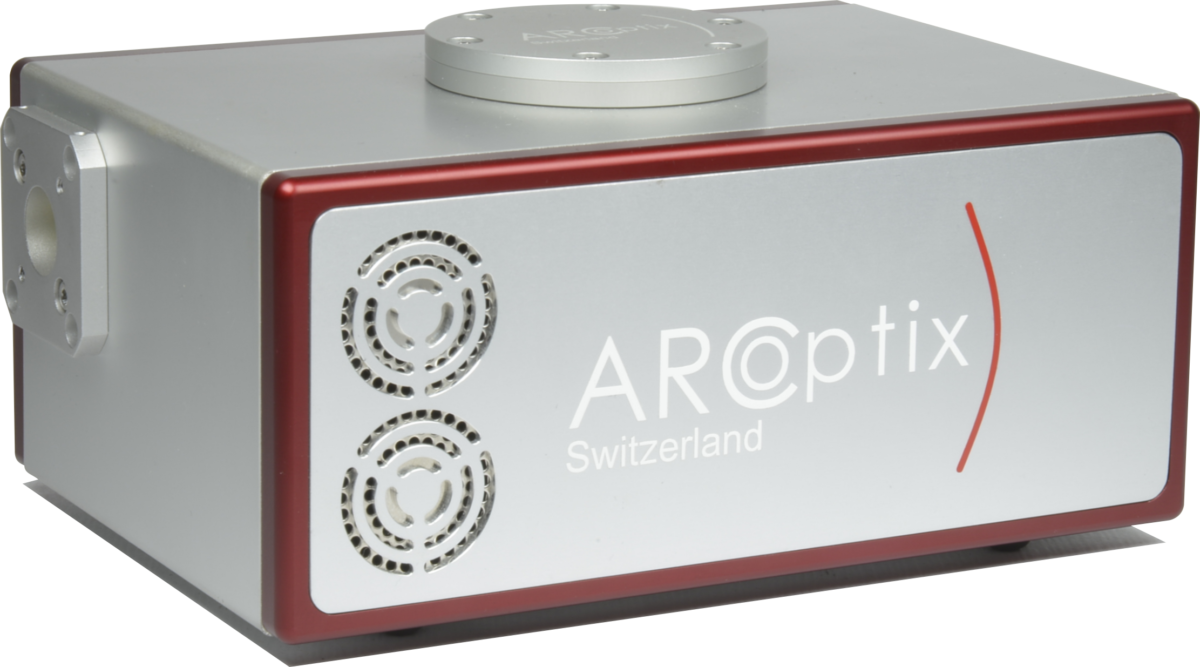
The FT-NIR Rocket spectrometer is a high-performance near-infrared spectrometer designed for engineers and scientists who need precise, reproducible spectral analysis. Using Fourier Transform (FTIR) technology, it covers a wide NIR wavelength range from 0.9 to 2.5 μm and even offers an extended model reaching 6.0 μm into the mid-infrared. This fibre-coupled NIR spectrometer is built with a permanently aligned interferometer and an internal reference laser, which together ensure very stable wavelength calibration and intensity measurements over time. As a result, it is ideal for demanding applications like chemometric analysis, where consistent, drift-free performance is critical for accurate quantitative results. The instrument’s compact and robust design (roughly 18 × 16 × 8 cm, 1.8 kg) makes it easy to integrate into laboratory setups or field deployments. Typical uses range from quality control in pharmaceuticals, food and agriculture (analysing compositions and moisture content), to environmental monitoring and material identification (for example, distinguishing minerals or plastics by their spectral “fingerprints”). With USB connectivity (optional with Ethernet available) and included software/API support, the FT-NIR Rocket can be conveniently deployed in both research and industrial settings, providing reliable NIR-spectrometer performance for a broad array of spectroscopy applications.
Range features
A high level overview of what this range offers
- Broad spectral range (900–2500 nm, extendable to 900–6000 nm) – Covers a wide NIR band (and optional mid-IR) in one device, allowing analysis of diverse materials and chemical bonds without switching instruments.
- High resolution (2 cm⁻¹) – Resolves fine spectral details (equivalent to <0.25 nm at 1000 nm), enabling detection of subtle absorption features and precise identification of compounds.
- Stability in intensity and wavelength – Permanently aligned interferometer with an internal stabilised laser provides long-term calibration stability and eliminates drift, ensuring consistent results day-to-day without frequent re-calibration.
- High sensitivity with cooled detector – Uses a thermoelectrically cooled InGaAs photodiode (and an added MCT detector in the extended model) for very low noise, allowing the detection of weak spectral signals and low-concentration samples.
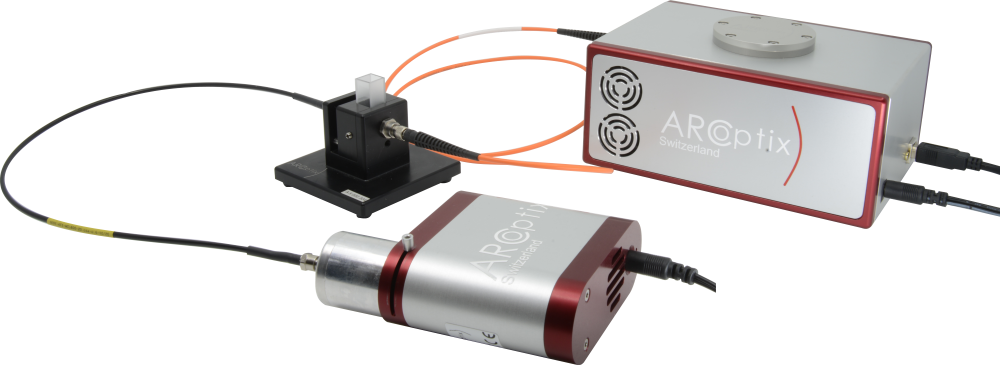
- Fiber-coupled, compact design – The spectrometer’s SMA-905 fibre input makes it easy to connect to probes, sample cells, or integrating spheres, supporting flexible measurement setups. Its small, rugged form factor simplifies integration into systems or use in the field.
- Single-detector FTIR advantage – The FT-NIR Rocket’s single photodiode detection avoids issues common in array detectors (no dead pixels, no pixel-to-pixel variation, no dark-current drift). This design, combined with the FTIR’s lack of stray-light artifacts, yields clean spectra with excellent signal-to-noise for quantitative analysis.
Downloads
for NIR Spectrometer
What’s in this range?
All the variants in the range and a comparison of what they offer
| Specification | FTNIR-L1-025-2TE | FTNIR-L1-060-EXT |
|---|---|---|
Spectral Range – Wavenumber (cm⁻¹) | 11,000 – 4,000 | 11,000 – 1,660 |
Spectral Range – Wavelength (μm) | 0.9 – 2.5 | 0.9 – 6.0 |
Detector Type | Extended InGaAs (2-TEC cooled) | Dual: Ext. InGaAs 2-TEC + MCT 4-TEC |
Detectivity D* (cm·Hz^½·W⁻¹) |
|
|
Signal-to-Noise Ratio (4 cm⁻¹, 1 min scan) |
|
|
Recommended Fibre Type | Low-OH silica | – |
Power Requirements | 12 V DC, 10 W max | 12 V DC, 20 W max |
Interferometer | Permanently aligned, double retro-reflector design | Permanently aligned, double retro-reflector design |
Resolution (unapodized) | 2, 4, 8 cm⁻¹ (selectable) | 2, 4, 8 cm⁻¹ (selectable) |
Wavenumber Repeatability | < 20 ppm | < 20 ppm |
Scan Frequency (at 4 cm⁻¹) |
|
|
Reference Laser | Temperature-stabilised solid-state @ 850 nm | Temperature-stabilised solid-state @ 850 nm |
A/D Converter | 24-bit | 24-bit |
Operating Temperature | 10 °C – 40 °C | 10 °C – 40 °C |
Free-space Aperture | Ø 12.7 mm, full angle 3.2° | Ø 12.7 mm, full angle 3.2° |
Fiber Input Coupler | SMA-905 connector; accepts fibre core up to 1 mm (NA 0.25) | SMA-905 connector; accepts fibre core up to 1 mm (NA 0.25) |
Communication Interface | USB 2.0 / Ethernet (optional) | USB 2.0 / Ethernet (optional) |
Software / API | Windows® 10/11 GUI software; DLL-based API available | Windows® 10/11 GUI software; DLL-based API available |
Dimensions (L×W×H) | 180 × 160 × 80 mm | 180 × 160 × 80 mm |
Weight | 1.8 kg | 1.8 kg |
Note: FTNIR-L1-025-2TE covers the standard NIR range (0.9–2.5 µm) with a single cooled InGaAs diode. The FTNIR-L1-060-EXT model adds a second MCT detector to extend coverage into the mid-IR (up to 6.0 µm), with slightly increased power use and dual-range performance as detailed above.
FAQs
for NIR Spectrometer
Fourier Transform infrared (FTIR) spectrometers offer several key advantages over traditional grating (dispersive) spectrometers. First, an FTIR (like the FT-NIR Rocket) collects all wavelengths simultaneously (the Felgett advantage), which generally yields a higher signal-to-noise ratio and faster measurements, especially when averaging many scans. Second, FTIR instruments have an internal laser for wavelength calibration, providing inherently high wavelength accuracy and no need for frequent recalibration – whereas grating spectrometers can drift or require reference checks. FTIR spectrometers also typically use a single-element detector rather than a detector array. In addition, the FTIR instrument does not limit the amount of light reaching the detector with an entrance slit. Because the optical throughput is therefore higher and the signal is measured on one detector element, the achievable sensitivity can be higher compared with array-based grating spectrometers, where the signal is distributed across many pixels. Furthermore, FTIR systems can achieve very high spectral resolution defined by the interferometer path length, which is often higher than what is practical in compact grating spectrometers. Additionally, because an FTIR uses a single detector and no entrance slit, it avoids issues like stray-light and pixel non-uniformity, producing “cleaner” spectra without the baseline artifacts that often affect array-based grating systems. In summary, an FTIR spectrometer provides broad spectral coverage, high resolution, and stable, reproducible results – making it a powerful alternative to grating-based designs when precision and range are paramount.
These two models are variants of the FT-NIR Rocket spectrometer with different detector configurations and spectral ranges. The FTNIR-L1-025-2TE model uses a single thermoelectrically cooled InGaAs photodiode and covers the near-infrared range from about 0.9 μm to 2.5 μm (900–2500 nm). The FTNIR-L1-060-EXT model, on the other hand, includes a dual-detector system: it combines the same InGaAs detector with an additional cooled MCT (mercury cadmium telluride) detector. This extended model can measure from 0.9 μm all the way to 6.0 μm (900–6000 nm), reaching well into the mid-infrared. In practical terms, the EXT version lets you detect spectral features in the 2.5–6 μm region (for example, for certain organic functional groups or moisture bands) that the standard model cannot see. The extended model requires slightly higher power (it has two detectors to cool) and has two working spectral sub-ranges, with a very high signal-to-noise in the NIR part and a bit lower SNR in the furthest mid-IR end. Apart from spectral range and detectors, both models share the same interferometer design, resolution options, software interface, and physical dimensions. Choosing between them depends on whether your application needs that extra mid-IR coverage – if you do need to measure beyond 2.5 μm (e.g. some plastics or chemicals with mid-IR features), the FTNIR-L1-060-EXT is the appropriate choice; otherwise, the standard FTNIR-L1-025-2TE covers typical NIR applications with a simpler single-detector setup.
Integration and control of the FT-NIR Rocket are designed to be straightforward. The unit connects to a PC via a standard USB 2.0 interface, through which it is powered and controlled. Arcoptix provides a Windows-based graphical user interface (GUI) for immediate operation – allowing you to adjust settings, acquire spectra in real time, and perform basic processing (such as setting references or switching between absorbance and transmittance modes). For custom systems and software integration, a full Application Programming Interface (API) is available: the spectrometer can be controlled via Arcoptix’s DLL libraries or through a TCP/IP command server that runs with the instrument’s AoDAQ software. This means you can write your own code (in languages like C++, Python, LabVIEW, etc.) to automate measurements, stream data, or embed the spectrometer’s functionality into larger control systems. In essence, the FT-NIR Rocket can operate as a standalone lab instrument or as an OEM component; its compact size and simple power requirements (12 V DC) also make it easy to incorporate into portable or in-line setups. For remote or distributed deployments, the built-in software’s TCP server mode even allows you to access the spectrometer over a network, enabling remote monitoring or control if needed.
Yes – the FT-NIR Rocket is compatible with the same kind of fibre-optic sampling accessories commonly used with conventional dispersive NIR spectrometers. It features removable SMA-905 fibre couplers on its input, so you can attach low-OH silica fibres to connect external modules like probe heads, flow cells, cuvette holders, or integrating spheres. For example, you might use a reflectance probe to measure solid samples, a transflectance probe for liquids, or a fibre-coupled transmission cell for analysing solutions – the spectrometer will accept all these, as long as the optics are suitable for the NIR wavelength range. One important consideration is to use fibres and optics rated for 0.9–2.5 μm (or beyond if using the extended range model); typically “low hydroxyl” (low-OH) silica fibres are recommended to minimise absorption losses in the NIR. In practice, anything from a simple fibre dip probe to more elaborate accessories (like the ArcSphere integrating sphere or a fibre-coupled flow cell) can be paired with the FT-NIR Rocket. The flexibility of a fibre input means you can easily adapt the spectrometer to different sampling setups – whether you need to analyse liquids in vials, reflectance from a surface, or even connect an NIR light source externally for special measurements.
The resolution of an FTIR spectrometer is specified in wavenumbers (cm⁻¹), which is an inverse wavelength unit. A 2 cm⁻¹ resolution corresponds to the ability to distinguish spectral features separated by 2 cm⁻¹ in the frequency (wavenumber) domain. In the wavelength domain (nanometres or microns), the actual spacing that 2 cm⁻¹ represents will depend on the wavelength of light. The relationship is Δλ ≈ λ² · Δν (with λ in cm and Δν the resolution in cm⁻¹). For practical examples: at λ = 1000 nm (1.0 µm), a resolution of 2 cm⁻¹ is roughly equivalent to about 0.25 nm difference in wavelength. At λ = 2500 nm (2.5 µm), 2 cm⁻¹ corresponds to around 1.2–1.3 nm. This means the FT-NIR Rocket at 2 cm⁻¹ can resolve very fine spectral lines – much finer than the resolution of typical array-based NIR spectrometers, which often is on the order of several nanometres. It’s worth noting that the resolution in nm gets coarser at longer wavelengths (because a fixed cm⁻¹ interval covers more nm at larger λ), but the instrument’s specification of 2 cm⁻¹ is a high spectral resolution across the board. In summary, a 2 cm⁻¹ resolution allows the spectrometer to distinguish closely spaced absorption peaks (for instance, separating two chemical bands that would appear merged at lower resolution), providing more detailed spectral information for identifying and quantifying substances.
Yes, it is possible, but some conditions must be considered because FTIR spectrometers such as the FT-NIR Rocket acquire data by scanning an interferogram over time. During a scan, the instrument assumes that the light source remains stable. Pulsed light sources can be measured if the pulse repetition rate is sufficiently high so that many pulses occur during a single interferometer scan. In practice, the repetition rate should typically be above about 15 kHz, ensuring that the pulses average into a stable signal during the measurement. If the pulse frequency is lower or falls within the interferometer modulation frequency range, artifacts such as aliasing can occur in the measured spectrum. Further details and practical measurement examples are described in the Arcoptix application note on modulated and pulsed light sources, which can be downloaded from this page.
Being a versatile NIR spectrometer, the FT-NIR Rocket finds use across many industries and research fields. In chemometrics and material analysis, it is used for both qualitative identification and quantitative measurements – for example, determining the composition of food ingredients (protein, moisture, sugar content), analyzing dairy or beverages, and monitoring chemical concentrations in pharmaceuticals or polymers. In the pharmaceutical industry, it can perform rapid raw material verification or monitor blend uniformity by detecting NIR absorption signatures of various compounds. In agriculture and food processing, it’s commonly employed to measure properties of grains, fruits, or dairy (like fat and protein content) without destroying the sample. The extended-range model (FTNIR-L1-060-EXT) opens up further applications in the mid-infrared, allowing, for instance, analysis of plastics, petrochemicals, or environmental samples that have important spectral features above 2.5 µm. In geology and mining, this spectrometer – often paired with an integrating sphere – is used for mineral identification and grading, exploiting distinctive NIR/MIR reflectance profiles to tell apart mineral species or assess ore quality. It’s also used in environmental monitoring, such as detecting contaminants in water or monitoring gases (via fibre probes in process environments). Another growing area is optical and semiconductor research – for example, characterizing the output spectrum of lasers or LEDs (including those in the 1–2.5 µm telecom range, or even up to 4–5 µm for certain quantum cascade lasers or novel sources). With its portable size and low power needs, the FT-NIR Rocket can even be taken out of the lab for field measurements, like assessing crops in the field or on-site analysis of oil and fuel samples. In summary, any application requiring robust, high-quality NIR spectral data – from factory process control to academic research – can potentially benefit from the FT-NIR Rocket’s combination of broad range, resolution, and stability.