Fibre Optics for Harsh Environments
Rugged optical connectivity for industrial automation and demanding operating environments.
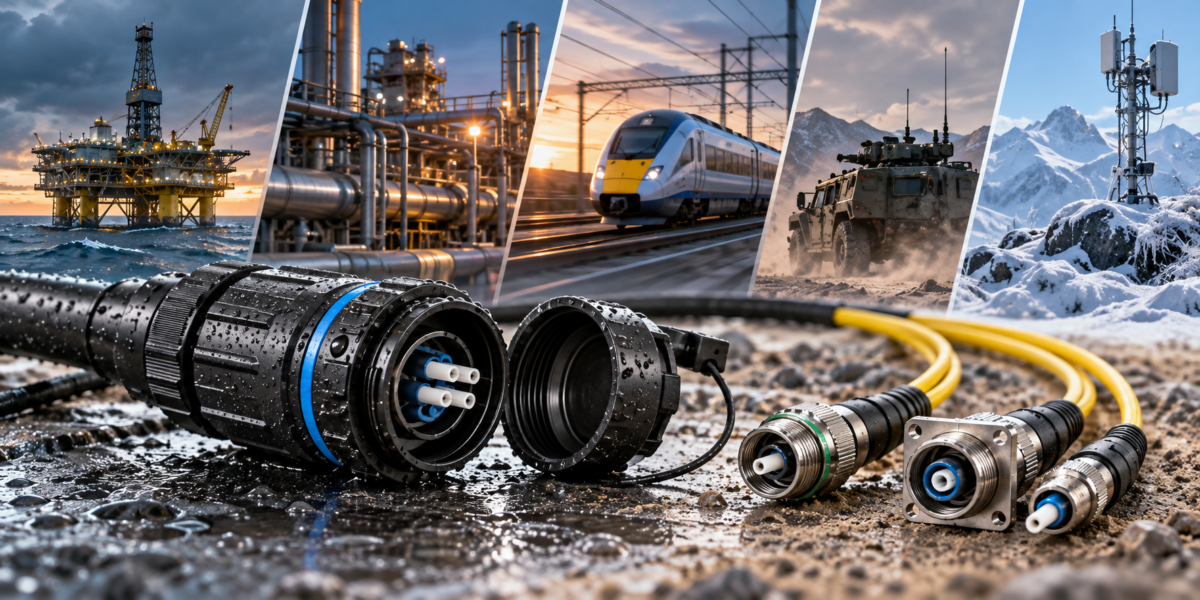
Fibre optics for harsh environments provide reliable, high-performance connectivity for industrial networks exposed to extreme temperatures, vibration, shock, moisture, dust and electromagnetic interference. From smart manufacturing and industrial automation to energy infrastructure, mining, oil and gas, ruggedised fibre optic solutions support dependable data transmission and communication across demanding operating environments. Specialised optical cables, connectors and termination systems help maintain network performance while addressing the mechanical and environmental challenges associated with industrial installations. In practice, selecting fibre optics for harsh environments requires careful consideration of optical performance, environmental protection, installation requirements and connector compatibility. Engineers must also evaluate network architecture, maintenance accessibility and long-term reliability to support increasingly connected industrial operations.
Do you want to know more about this technology? Try out our new Chatbot!
Technical overview
Fibre optics for harsh environments combine ruggedised optical fibres, reinforced cables, specialised connectors and termination technologies designed to support reliable communication in industrial networks. These solutions are used in Industrial Ethernet, SCADA systems, factory automation, energy monitoring and protection, and utility communications, where high data integrity and resistance to electromagnetic interference are important. Single-mode and multimode fibre technologies support different bandwidth and transmission distance requirements, while modular harsh-environment connector systems provide secure optical connections in demanding installations. Field termination technologies, including crimp-and-cleave connectors, can simplify installation by reducing the need for specialist equipment, adhesives or polishing, depending on the connector design. Design trade-offs include optical performance, mechanical durability, cable flexibility, installation complexity and environmental protection. Typical applications include automotive manufacturing, agribusiness, steelmaking, mining, oil and gas, power utilities and smart infrastructure.
Key selection factors
-
Environmental protection – Define exposure to moisture, dust, chemicals, salt spray, temperature variation and other environmental conditions. A common pitfall is selecting a connector based on its ingress protection rating alone without considering the complete cable and connector assembly.
-
Mechanical durability – Evaluate resistance to shock, vibration, crushing, abrasion, tensile loading and repeated movement according to the installation environment.
-
Fibre type and optical performance – Select single-mode or multimode fibre according to transmission distance, bandwidth, wavelength and optical interface requirements. Increased mechanical protection can introduce trade-offs in cable diameter, weight and flexibility.
-
Connector and termination compatibility – Confirm connector geometry, mating interfaces, termini, sealing arrangements and optical performance against the equipment and maintenance requirements.
-
Cable construction and routing – Assess jacket materials, armouring, minimum bend radius, strain relief and installation space to avoid excessive optical losses or mechanical damage.
-
Qualification and lifecycle requirements – Review applicable environmental and industry standards, test evidence, maintenance procedures, replacement requirements and expected operating life.
Integration notes
Harsh-environment fibre optic assemblies should be integrated with the complete optical, mechanical and environmental architecture of the equipment. Cable routing, connector mounting, strain relief and bend radius can influence both optical performance and mechanical reliability under vibration or repeated movement. Environmental sealing should be assessed across the complete assembly, including connector interfaces, cable entry points and protective transitions. Watch out for assuming that a ruggedised connector alone makes the complete fibre optic link suitable for harsh environments, particularly where cable construction or termination methods differ from the connector’s qualification conditions. Representative testing should verify insertion loss, return loss where relevant, mechanical retention and environmental performance across the intended operating conditions.
Why our portfolio is right for you
Our harsh-environment fibre optic portfolio can be evaluated against optical performance, connector compatibility, cable construction, environmental protection and mechanical integration requirements for demanding applications.
Fibre Optics for Harsh Environments FAQs
Fibre optics for harsh environments are optical cables, connectors and assemblies designed to maintain optical connectivity under demanding mechanical and environmental conditions. They may incorporate reinforced materials, protective sealing and specialised termination systems to address conditions beyond those typically encountered in controlled indoor installations.
Rugged fibre optic connectivity is used where optical links are exposed to challenging installation or operating conditions. Typical applications include:
- Aerospace, defence and transportation systems
- Industrial automation, robotics and manufacturing
- Offshore energy, mining and outdoor communications
The required protection depends on the installation environment and expected mechanical stresses.
Suitability depends on the cable’s optical, mechanical and environmental construction. Important considerations include jacket material, armouring, tensile strength, crush resistance, bend performance, temperature range and resistance to relevant chemicals or moisture.
Ruggedised connectors may use reinforced housings, sealing systems, secure coupling mechanisms and additional strain relief to withstand demanding conditions. Engineers should consider:
- Environmental sealing and connector protection
- Resistance to vibration and mechanical shock
- Compatibility with fibre termini and mating interfaces
The complete mated assembly should be evaluated against the intended environment.
Yes, harsh-environment fibre optic systems can be designed around single-mode or multimode fibres, depending on the available product configuration. Fibre selection should reflect transmission distance, bandwidth, wavelength, transceiver compatibility and the required optical link budget.
Temperature changes can affect cable materials, connector alignment, mechanical stress and optical attenuation. Engineers should evaluate the specified operating and storage temperature ranges together with thermal cycling performance, particularly where assemblies contain different materials with different expansion characteristics.
Installation should account for mechanical routing, environmental exposure and access for inspection or replacement. Key considerations include:
- Minimum bend radius and cable strain relief
- Connector cleanliness and environmental sealing
- Protection against abrasion, crushing and movement
Optical testing after installation can help identify damage or excessive connection losses.
Selection should begin with the required optical transmission characteristics and a clear definition of the mechanical and environmental operating conditions. Fibre type, cable construction, connector interfaces, sealing, shock and vibration performance, applicable qualification requirements and lifecycle support should then be evaluated against the complete system architecture.