Smart metering systems: technologies and integration guide
A technical overview of smart metering systems, covering architecture, communication technologies, hardware, use cases, and integration challenges
Contents
- What is smart metering?
- How does smart metering technology work?
- Communication technologies in smart metering
- Hardware foundations: sensors, filters and modules
- Use cases and applications
- Smart metering infrastructure planning
- Challenges and solutions of smart meter infrastructure
- Getting smart metering technology decisions right
- What else are smart meters used for?
- How does Acal BFi add value in the delivery of smart energy solutions?
- Conclusion
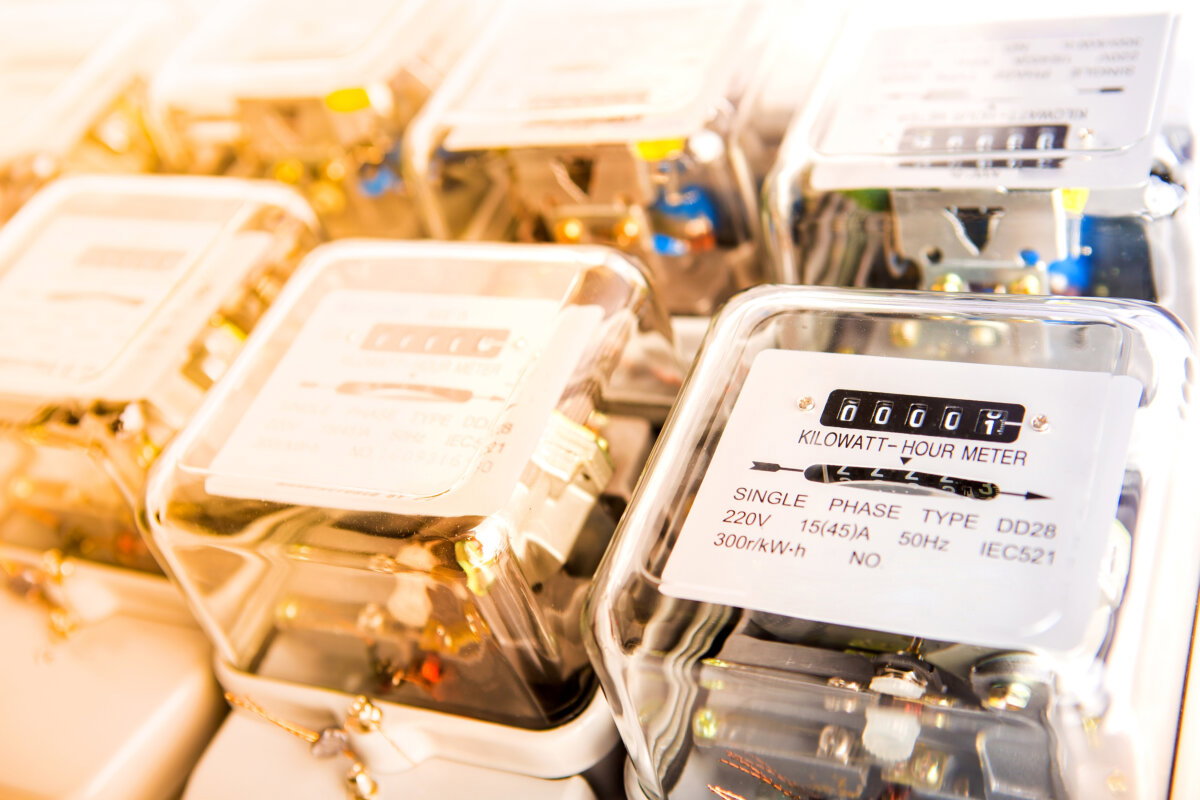
This knowledge hub article provides a comprehensive, engineering-focused overview of smart metering systems.
Explaining what smart metering is, how it works at a system level, and how it differs from traditional and AMR approaches, before exploring the communication technologies that enable reliable, scalable data transmission.
It also examines the hardware foundations of smart meters – including sensors, communication modules, and RF filtering – alongside real-world applications across utilities, buildings, industrial environments, and smart cities. Highlighting key infrastructure planning considerations such as data management, security, compliance, and scalability, and outlines common technical challenges with practical engineering solutions.
Offering guidance on selecting the right smart metering architecture and how we support system design, integration, and deployment, helping engineering teams develop robust, future-ready solutions.
What is smart metering?
A smart meter is a next-gen measurement device designed for automatic recording and communication of data for electricity, gas and water usage to utility providers in real time. By replacing manual meter readings with continuous, remote data transmission, smart metering has eliminated estimated billing and improved both accuracy and granularity of usage data. Unlike traditional / legacy analogue meters, where readings had to be manually collected and submitted, smart meters eliminate the need for utility providers to manually collect data and report usage, which significantly improves data accuracy.
Traditional metering systems relied on infrequent, manual readings, limiting visibility into usage patterns and often resulting in estimated bills and discrepancies. In contrast, smart meters incorporate two-way communication, allowing data to be transmitted regularly while also supporting remote monitoring, updates, and user feedback via digital interfaces.
Generally, smart metering refers to digitally connected measurement systems that are integrated within a wider infrastructure for data acquisition, processing, and transmission. These systems play a key role in modern energy and utility networks by enabling high-resolution data for billing, monitoring, forecasting, and operational optimisation, as well as supporting the transition to decentralised and renewable energy systems.
Smart metering is now widely deployed across multiple sectors, including: -Utilities (electricity, gas, and water networks) -Smart buildings and campus environments -Industrial energy management systems -Municipal and city-scale infrastructure
In Europe, implementation typically aligns with standards such as Open Metering System (OMS) and the Measuring Instruments Directive (MID), along with national and EU regulations. These frameworks ensure interoperability, data security, and consistent performance across multi-vendor environments.
Such guidelines and standards help in minimising fragmentation in the overall smart metering ecosystem by facilitating secure and efficient data communication and exchange among various devices and platforms, especially in multi-vendor environments where interoperability of various devices and platforms becomes critical for efficient smart metering systems.
How smart metering works
At a system level, a smart metering infrastructure is built around a distributed architecture that combines sensing, connectivity, data aggregation, and analytics. Each layer plays a specific role in ensuring accurate, secure, and scalable data collection.
Core components of a smart metering system
-
Sensors/meters – measure consumption (electricity, water, heat, gas) Smart meters act as primary data acquisition points and continuously measure consumption in real time using embedded sensing technologies specific to each type of consumption (e.g. current transformers for electricity, flow sensors for water). Many modern meters also include onboard processing capabilities for data pre-conditioning, event detection (e.g. leaks or tampering), and timestamping.
-
Communication modules – transmit data via wireless or wired protocols These modules allow the transfer of metering data to external systems using various wireless and wired communication protocols. Depending on the application, they may support technologies such as LoRaWAN, NB-IoT, Wireless M-Bus, or wired interfaces like M-Bus. Selection is typically driven by range, power consumption, data rate, and environmental constraints.
-
Gateways – aggregate data of multiple endpoints Gateways are used as intermediaries for communication between edge devices and central platforms. For large deployments, they collect data from hundreds or thousands of meters, perform protocol translation if required, and then forward the data to backend platforms. Gateways are particularly important in LPWAN architectures, as they extend network coverage and reduce the need for direct cloud connectivity.
-
Backend platforms – processing, storage and visualisation of data Backend platforms include cloud-based platforms for processing, storage, and analysis of data. This includes Meter Data Management Systems, IoT platforms, and application platforms.
Looking for support with your smart metering design or exploring the right components for your application? Speak to our engineering specialists to discuss your requirements, evaluate options, and get expert guidance on building a reliable, efficient solution.
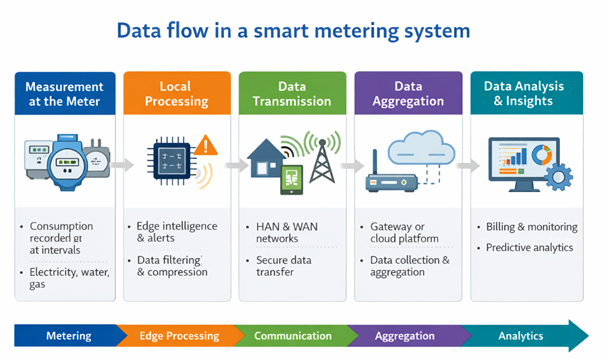
Data flow in a smart metering system
-
Measurement is captured at the meter Smart meters continuously record your energy consumption at regular intervals. Depending on the application, these readings can be taken every few minutes or hourly, giving a detailed picture of usage over time.
-
Local processing with edge intelligence Some smart meters are smart in more ways than one – they can process data right at the meter. This local “edge intelligence” helps filter out noise, compress information, or even trigger alerts for unusual events, like a sudden spike in consumption or a potential leak. By handling some processing locally, the system avoids sending unnecessary data and becomes more efficient.
-
**Transmission via WAN/HAN communication networks Once collected, the data is sent through a network. Home Area Networks (HAN) typically connect devices within the home (e.g. in-home displays), whereas Wide Area Networks (WAN) transmit data to utility providers or central systems for further use.
-
Aggregation at gateway or cloud platform In many systems, a gateway gathers data from multiple meters before sending it on. In other setups, devices with direct connectivity, like NB-IoT meters, can transmit data straight to the cloud without a gateway.
-
Analysis for billing, monitoring, or predictive insights Once the data reaches the backend, it’s analysed to support a range of functions. This includes automated billing, monitoring consumption patterns, forecasting energy loads, and even predictive maintenance. Advanced analytics can also help utilities balance the grid and implement demand response strategies, making energy distribution smarter and more efficient.
Smart metering vs traditional metering vs sub-metering
While traditional and AMR systems focus primarily on data collection for billing, smart metering introduces real-time visibility and system interaction. Smart sub metering extends this further by enabling highly granular monitoring within buildings or facilities, making it particularly valuable for energy optimisation and cost allocation in complex environments.
| Feature | Traditional metering | AMR (automated meter reading) | Smart metering | Smart sub metering |
|---|---|---|---|---|
Data collection | Manual, infrequent readings | Automated but periodic | Continuous or near real-time | Continuous, highly granular |
Connectivity | None | One-way communication | Two-way communication | Two-way communication |
Data granularity | Low (monthly/quarterly) | Moderate | High (minutes to hourly) | Very high (per device/tenant/zone) |
User visibility | Limited or none | Limited | Real-time or near real-time | Detailed, location-specific insights |
Use case | Basic billing | Remote meter reading | Billing, monitoring, optimisation | Internal cost allocation, efficiency tracking |
Interaction capability | None | Minimal | Supports control signals and alerts | Supports detailed monitoring and control |
Typical environment | Legacy residential/commercial | Transitional systems | Utilities, smart grids, smart buildings | Multi-tenant buildings, campuses, industrial sites |
Communication technologies in smart metering
Choosing the right communication technology is a key part of designing a smart metering system. Each protocol offers its own advantages and limitations depending on the environment, data requirements and scale of the deployment. In practice, smart meters often use a mix of technologies to ensure reliable, secure, and scalable connectivity.
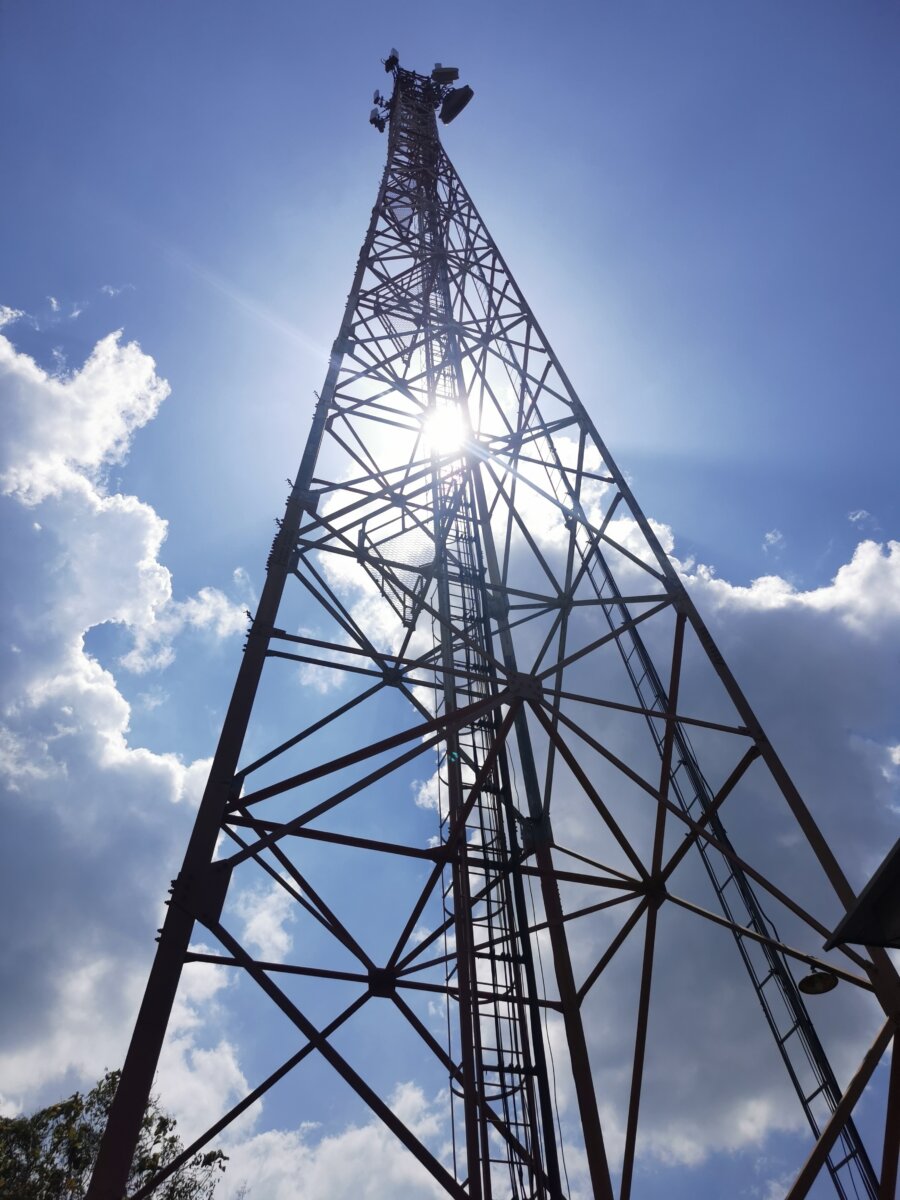
Key communication technologies in smart metering are:


Why LoRaWAN is well suited for smart metering
With so many communication technologies available for smart metering, LoRaWAN stands out for how well it matches the needs of modern utility networks. It brings together long-range connectivity, low power consumption, and strong security in a way that makes it particularly effective for large-scale, distributed deployments.
LoRaWAN (Long Range Wide Area Network) is designed for wireless, battery-powered devices. Operating in unlicensed radio bands, it enables devices such as smart meters and sensors to communicate over long distances while using very little energy. This makes it especially useful in environments where devices are spread out over wide areas or are difficult to access.
One of LoRaWAN’s biggest strengths is its ability to balance performance with efficiency. Utilities can deploy networks that support two-way communication, integrate with existing systems, and deliver reliable data for billing, monitoring, and predictive maintenance – all without excessive power or infrastructure demands. As a result, it has become a popular choice for organisations looking to build scalable, cost-effective smart metering solutions across urban, rural, and industrial settings.
Key advantages
-
Long-range, low-power operation – LoRaWAN is well suited to geographically dispersed metering networks (water, gas, district utilities) where devices may be installed in basements, pits, or remote locations. Its ultra-low power profile enables multi-year battery life, even in frequently polled metering applications.
-
Low infrastructure overhead – Networks can be deployed using a relatively small number of gateways, reducing dependency on operator-owned infrastructure. This makes it attractive for utilities upgrading legacy metering systems or rolling out coverage in rural or hard-to-access areas.
-
Strong scalability for dense deployments – LoRaWAN can support large numbers of end devices across a single network, making it suitable for utility-scale rollouts. Properly planned gateway placement allows thousands of meters to operate within a single infrastructure footprint.
-
Secure, standards-based communication – End-to-end AES-128 encryption, device authentication, and network-level security mechanisms make it suitable for regulated utility environments where data integrity and tamper resistance are critical.
-
Flexible integration with existing systems – LoRaWAN can be integrated into hybrid architectures via gateways and middleware, allowing it to coexist with cellular, PLC, or mesh networks within broader smart metering ecosystems.
Limitations
-
Low data throughput by design – LoRaWAN is optimised for small, infrequent uplink packets (e.g. meter readings). It is not suitable for high-resolution waveform data, continuous streaming, or applications requiring high bandwidth or low-latency control.
-
Duty cycle and network congestion constraints – In dense deployments, especially in unlicensed spectrum, airtime limitations and gateway congestion can impact performance if network planning is not carefully managed.
-
Sensitivity to RF environment – While robust over long distances, performance can degrade in heavily built-up urban areas, underground installations, or environments with significant RF attenuation or interference.
-
Asymmetric communication model – Uplink is optimised, but downlink capacity is limited, which can restrict real-time control or frequent device configuration updates at scale.
-
Requires careful network design – Performance is highly dependent on gateway placement, antenna design, and link budget planning; poorly designed networks can lead to packet loss or uneven coverage across deployments.
Overall, LoRaWAN offers a flexible and reliable approach to smart metering. It enables utilities to roll out infrastructure that not only meets today’s requirements but is also ready to support future smart city applications.
This makes it particularly well suited to use cases such as smart water metering, distributed utility networks, and upgrading existing infrastructure without the need for extensive new cabling.
Hardware foundations: sensors, filters and modules
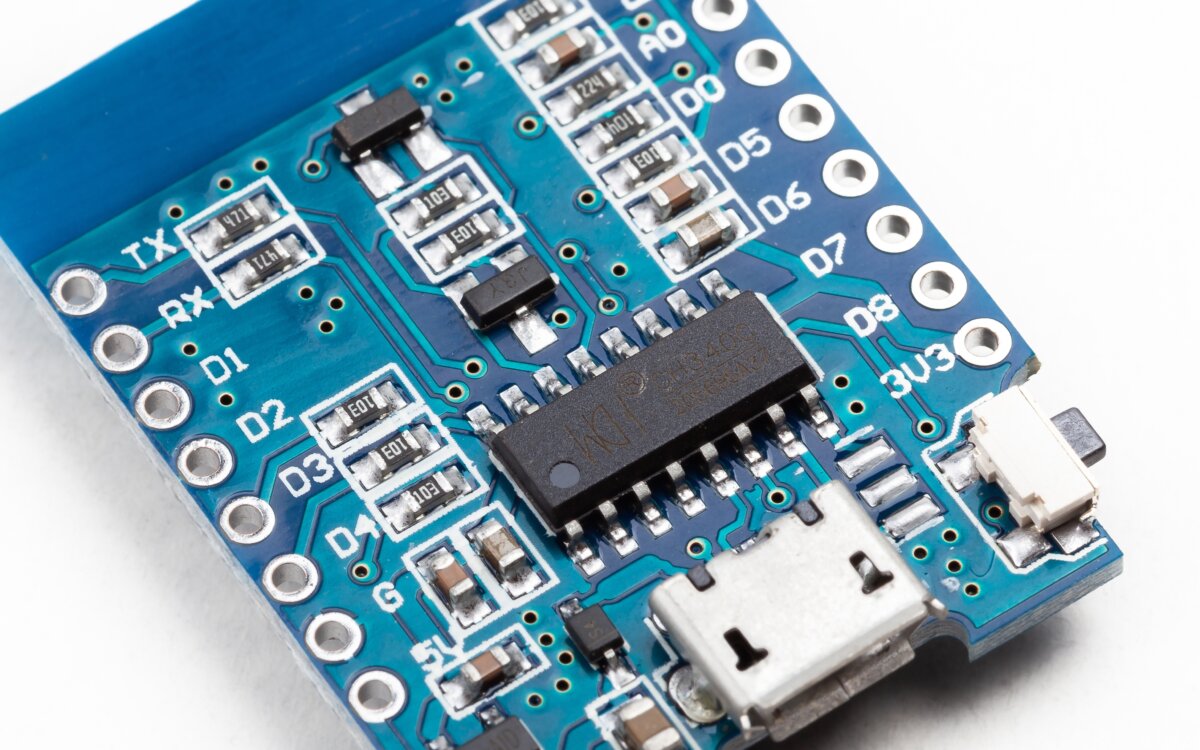
A reliable smart metering system relies on high-performance hardware to ensure accurate measurement, secure communication, and long-term durability. At their core, smart meters are compact embedded systems that bring together sensors, filters, and communication modules to capture, process, and transmit consumption data safely and consistently.
Each component plays an important role in maintaining overall system performance. From precise sensing and signal conditioning to stable, secure data transmission, the hardware must be designed to operate reliably over many years – often in challenging or hard-to-access environments.
In this context, SAW (Surface Acoustic Wave) filters are widely used for RF filtering within smart meters. They offer a compact, efficient, and cost-effective way to manage signal integrity, helping to ensure reliable communication. Their small size and strong performance make them well suited to space-constrained designs, while also supporting straightforward integration into existing systems.
However, it’s important to consider their limitations. SAW filters are typically designed for specific frequency ranges and are less flexible than some alternatives, which can restrict their use in certain applications. Overall, they provide a robust and practical solution for many smart metering designs, as long as their fixed configuration and application scope are taken into account during system development.
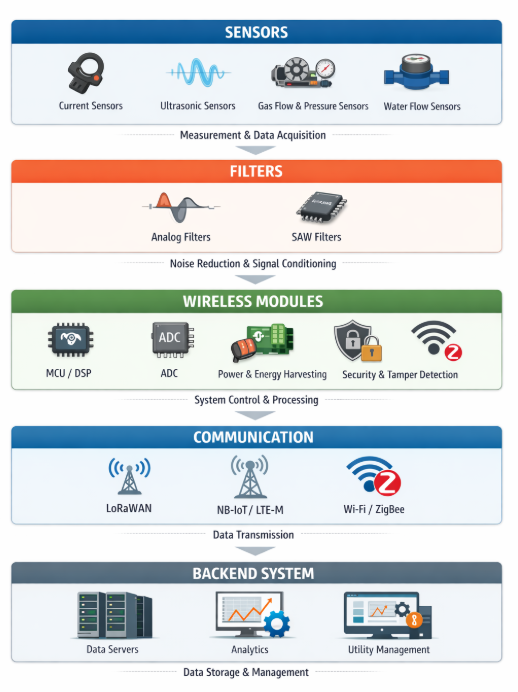
| Functional Block | Description | Key Functions | Advantages | Limitations |
|---|---|---|---|---|
Sensors | Front-line measurement devices that convert physical quantities (electricity, water, gas, heat) into measurable signals for processing. Types include:
|
|
|
|
Modules | Central processing and communication units for acquiring, processing, and transmitting smart metering data securely. Include:
|
|
|
|
SAW Filters | Surface Acoustic Wave filters used in RF front-ends, leveraging the piezoelectric effect to generate and manipulate surface acoustic waves for precise signal filtering |
|
|
|
Use cases and applications
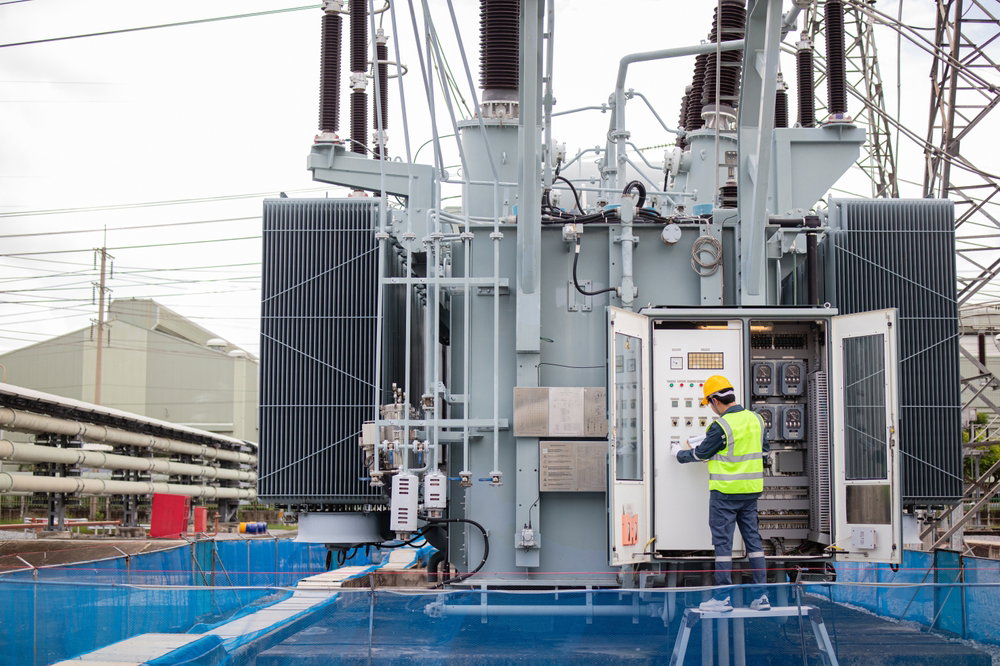
Smart meters have evolved far beyond simple tools for recording electricity, water, or gas usage. Today, they act as a critical data backbone for utilities, buildings, industrial sites, and even entire cities, supporting energy optimisation, cost control, sustainability, and more informed, predictive decision-making.
Smart metering infrastructure planning
A successful smart metering rollout depends on getting the fundamentals right early in the planning stage. Importantly, smart metering is not just about the meter itself, it is a system of systems that bring together devices, communication networks, data platforms, cybersecurity, and customer-facing tools. For this reason, it should be treated as a core part of infrastructure design from the start, rather than something that can be added later. Taking a system-level approach early on helps ensure long-term performance, scalability, and interoperability.
One of the first considerations is communication reliability. The chosen technology must provide consistent coverage across all deployment environments, from dense urban areas and high-rise buildings to rural locations and underground installations. Factors such as signal penetration, latency, network resilience, and the ability to scale to millions of connected devices all need to be evaluated carefully. In many cases, this leads to hybrid communication architectures to ensure coverage and redundancy.
Equally important is data management. Smart meters generate large volumes of time-series data that must be collected, processed, stored, and analysed efficiently. This requires high-throughput ingestion, support for both real-time and batch processing, and seamless integration with existing IT systems such as ERP, billing, CRM, and energy management platforms. Scalable cloud or hybrid infrastructures are typically needed to handle long-term growth and increasing data complexity.
Privacy and security must be designed in from the beginning. Smart metering systems need to ensure secure, end-to-end communication, robust authentication, and protection against tampering or data breaches. This includes the use of encryption (such as AES-128), integrity checks, and device identity management. At the same time, systems must comply with regional regulations such as GDPR and ensure that data collection does not compromise consumer privacy or reveal sensitive behavioural patterns.
Closely linked to this is regulatory compliance and standardisation. Smart metering infrastructure must align with local and international standards, including MID for measurement accuracy and communication standards such as DLMS/COSEM and IEC 62056. Compliance with broader regulatory frameworks—such as the EU Clean Energy Package or national smart grid initiatives—is also essential. Adhering to these standards not only ensures legal operation but also enables interoperability across multi-vendor ecosystems.
From an economic perspective, smart metering should be evaluated over its full lifecycle. This includes balancing upfront capital expenditure (CAPEX) with ongoing operational costs (OPEX), as well as considering available funding mechanisms such as government-backed rollout programmes. At the same time, it’s important to factor in the value of new capabilities—such as dynamic pricing, demand response, and data-driven services—that can offset costs and create long-term return on investment.
Consumer engagement is another critical factor. Adoption depends on how effectively end users interact with the system through in-home displays, mobile apps, or web dashboards. While acceptance is generally positive, concerns around privacy and cost remain. Successful deployments often include clear communication, education programmes, and incentives to encourage user participation and trust.
Finally, future-proofing should be built into the design. This includes supporting multi-utility integration (electricity, gas, water, heat), enabling remote firmware updates and security patches, and ensuring compatibility with emerging technologies such as AI-driven analytics and automation. Designing with flexibility in mind allows systems to evolve alongside changing regulatory, technological, and operational requirements.
In summary, smart metering infrastructure planning must balance technical performance, security, compliance, cost, and user experience. When approached as a long-term strategic investment rather than a one-off deployment, it provides the foundation for scalable, resilient, and future-ready energy and utility systems.
Key smart metering challenges and engineering solutions
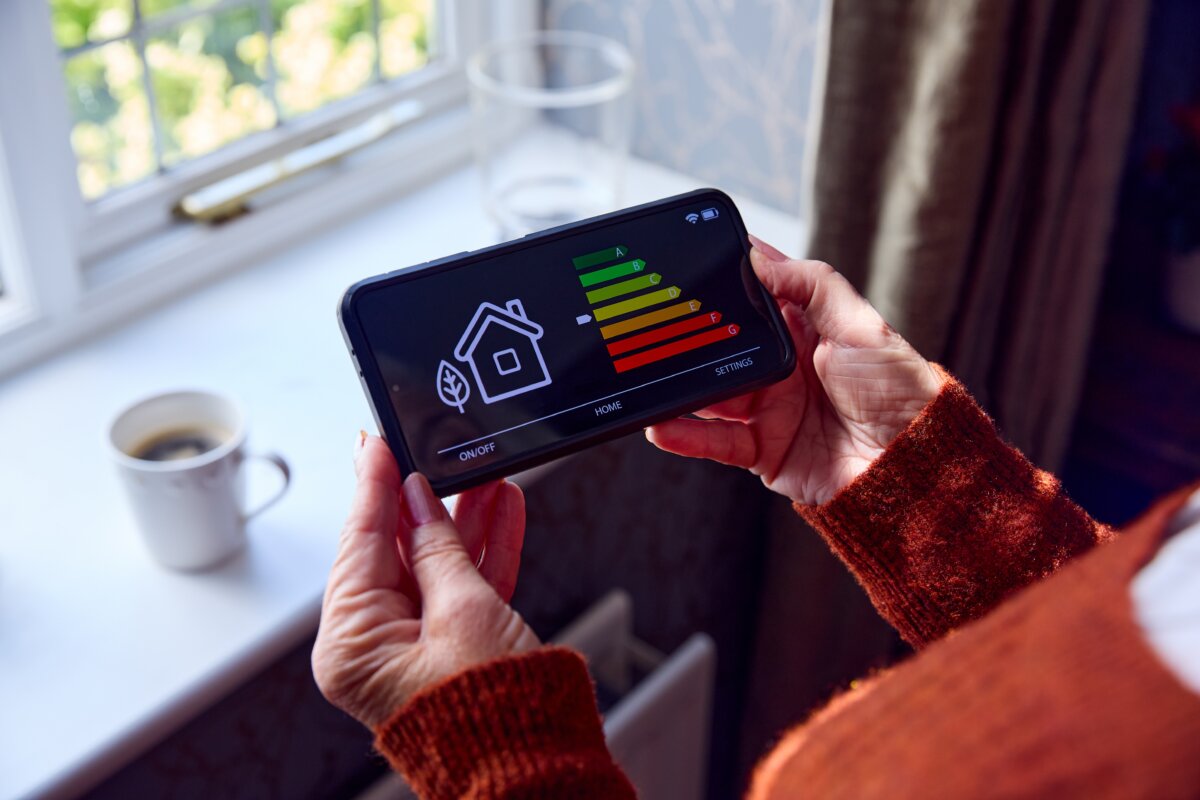
How do I know that I’ve chosen the right smart metering solution?
Like any successful project, you must get the fundamental decisions right, and those decisions are made very early in the planning stage.
Choosing the right smart metering solution isn’t just about the meter itself, it requires balancing technical performance, secure communications, regulatory compliance, business viability, and consumer trust, while also ensuring interoperability and scalability for future grid requirements.
Smart metering is not a bolt-on solution. It’s a “system of systems,” where meters, communication networks, data platforms, cybersecurity measures, and customer engagement tools must work together seamlessly. For maximum impact, smart metering should be designed as a core part of the infrastructure from the outset, rather than being retrofitted later.
To guide decision-making, the evaluation process should focus on three main areas: technical criteria, operational considerations, and strategic validation, ensuring that every component and system aligns with long-term goals.
Look for confirmation of:

Technical criteria
-
Communication technologies: Choose the approach that best fits the deployment environment, coverage needs, latency, and data requirements. Options include PLC, RF mesh, cellular, or hybrid networks. Hybrid architectures can enhance resilience across diverse conditions.
-
End-to-end encryption: Protect data at every stage, from the meter to backend systems, using strong encryption such as AES-128 in LoRaWAN.
-
Secure authentication and tamper detection: Devices should be verified before joining the network and able to detect both physical and digital tampering, maintaining data integrity.
-
Standards compliance: Alignment with industry standards (DLMS/COSEM, IEC 62056, IEEE 2030.5) ensures interoperability, simplifies integration, and supports regulatory requirements over time.
-
Accuracy certifications: Verify adherence to recognised standards such as MID to guarantee measurement precision for billing and monitoring.
-
Flexible upgrade path: Support for remote firmware updates (OTA) enables ongoing security patches, feature enhancements, and adaptation to evolving standards.
Operational considerations
-
Scalability: The system should handle growth from pilot projects to millions of connected devices without performance loss.
-
Multi-utility capability: Supporting electricity, gas, water, and heat within a unified infrastructure simplifies long-term management.
-
Long-term cost models: Evaluate total cost of ownership over 10–20 years, including hardware, connectivity subscriptions, maintenance, and updates.
-
Flexible funding and ownership: Consider CAPEX vs OPEX models, government-backed funding, or service-based delivery approaches.
-
Audit trail and compliance reporting: Ensure the system provides traceability and documentation to meet operational and regulatory requirements.
-
Consumer-facing tools: Mobile apps, portals, and in-home displays should offer real-time insights and support ongoing engagement.
Strategic validation and decision support
-
Proven deployments: Look for references or case studies demonstrating reliable performance at scale in real-world environments.
-
Documented ROI: Assess measurable benefits such as efficiency gains, reduced operational costs, or new revenue opportunities from dynamic tariffs or demand response.
-
Support for dynamic tariffs and demand response: The system should enable flexible pricing and grid-balancing strategies using real-time smart meter data.
-
Consumer education and transparency: Trust and adoption depend on clear communication about data use, pricing, and benefits.
-
Service-level agreements (SLAs) and warranties: Evaluate vendor commitments for uptime, maintenance, and long-term support.
-
Open integration and interoperability: Avoid vendor lock-in by selecting solutions that support open APIs and multi-vendor integration with existing IT and OT systems.
What else are smart meters used for?
Smart meters are no longer just about recording household utilities use. They are central to how utilities, buildings, and industries manage their energy, costs, and sustainability. For example: Public utilities use smart metering technologies to ensure accurate billing; manage demand peaks and troughs; identify, locate and repair leaks or other faults; offer flexible pricing depending on demand; and integrate renewable energy sources directly into a grid or network.
In terms of smart buildings, smart meters enable multi-tenant office or apartment buildings to use smart sub-metering for more equitable and transparent energy costs. This includes integration with building management systems (BMS) to adjust HVAC, lighting, and equipment in real time to continuously optimise energy use and, when applicable, achieve “green” status. This is achievable via the detailed energy efficiency reports that are generated by smart meters in smart buildings.
At an industrial level, energy management via smart meters optimises many processes by using smart metering data that enables factories to continuously hone efficiency processes. Like home usage, peak charges are avoided by redeploying operational staff and energy consuming tasks to less costly off-peak periods.
Many times, smart sub-metering technologies identify energy-hungry or malfunctioning equipment. If such anomalies are detected or predicted, maintenance is scheduled for to the least disruptive period to minimise downtime. Smart metering sensors in industry also help manufacturing facilities to ensure they are operating in a way that complies with industry regulatory standards.
Other real-world applications for industry are rapidly taking their place in the form of smart cities, where smart water metering and smart electricity metering feed into citywide platforms for resource efficiency, leak detection, and environmental monitoring.
Most of us are now seeing EV charging stations becoming increasingly commonplace. Smart meters are used to track overall EV charging demand; support differential tariffs; and prevent localised grid overload. It is not an overstatement to say that microgrids for renewable power sources rely heavily on smart meters for real-time balancing between solar generation, battery storage, and demand.
How Acal BFi supports smart metering integration
Developing a reliable and scalable smart metering system is about more than just selecting individual components. Success involves coordinating sensing, connectivity, data handling, and long-term infrastructure planning into a cohesive and reliable system.
From wireless sensor modules and SAW filters to LoRaWAN, NB-IoT, and LTE-M connectivity, our broad, modular portfolio covers standard measurement and communication needs, while also supporting advanced, multi-sensor, low-power modules for more complex applications.
Backed by our extensive technology network and in-house expertise, we guide teams through every stage – component selection, system-level design, prototyping, integration, and scaling across multi-site deployments – ensuring practical, future-ready solutions. Whether you’re upgrading legacy meters, implementing modern connectivity, or tackling unique smart metering challenges, our engineers provide hands-on support to reduce risk and optimise performance.
Discover how we can support your next smart metering project contact us or explore our technology portfolio for more information.
Conclusion
Smart metering technologies are cornerstones of the digital energy transition. Smart metering transforms utilities from passive providers into active, smart data-driven energy platforms through accurate billing, real-time insights, and dynamic tariffs while supporting renewable integration, demand response, and grid resilience.
In an increasingly complex design landscape, having access to the right tools is only part of the equation. While this solution provides valuable guidance to support decision-making and streamline development, it is the combination of technology and human expertise that delivers the greatest impact. For consumers, industries, and cities, smart metering technologies deliver cost savings, efficiency, and sustainability that is not just a new digital tool, it is the foundation of tomorrow’s smart and sustainable smart energy delivery systems.
Our in-house engineers and technology specialists are on hand to help you go further — from refining specifications to overcoming complex design challenges. By pairing intelligent tools with real-world experience, we ensure you’re not just making informed decisions, but the right ones for your application.
If you’re looking to accelerate your development or need support with a specific project, our team is ready to help.