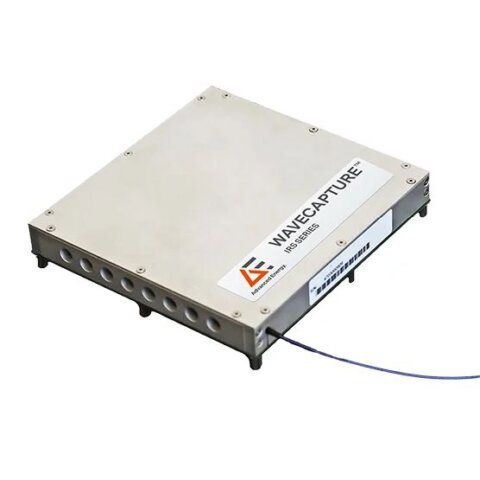
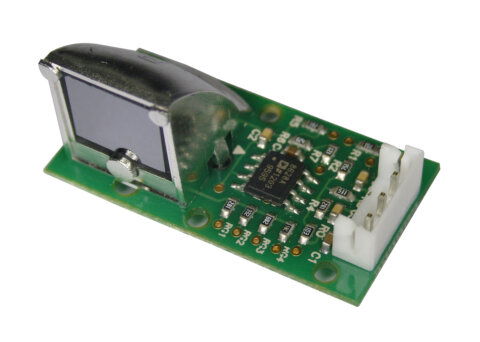
Impac series pyrometers for non-metallic surfaces
- Technology
- Pyrometers
- Partner
- Advanced Energy
Precise temperature monitoring is essential in modern manufacturing, especially for materials like glass, plastics, rubber, wood, or painted surfaces where conventional probes are impractical. Impac infrared pyrometers provide a non-contact solution to measure surface temperature without touching the product, which is ideal for moving objects, delicate materials, or extreme heat environments. The Impac series encompasses several models tailored for non-metal surfaces, offering broad coverage from sub-zero temperatures up to high heat applications. Each model is optimised for a specific use-case – from compact two-wire units that simplify installation to modular multi-sensor systems that can monitor multiple points simultaneously. All instruments share a focus on high accuracy and industrial robustness, using digital signal processing to ensure reliable readings even in harsh production conditions. By configuring parameters like emissivity and response time, engineers can adapt these pyrometers to diverse materials and processes, achieving consistent quality control across applications such as plastic extrusion, glass manufacturing, food processing, and asphalt production.
Range features
A high level overview of what this range offers
- Non-contact measurement – Allows temperature sensing of moving or hard-to-reach surfaces without contamination or interference.
- High accuracy digital output – Digitally linearised signal ensures precise temperature readings for reliable quality control.
- Small spot size optics – Capable of measuring very small targets (down to ~1 mm) – useful for detailed temperature profiling of tiny or thin objects.
- Rugged, compact design – Durable metal housings and miniature sensor heads enable installation in tight spaces and harsh environments (some models withstand up to 180 °C ambient without cooling).
- Analog and digital outputs – Choose between simple 4–20 mA two-wire outputs or advanced RS232/RS485 interfaces for easy integration with PLCs and for remote monitoring/data logging.
- Modular multi-sensor option – A multi-head configuration (available in the 600 series) lets you connect up to eight sensor heads to one controller, providing multi-point measurement in one system.
- Fast response time – High-speed models measure rapid temperature changes with response times as short as 10 ms, making them suitable for dynamic processes.
- Configurable settings – Adjustable emissivity, sub-temperature ranges, and exposure time allow optimisation for different materials and process conditions, improving measurement accuracy.
Downloads
for Impac series pyrometers for non-metallic surfaces
What’s in this range?
All the variants in the range and a comparison of what they offer
| Specification | Impac IN 5 Series | Impac IN 5 plus Series | Impac 300 Series | Impac 500 Series | Impac 600 Series |
|---|---|---|---|---|---|
Operational temp. range (°C) | –32 to 900 (variations) | –32 to 900 °C | –20 to 600 °C | –40 to 700 °C | –40 to 2500 °C (multiple ranges) |
Spectral range (µm) | 8 to 14 | 8 to 14 | 8 to 14 | 8 to 14 | 0.7 to 14 (multiple bands) |
Measurement uncertainty | ±0.6% of reading or ±1 °C | ±0.6% of reading or ±2 °C | ±1.5% of full range (°C) | ±0.8% of reading or ±1 °C | ±0.5% of reading or ±0.8 °C |
Optics | Fixed focus | Fixed focus | Fixed focus | Fixed focus | Fixed focus |
Field of view (distance : spot) | 50:1 (minimum) | 100:1 (minimum) | 15:1 (minimum) | 2:1 or 10:1 (models) | 70:1 (minimum) |
Alignment aid | None | Laser targeting | None | None | None |
Output signal | 4 to 20 mA (2-wire) | 0 or 4–20 mA (linear) and digital RS232/485 | 0/4–20 mA | 0/4–20 mA | 0/4–20 mA (with optional Profinet) |
Response time (t90) | 80 ms | 80 ms | 300 ms | 180 ms | Varies by sensor head (fast as 10 ms) |
Note: All models are CE compliant for electromagnetic immunity and are built in compact, industrial-grade housings (e.g. stainless steel sensor heads and IP65 protection on certain models).
FAQs
for Impac series pyrometers for non-metallic surfaces
The Impac range includes several models, each tailored to different needs. For example, the IN 5 series is a simple two-wire pyrometer with analog 4–20 mA output, whereas the IN 5 plus series adds digital interfaces and a laser sight for aiming. The 300 series is very compact for tight spaces and has a limited temperature range (up to 600 °C), while the 500 series features a separate miniature sensor head for easy mounting in hot areas (up to 180 °C ambient). At the high end, the 600 series is a modular system that can support multiple sensor heads and covers a very wide temperature range (with various spectral sensors for different materials).
Integration is straightforward since all models provide standard output signals. The pyrometers can output a linear analog 4–20 mA signal (suitable for common PLC analog inputs) and some models also offer a digital RS-232/RS-485 interface for serial communication. For the two-wire models, the 4–20 mA loop also powers the device, simplifying wiring. In digital-interface models, you can connect the sensor to a PC or controller to log data and remotely adjust settings. Always ensure your data acquisition or PLC input is configured for the appropriate signal type and range.
Yes. The Impac pyrometers are designed for precise spot measurements and fast response, which makes them suitable for small or moving targets. They have small spot size optics (distance-to-spot ratios up to 100:1 or better) that can measure tiny areas (on the order of a few millimetres or even below 1 mm with the right model and distance). For moving targets or rapidly changing temperatures, certain models (like the high-speed IN 5-H plus) can capture measurements with a response time as short as 10 ms. This means even fast-moving production lines or quick thermal events can be monitored with minimal blur or lag in the temperature reading.
Each Impac pyrometer allows the user to adjust the emissivity setting to match the material being measured. Non-metallic surfaces (like plastics, ceramics, wood, etc.) often have high and relatively constant emissivity, making them easier to measure. However, if you are measuring a coated or painted metal, you can tune the emissivity value on the device or via software to ensure the reading is accurate. The devices support emissivity adjustment (typically from around 0.40 to 1.00) so you can calibrate the instrument to the actual surface characteristics. In practice, you might determine the correct emissivity by comparing the pyrometer reading to a known temperature or using a reference emissivity table for the material.
Absolutely. The Impac series is built for industrial use and features robust construction. Many models have stainless steel housings or separate sensor heads that can tolerate high ambient temperatures. For instance, the IN 500 series sensor heads can operate in environments up to +180 °C without needing cooling, which is ideal for mounting near furnaces or ovens. All models are designed to handle typical factory conditions such as dust, vibrations, and electrical noise. They carry appropriate industrial ratings (like IP65 sealing on certain parts and compliance with EMC standards), ensuring reliable operation in harsh conditions. It’s still recommended to protect the lens from heavy dust or splashes (using optional protective enclosures or air purging accessories if needed) to maintain long-term performance.
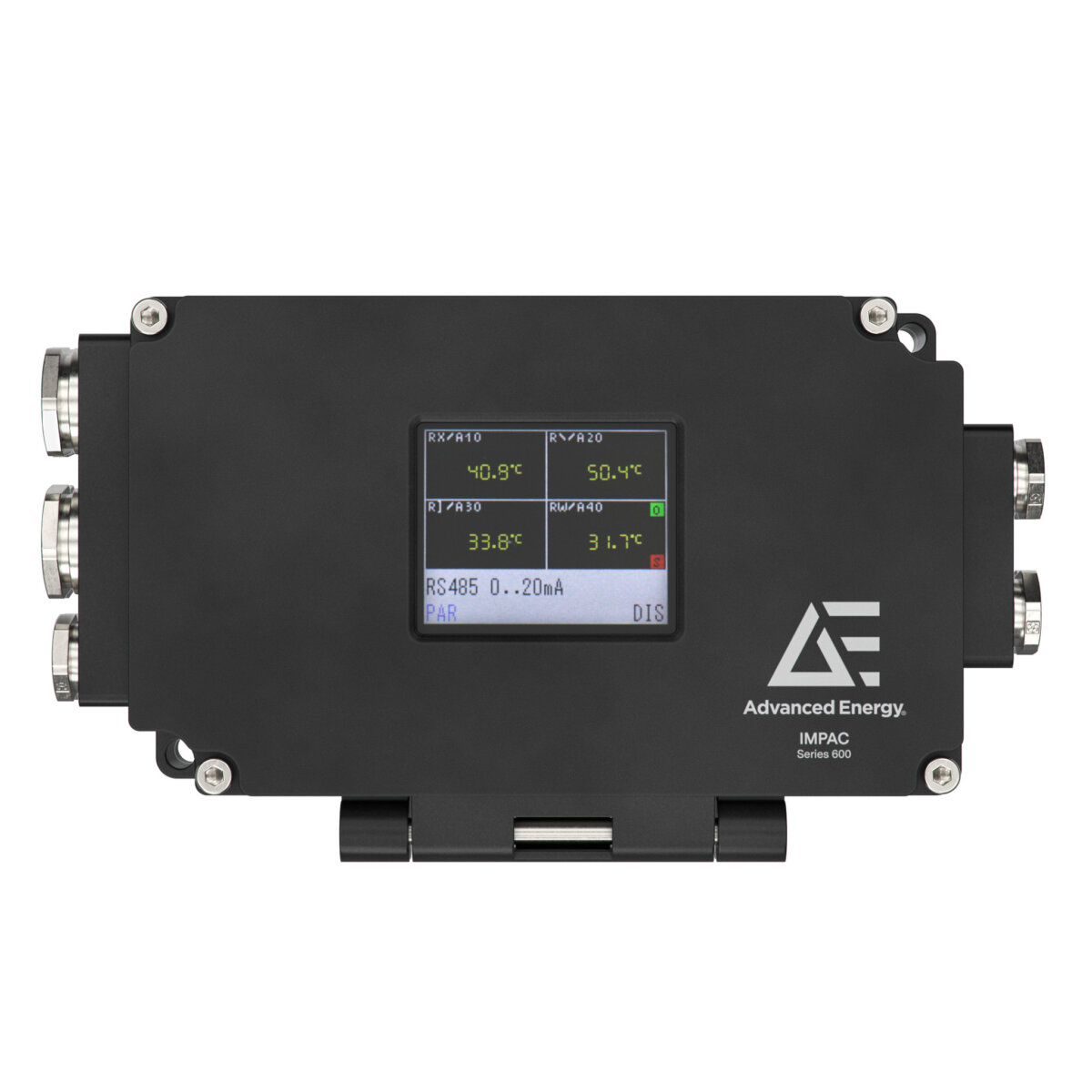
Yes, the Impac 600 series is specifically designed for multi-point measurement. Its modular architecture uses a central converter box to which you can attach up to 8 sensor heads (either directly or via multi-sensor junction boxes). This allows a single system to measure several locations simultaneously, which is very useful for processes like large-area web materials or multiple heating zones. Each sensor head can be of a different type (for example, one for a lower temperature range and another for a higher range), giving you flexibility within one integrated system. The readings from all sensors are aggregated in the converter electronics, and you can interface with them collectively, simplifying the installation and data collection for multi-point monitoring.
The Impac pyrometers are solid-state devices with no moving parts, so routine maintenance is minimal. It’s important to keep the optical lens or window clean and free of debris to ensure accurate readings – periodic gentle cleaning might be needed in dusty or smoky environments. Regarding calibration, these pyrometers come pre-calibrated from the factory. Over time (typically on the scale of 1–2 years, depending on usage and company quality protocols), you may want to verify the calibration against a blackbody reference. If needed, they can be recalibrated either in-house (using a calibration source) or by sending them to a qualified service center. Calibration ensures that the measurement accuracy stays within specifications for critical quality control processes.