FR50MxNR RedLink Versatile Link Receiver (DC–50MBd)
- Technology
- Pressure transducers and transmitters
- Partner
- Firecomms
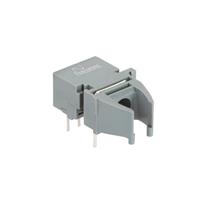
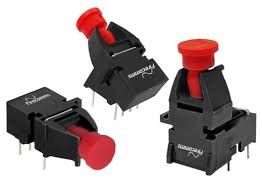
The FR50MxNR RedLink Versatile Link receiver is a fully integrated fibre optic receiver module designed for reliable data communication up to 50 MBd. Housed in a miniature Versatile Link compatible package, this receiver can connect to standard plastic optical fibre (POF) or 200 µm PCS fibre cables for robust data links. It features non-inverting TTL logic output and supports both 3.3 V and 5 V supply voltages, simplifying integration into modern or legacy control systems.
Engineered for industrial applications, the FR50M series receiver operates across a wide temperature range (-40 °C to +85 °C) and offers excellent EMI immunity thanks to its optical isolation. Typical use cases include factory automation networks, renewable energy systems (like wind turbine controls), railway and transportation electronics, and any high-noise environment where reliable, galvanically isolated data transfer is critical.
With its drop-in compatibility with Broadcom Versatile Link connectors and horizontal or vertical mounting variants, the FR50MxNR receiver gives engineers a flexible, high-performance solution for optical data links in demanding settings.
Range features
A high level overview of what this range offers
- DC–50 MBd data rate – Supports everything from DC signals up to 50 megabaud, enabling high-speed communication for fast control networks.
- Dual 3.3 V/5 V supply operation – Accepts both 5 V and 3.3 V power (±10% tolerance), allowing easy use in new designs or as upgrades in legacy 5 V systems without extra regulators.
- Non-inverting TTL output – Provides a push-pull CMOS output that is logic-high when light is detected, simplifying interface to standard digital inputs (no external pull-up resistors needed).
- Horizontal or vertical package options – Available in both horizontal (FR50MHNR) and vertical (FR50MVNR) orientations, giving mechanical design flexibility for PCB layout and fibre cable routing.
- Versatile Link compatible – Uses the industry-standard Versatile Link fibre optic connector system, making it a drop-in replacement for existing Versatile Link receiver modules and ensuring easy mating with common POF cable plugs.
- High optical sensitivity – Detects optical signals down to approximately -22 dBm power, supporting link lengths of tens of metres with quality POF and ensuring reliable data reception even with low transmitter output or attenuation.
- Industrial temperature range – Specified for -40 °C to +85 °C operation, guaranteeing stable performance in extreme climates, outdoor equipment, or heat-intensive industrial environments.
- EMI and isolation benefits – Optical fibre coupling provides complete galvanic isolation and is immune to electromagnetic interference, improving system safety and signal integrity in high-voltage or noisy electrical environments.
- Rugged and compliant design – Housed in a flame-retardant UL 94 V-0 rated plastic enclosure (black colour for receiver) and fully RoHS compliant, making it safe for use in industrial control cabinets and compliant with global environmental standards.
- Low distortion, fast response – The integrated photodiode and receiver IC offer minimal pulse width distortion, ensuring that even burst-mode or high-speed data signals are delivered with integrity and accurate timing.
Downloads
for FR50MxNR RedLink Versatile Link Receiver (DC–50MBd)
What’s in this range?
All the variants in the range and a comparison of what they offer
| Parameter | Value |
|---|---|
Part Numbers (Non-inverting) | FR50MHNR (Horizontal mount), FR50MVNR (Vertical mount) |
Optical Data Rate | DC to 50 MBd (Up to ~50 Mbps) |
Supported Fibre Types | 1 mm Plastic Optical Fibre (POF), 200 µm PCS fibre |
Peak Wavelength Sensitivity | ~650 nm (visible red light) |
Optical Sensitivity | ≈ -22 dBm minimum receivable power |
Supply Voltage Range | 2.97 V – 5.5 V (compatible with 3.3 V or 5 V logic) |
Supply Current (typ.) | ~16 mA (@ 5 V supply, receiving at 50 MBd) |
Output Logic Type | TTL/CMOS, push-pull output (non-inverting polarity) |
Orientation Options | Horizontal or Vertical housing (Versatile Link style) |
Operating Temperature | -40 °C to +85 °C (industrial range) |
Housing Material | Plastic (UL 94 V-0 flame retardant), black (receiver) |
Connector Interface | Versatile Link compatible simplex fibre plug |
Isolation | Galvanic isolation provided by optical link |
RoHS / REACH Compliance | Yes (RoHS compliant materials) |
Note: The FR50M series receivers are available in both Non-Inverting (NR) and Inverting (IR) output versions. This datasheet and product range FR50MxNR specifically cover the non-inverting variants. Inverting models (FR50MxIR) have identical optical/electrical specs but output the inverted logic signal.
FAQs
for FR50MxNR RedLink Versatile Link Receiver (DC–50MBd)
50 MBd stands for 50 Megabaud, which is a signaling rate of 50 million symbols per second. In the case of a simple on/off optical link, 1 baud typically corresponds to 1 bit per second, so 50 MBd is effectively similar to 50 Mbps data rate. The FR50M receiver can reliably handle data streams up to this rate, making it suitable for fast serial communications and control protocols.
The FR50M series is designed for dual-voltage operation. It accepts supply voltages from about 3.0 V up to 5.5 V, which means you can power it with 3.3 V or 5 V (±10% tolerance) without any issue. The output stage is TTL/CMOS compatible at whichever logic level you choose, so it will interface directly with both 3.3 V and 5 V digital systems.
The horizontal (FR50MHNR) and vertical (FR50MVNR) versions are electrically and optically identical; the only difference is the mechanical orientation of the fibre optic port. The horizontal version has the fibre plug entry on the side, parallel to the PCB, whereas the vertical version’s fibre entry is on the top, perpendicular to the PCB. This choice allows you to select the package that best fits your board layout and enclosure – e.g., use the vertical version if you need the fibre to plug in from above, or the horizontal if it’s coming in from the side. Both versions mount into the PCB via through-hole pins and offer the same performance.
Yes. The RedLink series was designed as a drop-in compatible solution for the Versatile Link system. The FR50M receiver’s housing and fiber connector interface conform to the Versatile Link standard dimensions. This means you can use the same plastic fibre plugs (latching or non-latching simplex connectors) that were used with legacy HFBR-series devices. In many cases, you can replace an older HFBR receiver with an FR50M series unit on an existing board, gaining higher speed (50 MBd support) without mechanical changes.
The FR50M receiver works with 1 mm Plastic Optical Fibre (POF) as well as 200 µm Polymer Clad Silica (PCS) fibre, using Versatile Link style connectors. The maximum link distance depends on your transmitter’s output power and the fibre’s attenuation. With a typical RedLink transmitter (650 nm RCLED) and quality POF, you can achieve on the order of 50 metres or more at full 50 MBd speed, given the receiver’s sensitivity around -22 dBm. Longer distances are possible at lower data rates or with lower loss fibre. Always check the link budget: the FR50M’s high sensitivity helps ensure a robust link across the distances common in industrial environments (e.g. tens of metres within a machine or between control cabinets).
“Non-inverting” means the digital output signal has the same polarity as the optical input. In other words, when light is present at the receiver (representing a logical “1”), the FR50MxNR’s output will drive logically high. Conversely, no light (logical “0”) results in a low output. This is intuitive for most applications. Firecomms also offers an inverting version (FR50MxIR), where the output logic is flipped (output goes low when light is on). The non-inverting (NR) version is generally preferred for simplicity, but the IR variant can be useful if your system logic or other components require an inverted signal.
The FR50M RedLink receiver is very straightforward to use. It is a fully self-contained module with an integrated photodiode and amplifier IC. You typically just need to provide it with a stable power supply (3.3 V or 5 V) and a good PCB layout (including a decoupling capacitor close to its supply pins for stability). The output of the module can be connected directly to your microcontroller, FPGA or interface circuit. There’s no need for external transimpedance amplifiers or biasing networks – all of that is built-in. The module is factory calibrated and will operate correctly out-of-the-box. Just ensure to follow the recommended PCB footprint and mounting instructions provided in the datasheet for optimal optical alignment and signal integrity.
Optical fibre links provide galvanic isolation and are immune to electromagnetic interference. In an industrial environment with lots of electrical noise (from motors, inverters, radio equipment, etc.), using a POF link ensures that your data communication is not affected by EMI, and it won’t create ground loops between equipment. The FR50M receiver, paired with its transmitter, effectively acts as an isolated data channel – there is no electrical conduction between the two ends, which protects sensitive control electronics from voltage spikes or differences in ground potential. Additionally, plastic optical fibre is robust, lightweight, and safe (it doesn’t conduct electricity and is not prone to spark), which is beneficial in hazardous or high-voltage areas. Overall, these receivers let you implement a high-speed, noise-immune communication line with the simplicity of plugging in a fibre cable, which is a big advantage over copper in many cases.
The FR50M series is designed for continuous data transmission across the full DC to 50 MBd range. “DC to 50 MBd” means it can handle anything from a steady DC level (0 Hz) up to 50 million bits per second, so both constant streams and bursty data are fine. The receiver has ultra-low pulse width distortion, which means it preserves the shape and timing of pulses accurately even in burst-mode communications (where rapid sequences of on/off signals may have varying pulse widths). This makes it suitable for protocols that send bursts of data or require precise timing. Whether you are sending a continuous serial stream (like a fast UART or proprietary protocol) or packets of data intermittently, the FR50MxNR will handle it reliably.
The FR50M optical receiver module is built with industrial safety and compliance in mind. It uses a UL 94 V-0 rated plastic housing, meaning the material is flame-retardant and self-extinguishing – important for meeting safety codes in industrial electronics. The device is also RoHS compliant, so it contains no restricted hazardous substances, which is required in many regions. While fibre optic components like this do not have a functional “safety” certification per se (as they are not a complete system on their own), you can use them within systems that need to meet standards for insulation and isolation. The optical link can help your design meet reinforced insulation requirements in standards such as IEC 61010 or IEC 61800 for drives, since the transmitter and receiver have no electrical connection. Always refer to the datasheet for details on creepage/clearance or any agency approvals, but generally the FR50M series is intended to be a reliable component in systems that must comply with global industrial standards.