Uniblitz Optical Shutters
- Technology
- Galvanometer scanners and shutters
- Partner
- Vincent Associates
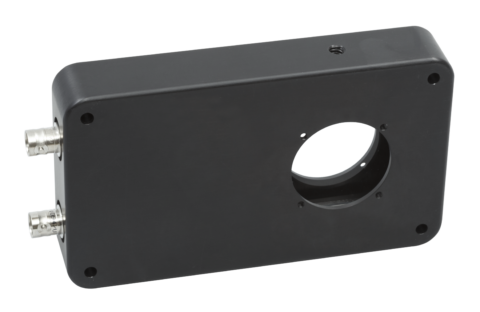
The application areas of these fast Uniblitz shutters are manifold and range from the modulation of light in general and laser radiation, in particular to exposure protection of detectors or camera sensors and the blocking of X-rays.
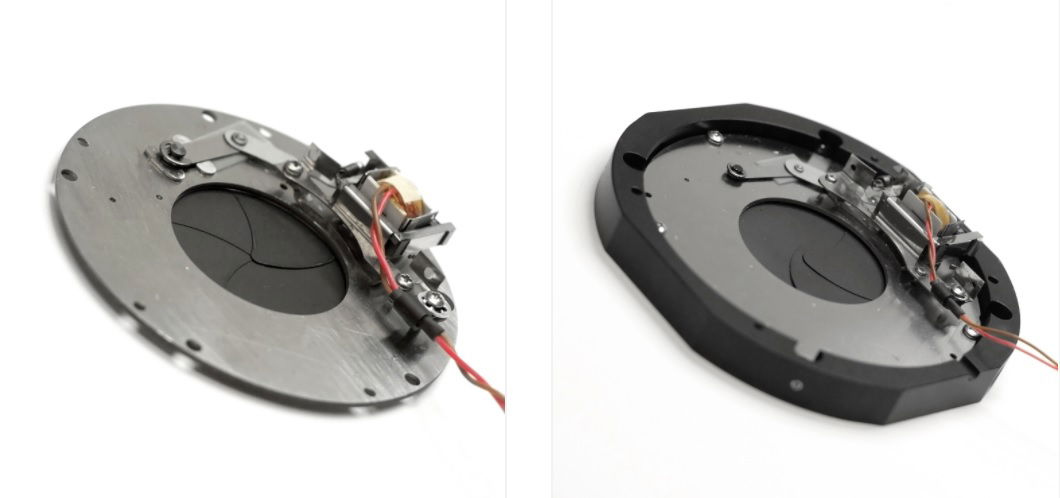
The LS and VS Uniblitz series are optimised for high shutter speeds, so that minimum window times can be used for laser applications or short exposure times for detectors and cameras. A large selection of materials for the shutter blades allows use with intensive laser power from deep UV to infrared. In addition, special PtIr blades are available for blocking X-rays. The Uniblitz shutters can be used both under normal conditions and with special encapsulation of the drive coil in a vacuum. For fail-safe use, the shutters can be divided into unistable and bistable shutters. The unistable versions, which include the types LS, VS, FS, and CS, close passively by means of a return spring, whereby the bistable shutters each require an electrical pulse for closing and opening and do not need electric power to hold in position.
Range features
A high level overview of what this range offers
- Fast timing on opening provides unique min. total window times of LS and VS Uniblitz shutter series
- Compact versions for OEM applications
- Special blade materials to withstand high laser power up to 10 W/mm²
- Apertures between 2mm and up to 150mm
- Opens and closes centrically
- High attenuation up to 10 – 6
- Options for use in vacuum
- Innovative platinum-iridium (PtIr) blade design allows beam extinction of 90% up to 30 keV X-ray energy
- Uniblitz shutters available with and without housing for OEM applications
- The special design of ES6B shutters guarantees 25 Mio cycles lifetime
What’s in this range?
All the variants in the range and a comparison of what they offer
| Series | Apertures | Blade material | Min. total window time* | Uniblitz drivers |
|---|---|---|---|---|
CS | 25, 35, 45, 65 und 90 mm | Teflon, AlMgF2 | 29, 53, 50, 119 und 116 ms | VCM-D1, VED24, D880C* |
DS | 10, 25 und 35 mm | Teflon, AlMgF2 | 15, 51 und 66 ms | VED24 |
ES | 6 mm | Teflon, AlMgF2, AlSiO | 13.2 ms | VED24 |
FS | 6, 25 und 35 mm | Carbon* | 46 und 52 ms | Direkt über 5 V/425 mA |
LS | 2, 3 und 6 mm | Teflon, AlMgF2, AlSiO | 1.5, 1.9 und 2.3 ms | VCM-D1, VED24, D880C* |
MS | 150 mm | Carbon* | Ca. 400 ms | Direkt über 12 V/2 A |
NS | 25, 35, 45 und 65 mm | Teflon, AlMgF2 | 16, 31, 36.5 und 79 ms | VED24, ED12DSS*, VDM1000 |
VS | 14, 25 und 35 mm | Teflon, AlMgF2 | 6.5, 10 und 30 ms | VCM-D1, VED24, D880C* |
XRS | 6, 14 und 25 mm | PtIr (for X-ray) | 9, 35 und 30 | VCM-D1, VED24, D880C* |
FAQs
for Uniblitz Optical Shutters
An optical shutter is a device that physically blocks or releases light in a controlled way. It is used to create repeatable exposure windows, protect sensors, and gate illumination or laser beams when electronic exposure control alone is not sufficient.
You typically need a shutter when you must physically interrupt the light path, for example:
- Continuous light sources or CW lasers where precise exposure windows are required
- Preventing smear in systems without an effective electronic shutter
- Protecting sensors/optics from stray light or contamination
- Safety interlocks requiring fast beam interruption
Uniblitz shutters are commonly used for:
- Non-uniformity correction (NUC) and black-reference calibration
- Exposure control in imaging and metrology
- Light-source selection (multi-source or fibre switching)
- Sensor protection in harsh environments
- Laser beam gating and pulse selection
- Laser-safety interlock shut-off applications
Selection is usually driven by five parameters:
- Aperture (clear opening)
- Speed / timing requirements
- Duty cycle / lifetime (how often it will actuate)
- Operating mode (bi-stable vs uni-stable)
- Environment (vacuum, IR, X-ray, contamination risk) If you share these five details, we can recommend the most suitable series quickly.
A practical starting point is application-led selection:
- Laser systems: LS, ES6, DSS
- Laser-safety / interlock shut-off: LS, ES6, DSS
- X-ray imaging: XRS
- Infrared (IR) imaging: DSS, NS
- Microscopy: VS, NS
- Imaging systems / cameras: VS, CS, DSS, FS
- Large apertures: CS65, CS90HS, MS150B
- Vacuum applications: CS, FS, VS, LS, NS35B, NS45B, XRS
- Iris control: A125 Auto Iris For best results, match the shortlist to aperture, timing, and environment.
- Bi-stable (B): holds its open/closed position without power. Useful for low power/heat and for systems that must maintain position during power loss.
- Uni-stable (S): returns to a defined rest position when unpowered and requires power to hold the active state.
Depending on the series, Uniblitz shutters typically cover clear apertures from 2 mm up to 150 mm. As a rule, choosing the smallest suitable aperture can improve speed, stability, and mechanical footprint.
Uniblitz shutters can be supplied:
- With or without housings depending on mechanical protection needs
- With electronic synchronisation / feedback for timing-critical systems
- With encapsulated coils for vacuum environments
- With blade options (for example black Teflon®) depending on optical and environmental requirements
Yes. Many configurations support sync/feedback outputs (for example an “open” signal), helping you align shutter timing with camera triggers, illumination timing, and system interlocks.
Most shutters require a dedicated driver for correct timing and actuation. Typical pairing:
- FS series: no external driver required (5 VDC)
- VED24: supports uni-stable and bi-stable shutters
- VCM-D1 / D880C: CS, VS, LS, XRS
- ED12DSS: NS, DSS, ES6
- AIC10: A125 Auto Iris If you provide the shutter series (or your application), we can confirm the correct driver and setup.
Yes. Customisation can include blade coatings, mechanical modifications, or fully tailored designs for specialised requirements such as timing, aperture, environment, or mounting constraints. Provide your application details and we will advise the best route.