DFI X6-MTH-ORN edge AI box
- Technology
- AI modules
- Partner
- DFi
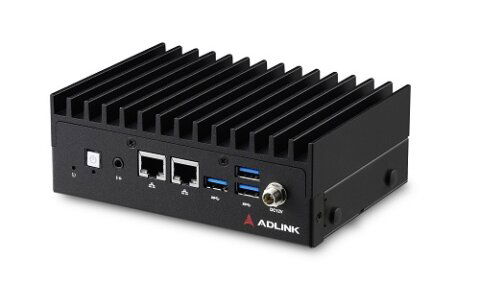
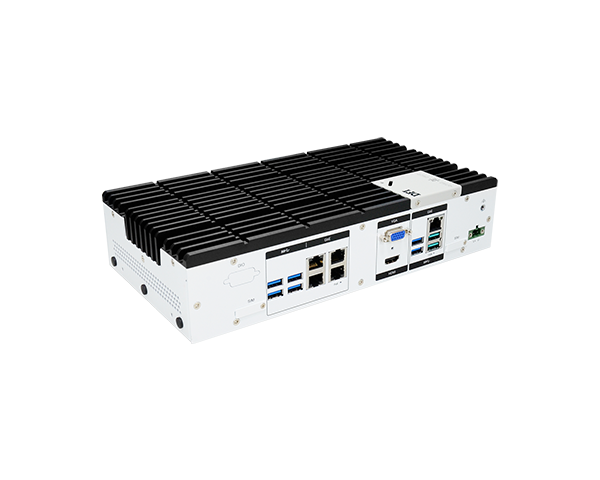
The X6-MTH-ORN Edge AI Box is an advanced AI computing platform engineered for demanding edge applications. By combining a Jetson Orin NX AI engine with an Intel Core Ultra CPU, this fanless box PC provides a unique balance of high-speed AI inference and general-purpose computing in one device. Designed for industrial use, it operates reliably from -20°C to 60°C and withstands shock and vibration, making it suitable for factories, transportation systems, healthcare equipment, and smart city infrastructure. Its rugged, cable-free design and wide 9–36V DC power input allow deployment in vehicles, remote sites, and mission-critical environments.
With extensive I/O — including multiple Gigabit Ethernet, USB 3.2, serial COM, CAN bus, audio, and display outputs — the X6-MTH-ORN easily interfaces with cameras, sensors, and displays for AI-driven tasks such as machine vision, real-time analytics, and intelligent control. Integrated out-of-band remote management (OOB) capabilities further enable engineers to perform remote BIOS updates, power cycling, and system monitoring, simplifying maintenance and reducing downtime. In essence, the X6-MTH-ORN offers system integrators a versatile, high-performance Edge AI computer that accelerates development of next-generation AIoT solutions while lowering total cost of ownership.
Range features
A high level overview of what this range offers
- Hybrid AI architecture (Jetson Orin NX + Intel Core Ultra) – Delivers up to 100 TOPS AI compute alongside a powerful multi-core CPU, enabling real-time machine learning inference and complex decision-making on the edge without cloud latency.
- Fanless, industrial design – Rugged aluminium chassis with passive cooling and wide temperature range (-20°C to 60°C) ensures reliable 24/7 operation in harsh, dust-prone or vibration-heavy environments, with zero fan maintenance.
- Out-of-Band remote management – Built-in OOB module supports remote power control, BIOS updates and system health monitoring over network, allowing technicians to troubleshoot and update the box PC from anywhere, minimising on-site service visits.
- Quad display support – Capable of driving up to four independent high-resolution displays (via 3 DisplayPort outputs on an optional MXM GPU card and 1 HDMI) for advanced visualization, multi-screen control panels or digital signage in AI vision applications.
- Rich I/O connectivity – 8 USB ports (USB 3.x and USB 2.0), 6 GbE LAN ports (including optional PoE), dual serial ports (RS-232/422/485), CAN bus, audio line-out, plus VGA and HDMI outputs provide extensive interfacing with cameras, sensors, legacy equipment and network devices in diverse industrial setups.
- Flexible expansion – Four M.2 slots (E-key, B-key, and M-key) allow easy addition of wireless 5G/LTE modems (with SIM slot), Wi-Fi 6E modules, NVMe/SATA SSD storage or other accelerators. This modular expandability lets you tailor the system to specific project needs and future-proof your investment.
- Optional MXM GPU slot – An MXM 3.1 Type A/B socket (60W) is available for adding a dedicated GPU or accelerator, boosting graphics and AI performance further or enabling training workloads on the same platform.
- Wide-range DC power input – Accepts 9–36V DC via a durable 2-pin terminal block, making it suitable for in-vehicle use (e.g. AGVs, autonomous machines) and sites with unstable power. Built-in surge protection and a rechargeable RTC battery safeguard against power fluctuations.
- Standards compliance – Certified to CE/FCC Class A, UL 62368-1, UKCA and RoHS standards for safety and EMI. The system’s IP20-rated enclosure and tested shock/vibration resistance (IEC 60068) underline its ability to operate reliably in industrial and automotive environments.
Downloads
for DFI X6-MTH-ORN edge AI box
What’s in this range?
All the variants in the range and a comparison of what they offer
| Specification | Details |
|---|---|
Processor (CPU) | Intel® Core™ Ultra 7 155U (2 P-cores @ 1.7 GHz + 8 E-cores @ 1.2 GHz, 12 MB cache, 15 W TDP) – or – Intel® Core™ Ultra 5 125U (2 P-cores @ 1.3 GHz + 8 E-cores @ 0.8 GHz, 12 MB cache, 15 W) |
AI Accelerator (GPU) | NVIDIA Jetson Orin NX module (up to 100 TOPS AI performance) – or optionally – Jetson Orin Nano (up to 40 TOPS). Optional MXM 3.1 Type A/B slot for additional GPU (supports 3 DP + 1 HDMI outputs). |
Memory | 2× 260-pin SO-DIMM slots, DDR5 5600 MHz, dual-channel, up to 64 GB RAM. |
Graphics (Integrated) | Intel Iris Xe Graphics (from Core Ultra CPU) supporting DirectX 12, OpenGL 4.6, Vulkan 1.2; hardware video decode/encode for HEVC (H.265), AVC (H.264), VP9, AV1, MJPEG. |
Storage | Onboard SSD (optional) 64 GB, 128 GB, 256 GB, 512 GB or 1 TB (factory-installed on COM Express module by request).{{BR}}1× M.2 2242/2280 M-key slot (PCIe x4) on Jetson module for NVMe SSD.{{BR}}1× Additional M.2 2242/2280 M-key slot (PCIe Gen3 x1 / SATA3) on baseboard for SATA or NVMe.{{BR}}Optional dual 2.5” SATA drive kit (supports RAID 0/1). |
Expansion Slots | 1× M.2 E-key 2230 (PCIe x1 + USB 2.0) for Wi-Fi 6E module.{{BR}}1× M.2 B-key 3042/3052 (USB 3.0 + PCIe x2) for 4G/5G cellular modem (Nano-SIM slot onboard).{{BR}}2× M.2 M-key 2242/2280 for SSD/accelerator (as described in Storage).{{BR}}1× M.2 A-key reserved for optional OOB management module (for remote management features). |
Ethernet LAN | 6× Gigabit Ethernet (RJ45) total: 1 from COM Express module, 5 via Intel i210 controllers (organized as 1 single + 2 dual-stacked ports).{{BR}}Optional: 2× PoE-enabled LAN ports (15 W IEEE 802.3at each) via add-on module.{{BR}}Antennas: 6× external antenna ports (for Wi-Fi/4G/5G modules). |
USB Ports | 8× USB total: 4× USB 3.2 Gen1/Gen2 Type-A ports (front panel) and 2× USB 2.0 ports (via internal connection or Type 10 COMe), plus 1× Micro-USB 2.0 (service port on rear, from Jetson module). |
Serial & CAN | 1× RS-232 (DB9 male) on rear.{{BR}}1× Combo RS-232/422/485 + CAN bus (DB9) on rear. (The combo port can be configured for serial or CAN/GPIO use.) |
Audio | Line-out or audio output support (via internal header or optional add-on, for industrial sound applications). |
Video Outputs | 1× VGA (15-pin D-sub) – via COM Express module (through eDP-to-VGA converter).{{BR}}1× HDMI 2.0 (front panel) – via COM Express module (eDP-to-HDMI).{{BR}}2× HDMI 2.0 (rear panel) – one from Jetson Orin, one from COMe module.{{BR}}(Up to 4 independent displays when combined with optional MXM module’s 3 DP outputs.) |
Remote Management | Supports out-of-band (OOB) management module for remote monitoring, system on/off control, and BIOS update via dedicated interface (M.2 A-key). |
Security | TPM 2.0 hardware security module onboard (on COM Express module) for secure boot and encryption. |
Power Supply | 9 V – 36 V DC input (wide range) via 2-pin terminal block.{{BR}}Internal UPS battery header for RTC (rechargeable coin cell).{{BR}}Power consumption ~ 15–60 W typical (depending on CPU/GPU load). |
Mounting Options | Wall-mount brackets included.{{BR}}Optional DIN-rail mount kit.{{BR}}Orientation: horizontal or vertical installation supported. |
Construction | Rugged fanless enclosure – black aluminum top heatsink with SGCC steel chassis. Ventless design protects against dust ingress. |
Dimensions (W×H×D) | 250 × 65 × 150 mm (9.84” × 2.56” × 5.91”).{{BR}}Compact footprint for easy installation in tight spaces. |
Weight | < 3.5 kg (approximately 7.7 lbs). |
Operating Temp. | -20 °C to 60 °C (de-rated beyond 50 °C depending on configuration/load). |
Storage Temp. | -40 °C to 85 °C. |
Humidity | 5% to 95% RH, non-condensing. |
Shock Resistance | IEC 60068-2-27 compliant.{{BR}}Operational: 3 G, 11 ms half-sine shock pulses (18 shocks total).{{BR}}Non-operational: 5 G, 11 ms (18 shocks). |
Vibration | IEC 60068-2-64 / -2-6 compliant.{{BR}}Operational: 2 Grms random vibration, 5–500 Hz, 30 min.{{BR}}Non-operational: 3 Grms sine sweep, 10–500 Hz, 30 min. |
Compliance | CE, FCC Class A, UL 62368-1, UKCA, RoHS certified.{{BR}}(EMC and safety standards for industrial environments.) |
Operating Systems | Microsoft Windows 10 IoT Enterprise, Windows 11, and Linux Ubuntu 22.04 LTS supported. |
FAQs
for DFI X6-MTH-ORN edge AI box
The hybrid architecture leverages the strengths of both processors. The Intel Core Ultra CPU handles general computing tasks and multi-threaded workloads, while the NVIDIA Jetson Orin NX provides a powerful AI accelerator for deep learning inference and GPU-intensive tasks. Working together, they enable the X6-MTH-ORN to perform complex AI computations (up to 100 TOPS) in real time and also manage control logic, networking, and storage tasks efficiently. This means you get a single system that can both “think” (AI processing) and “act” (run applications and OS services), ideal for sophisticated edge AI solutions.
The X6-MTH-ORN supports out-of-band (OOB) remote management, which allows you to monitor and control the system even if the primary OS is down. Using the OOB module, you can power the system on/off, perform remote BIOS updates, and check hardware health via an Ethernet connection. This feature is extremely useful for devices installed in hard-to-reach or unmanned locations, as it lets technicians troubleshoot issues, update firmware, or reboot the unit from a central console without needing a site visit. Remote management helps reduce downtime and maintenance costs for distributed edge deployments.
The X6-MTH-ORN is designed with multiple M.2 expansion slots for flexibility. It has an M.2 E-key slot for adding a Wi-Fi 6E or other wireless module, and an M.2 B-key slot (with Nano-SIM support) for installing a 4G/LTE or 5G cellular modem – enabling high-speed mobile broadband connectivity. For storage, the system provides two M.2 M-key slots that can accommodate NVMe or SATA SSDs, and even an optional kit for dual 2.5” SATA drives (supporting RAID). These expansion interfaces allow you to easily customize the box with the exact storage capacity and wireless capabilities your application needs. Simply plug in the appropriate M.2 cards (or SATA drives) and the system will support them, making it very adaptable to different project requirements.
Out of the box, the X6-MTH-ORN can drive up to four independent displays. It includes one VGA port and up to three HDMI outputs (one on the front, two on the rear – one of which is driven by the Jetson Orin module). Additionally, if you use the optional MXM GPU module, you gain three DisplayPort outputs (DP++), which together with one of the HDMI ports enables the four-display configuration (3 DP + 1 HDMI). These interfaces support high resolutions (Full HD and 4K, depending on the output) suitable for complex HMI, digital signage, or multi-screen control room setups. In summary, you have VGA and HDMI connectivity by default, and the potential for DisplayPort outputs via an add-on card – giving you flexibility to connect a variety of monitors and panels for your application.
Yes. The system’s wide DC input range of 9–36V and its rugged, fanless design make it very well suited to in-vehicle and mobile applications. The wide voltage range covers common vehicular power standards (12V and 24V battery systems) and can handle the fluctuations and transients typically found in automotive power environments. Additionally, the X6-MTH-ORN is rated to operate from -20°C to 60°C and has passed shock/vibration tests, which means it can tolerate the jolts and temperature extremes of moving vehicles or outdoor robotics. Combined with its compact form factor and ability to mount on walls or DIN rails, it’s an excellent choice for autonomous driving systems, fleet management devices, mobile surveillance units, or any AI-powered equipment on the move.
The X6-MTH-ORN uses a passive cooling approach. Its chassis is essentially a large heatsink made from aluminium and steel – the top of the unit has fins and a thermal design that draws heat away from the CPU, GPU, and other components. The internal layout couples the heat-generating components to the chassis via heat spreaders or heat pipes. This fanless cooling is highly reliable because there are no moving parts to wear out or suck in dust. It’s engineered to dissipate the heat from the 15W TDP Intel processor and the Jetson Orin module effectively under normal loads. For extremely heavy workloads or high ambient temperatures, the system may throttle performance slightly to maintain safe thermal levels, but in typical edge AI scenarios it can sustain operation within its thermal envelope. The benefit is silent operation and much less maintenance, which is crucial for industrial settings.
This Edge AI Box supports both Windows and Linux environments. Specifically, it’s compatible with Microsoft Windows 10 and Windows 11 (IoT Enterprise editions for embedded use) and Ubuntu 22.04 LTS (a common Linux distribution for AI and robotics). The Jetson Orin NX module runs NVIDIA’s JetPack SDK (based on Ubuntu) which provides CUDA, TensorRT and other AI libraries, so you can develop and deploy AI models on the GPU easily. On the Intel side, Windows or standard Linux distributions will run with drivers provided for the Core Ultra platform. Between these, developers have a rich ecosystem – you can use NVIDIA’s AI development tools for GPU inference and also leverage Intel’s toolkits (like OpenVINO or Intel oneAPI) for CPU or integrated GPU/NPU if needed. In summary, the device is quite flexible with OS choice and is supported by a broad software stack for AI and edge computing tasks.