RUTXR1 Rack-Mountable SFP/4G Router
- Technology
- Routers, gateways, modems and switches
- Partner
- Teltonika Networks
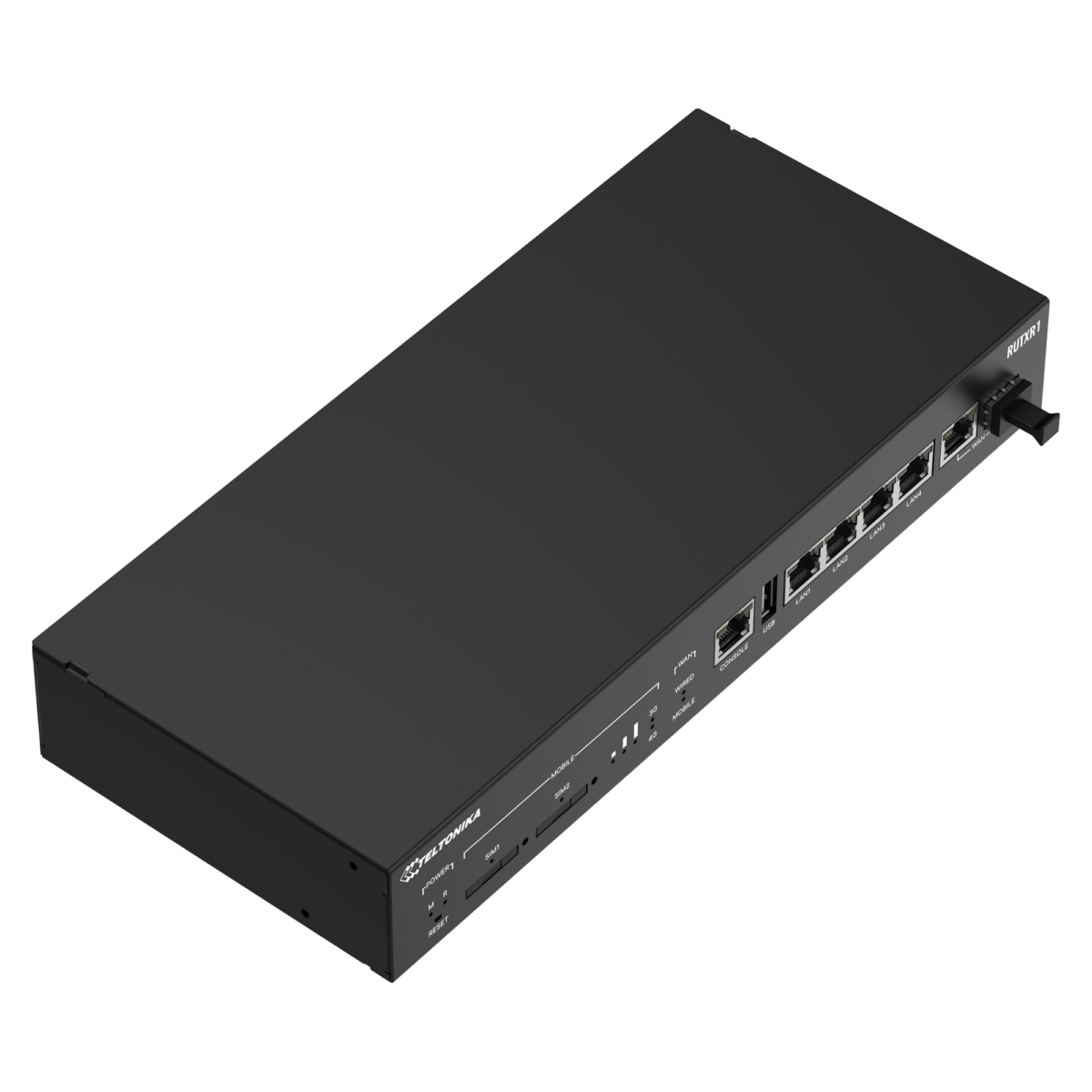
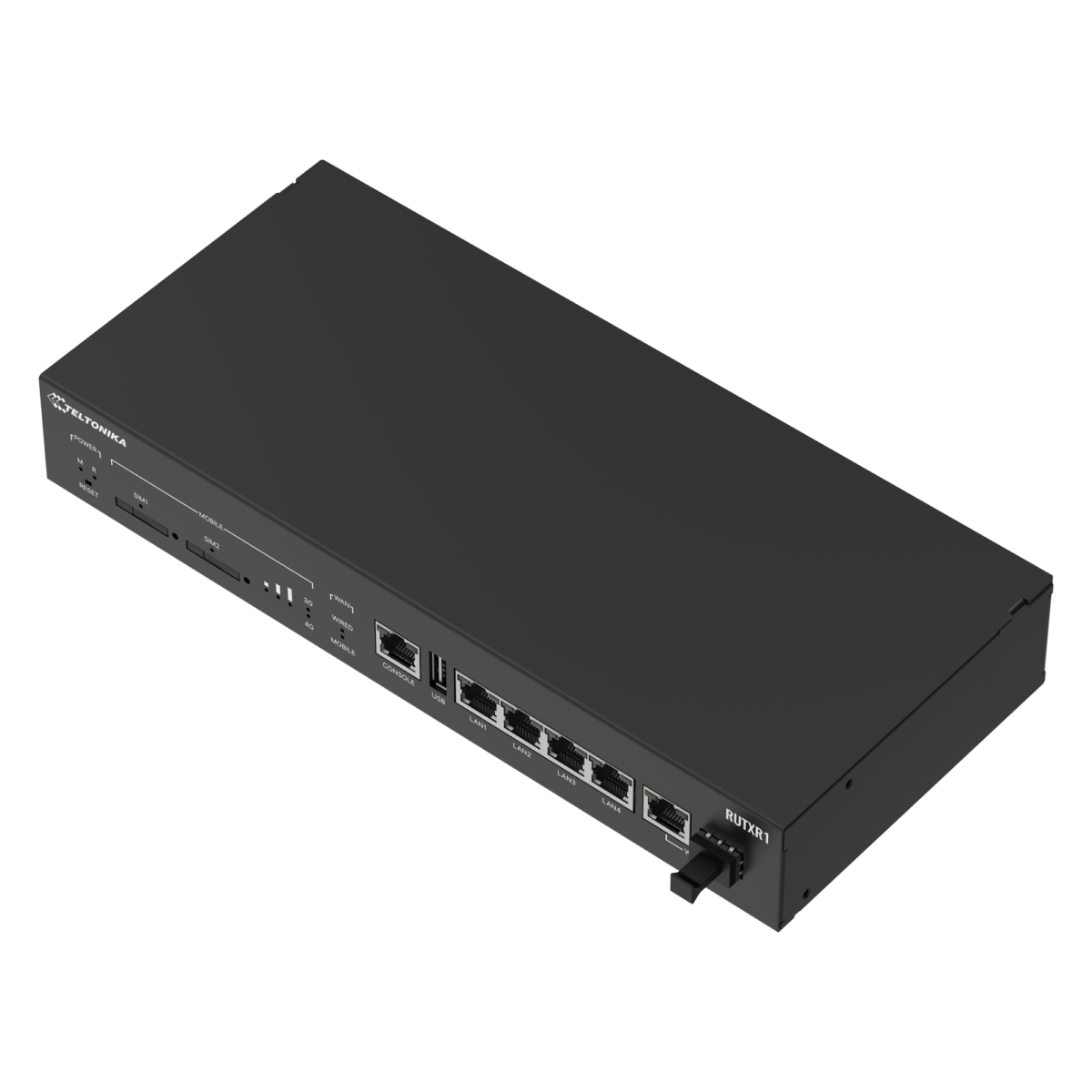
The RUTXR1 rack-mount router brings reliable cellular and fibre networking to enterprise and industrial environments. It is the first in its series to be designed for 19-inch rack cabinets, combining 4G LTE Cat 6 mobile broadband and SFP fibre-optic connectivity in one device. With its dual SIM slots and automatic failover, the router seamlessly switches to a backup mobile network if the primary connection drops, ensuring uninterrupted service for critical operations.
The unit also features dual redundant power supplies, so it can continue running even if one power source fails – ideal for highly available infrastructure. Built on a rugged hardware platform and RutOS firmware (a Linux-based OS with advanced networking features), the RUTXR1 offers extensive VPN, security, and remote management capabilities. It is well-suited for use as a primary office router with gigabit-speed internet, a backup connectivity hub for branch sites, or any scenario that demands ultra-reliable internet connectivity with flexible WAN options.
Range features
A high level overview of what this range offers
- 4G LTE Cat 6 connectivity – Supports mobile broadband speeds up to 300 Mbps download / 50 Mbps upload, providing fast internet access or backup wireless WAN for remote sites.
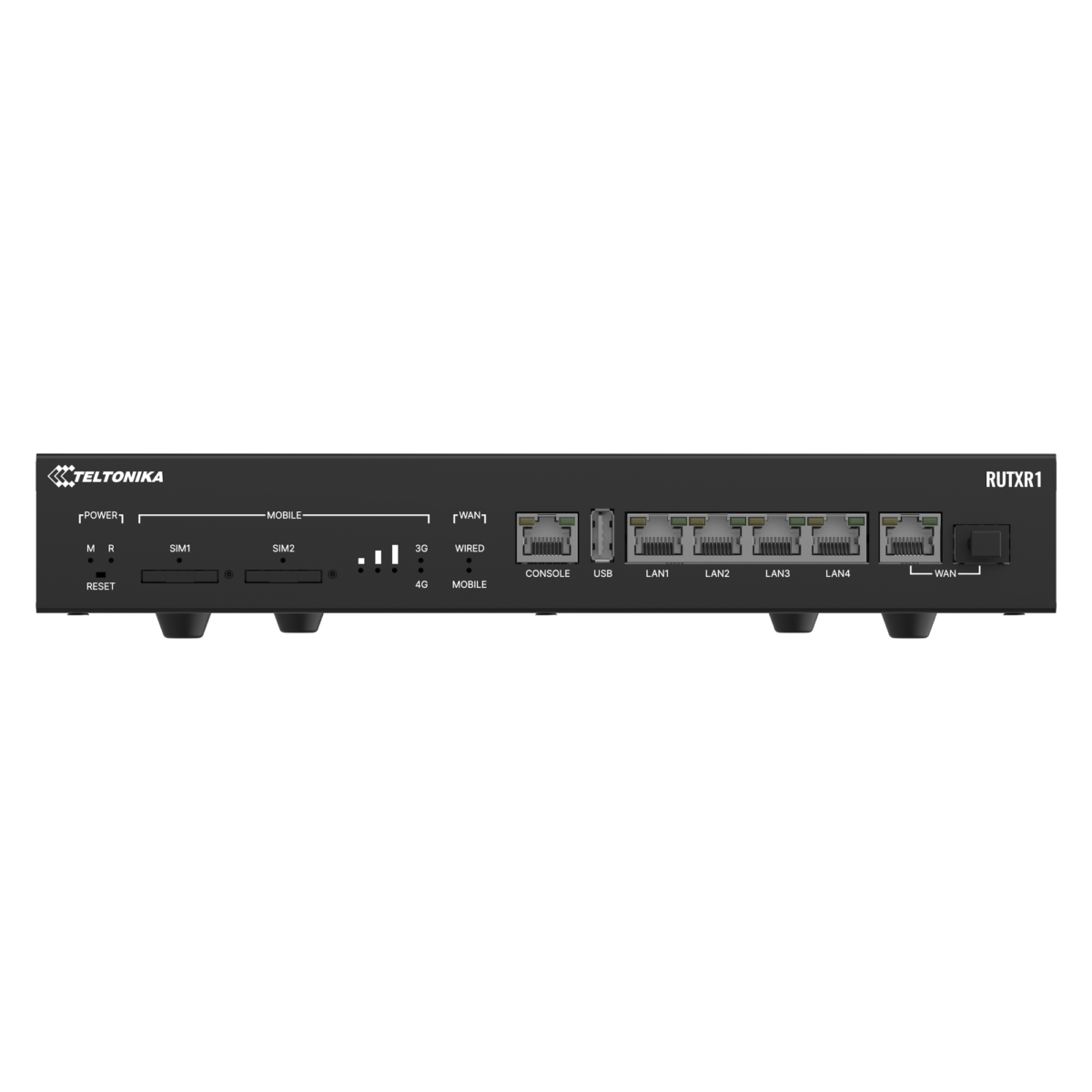
- SFP fibre port (WAN) – Includes an SFP slot for a fibre-optic module, allowing direct long-range fibre connectivity (1 Gbps) without a separate media converter – ideal for installations with fibre backhaul.
- Dual-SIM with auto-failover – Accommodates two SIM cards and intelligently switches to the second SIM if the primary mobile network signal is weak, data limit is reached, or connection fails. This ensures continuous 4G connectivity by using an alternate operator when needed.
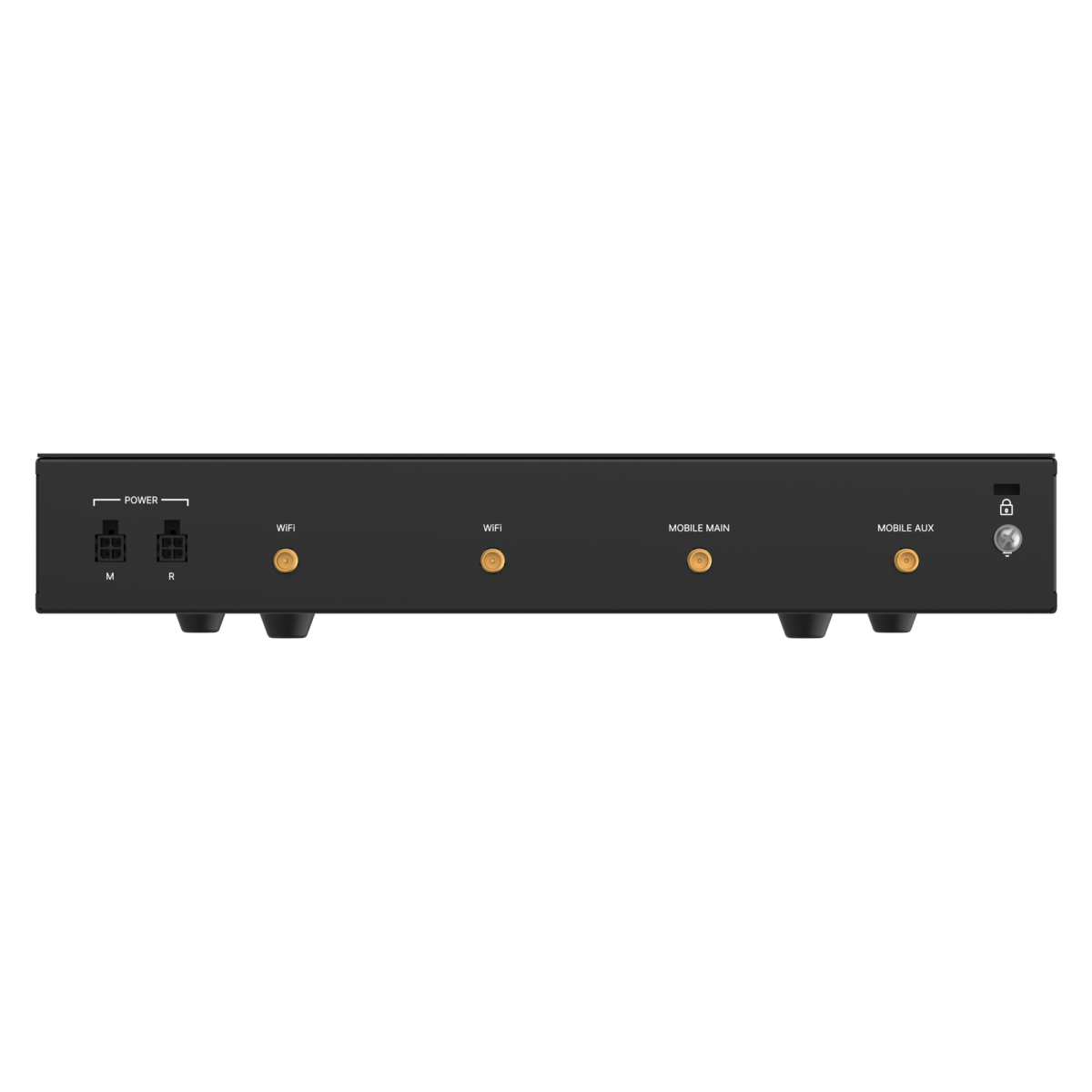
- Dual power inputs – Equipped with two separate DC power connectors for primary and backup power. This redundancy guarantees the router remains powered if one supply fails or is disconnected, greatly improving network uptime.
- Wave-2 802.11ac Wi-Fi – Provides dual-band Wi-Fi 5 (2.4 GHz & 5 GHz) with Wave-2 MU-MIMO, supporting wireless data rates up to 867 Mbps. Enables high-speed WLAN coverage for offices or cabinets, and can handle dozens of simultaneously connected devices with secure WPA2/WPA3 encryption.
- 5× Gigabit Ethernet ports – Offers 1 dedicated Gigabit WAN port and 4 Gigabit LAN ports (10/100/1000 Mbps) for wired devices. The WAN port can be toggled between the RJ45 interface or the SFP interface, giving flexibility to use either copper or fibre as the main WAN uplink. All LAN ports support full Gigabit throughput for local networking of computers, cameras, or switches.
- Dedicated console & USB ports – Includes an RS-232 console port (RJ45) for direct local management or integration with console servers, and a USB port for device configuration or connecting external devices (e.g. USB storage or modem). These interfaces simplify maintenance and expandability in advanced setups.
- Rugged industrial design – Housed in a durable metal 1U chassis that mounts neatly in standard 19-inch racks using the supplied kit. The unit operates in a wide temperature range (-40 °C to +75 °C) and tolerates 10–90% humidity (non-condensing), ensuring reliable performance in server rooms, outdoor cabinets, or factory floors. It is certified to CE, UKCA, EAC and other standards for safety and EMC, reflecting its suitability for professional use.
- Advanced RutOS software – Runs Teltonika’s RutOS, a feature-rich operating system based on OpenWRT. It supports a wide array of networking features: static and dynamic routing (BGP, OSPF, RIP, etc.), firewall with custom rules, NAT, VLANs, and VPN server/client functionality (OpenVPN, IPsec, WireGuard, PPTP/L2TP, etc.) for secure remote access. The router can be managed via a web UI, CLI (SSH/terminal), or a centralized cloud platform, and supports remote management protocols like SNMP for integration into larger networks.
Downloads
for RUTXR1 Rack-Mountable SFP/4G Router
What’s in this range?
All the variants in the range and a comparison of what they offer
| Category | Details |
|---|---|
Mobile (Cellular) | 4G/LTE Cat 6 modem (300 Mbps DL / 50 Mbps UL max); fallback to 3G (42 Mbps DL / 5.76 Mbps UL). Supports 2 × Mini-SIM (2FF) with automatic SIM switch for failover (configurable triggers such as signal loss, data cap, roaming, etc.). |
Wi-Fi | Dual-band 2.4 GHz & 5 GHz 802.11ac Wave-2 (Wi-Fi 5), 2×2 MU-MIMO. AP and Client modes supported. WPA2-PSK, WPA3-SAE encryption and up to 150 concurrent wireless clients. Data rates up to 300 Mbps (2.4 GHz) and 867 Mbps (5 GHz). |
Ethernet | 5 × Gigabit Ethernet ports (RJ45, 10/100/1000 Mbps): 1 × WAN port and 4 × LAN ports. The WAN RJ45 and SFP share the WAN function (only one can be active at a time). All Ethernet ports support auto MDI/MDIX crossover and comply with IEEE 802.3/802.3u/802.3az standards. |
SFP Port | 1 × SFP slot for Gigabit Ethernet SFP transceiver (1000Base-X). Allows fibre-optic or copper SFP modules for WAN. Note: The SFP WAN interface cannot be used simultaneously with the RJ45 WAN port. |
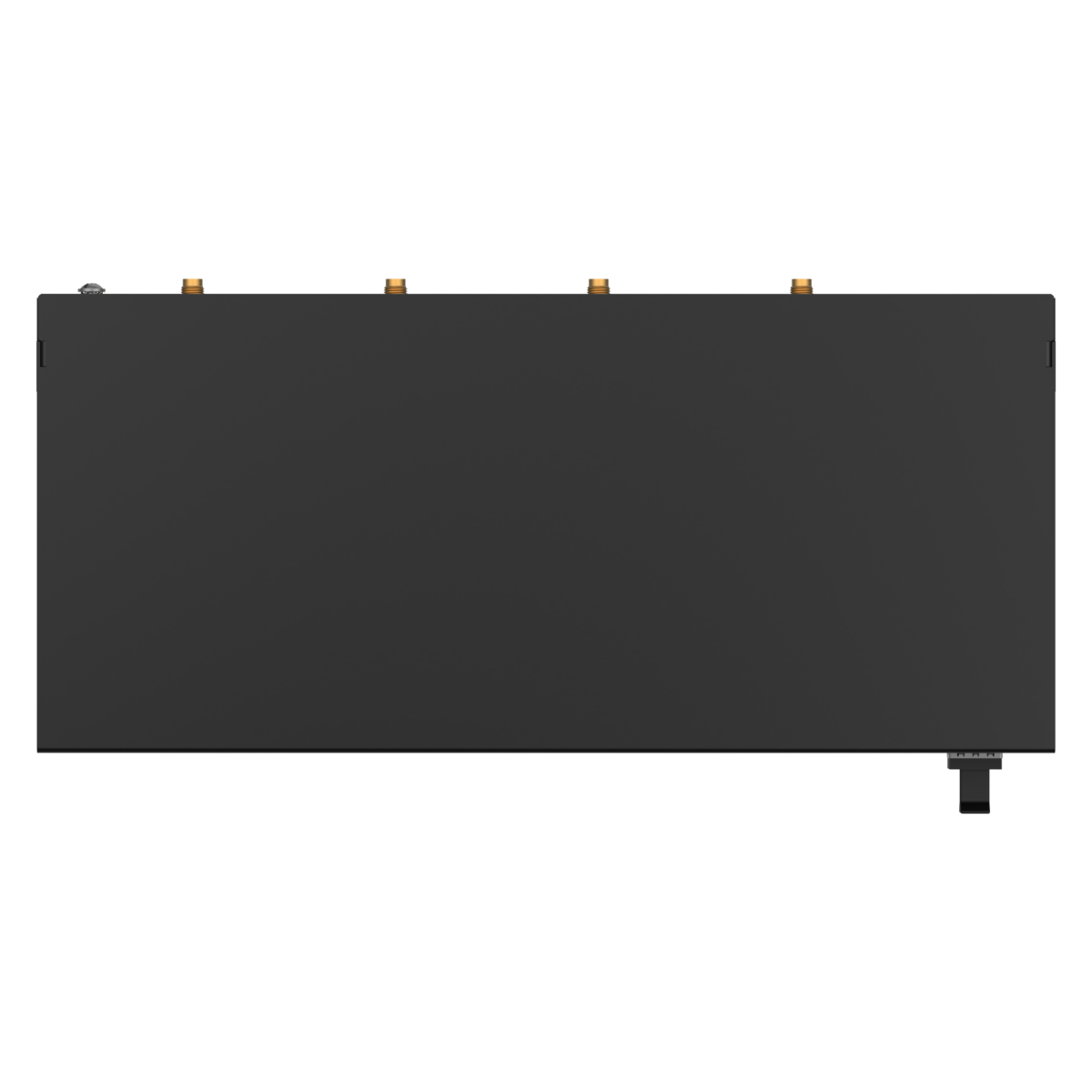
External Interfaces | 1 × USB 2.0 port for data or firmware upload; 1 × RJ45 console port (RS-232) for direct CLI access and debugging. 4 × SMA connectors for external antennas (2 × SMA for LTE, 2 × RP-SMA for Wi-Fi). LED indicators for Power, SIM status, WAN, Mobile signal strength, LAN activity, and others for quick status monitoring. |
Power | 2 × 4-pin locking DC power sockets (main and backup). Supports 9–50 V DC input range. Built-in reverse polarity protection and surge protection. Power consumption: <3 W idle, up to 18 W under full load. (No PoE input – must be powered via DC jack). |
Routing & Network | Routing protocols: Static routing, BGP, OSPFv2, RIP v1/v2, EIGRP, NHRP. Networking: IPv4/IPv6 dual stack, DHCP server/client, VLAN tagging, QoS, DNS, DynDNS. Supports VRRP for router redundancy. Firewall with NAT, port forwarding, custom rules, and content filtering (web filter). Connection watchdog features (ping reboot, Wget reboot, periodic reboot) to ensure link continuity. |
VPN & Security | VPN support for secure tunneling: OpenVPN, IPsec/IKEv2, WireGuard, PPTP/L2TP, SSTP, Stunnel, and GRE among others. Can operate as VPN server or client for remote access. Supports firewall policies, MAC filtering, wireless client isolation, and access control for enhanced security. |
Management | Local: Web-based GUI (HTTP/HTTPS), Command Line (SSH, Telnet), and console. Remote: Supports integration into Remote Management Systems (cloud platform) for batch configuration, monitoring, and firmware updates. SNMP v1/2/3 for network management, SMS control, and JSON-RPC API for custom integrations. Syslog logging and remote diagnostics available. |
Physical & Environmental | Enclosure: Rugged metal housing, 1U rack-mountable (integrated mounting brackets). Dimensions: 272 mm (W) × 42.6 mm (H) × 122.6 mm (D). Weight: ~1.1 kg. Operating temperature: -40 °C to +75 °C. Humidity: 10% to 90% RH (non-condensing). Certifications: CE, UKCA, EAC, FCC, RCM, and others for global deployments. |
FAQs
for RUTXR1 Rack-Mountable SFP/4G Router
No. The RUTXR1’s SFP slot shares functionality with the wired WAN port, meaning only one WAN interface can be active at a time. You can choose to use either the Gigabit RJ45 WAN port or the SFP port for your WAN connection. If an SFP module is plugged in and enabled, the RJ45 WAN is disabled (and vice versa). This design ensures there are two physical options for the WAN uplink, but they cannot operate concurrently.
The router holds two SIM cards and will automatically switch to the backup SIM when the primary connection is unavailable or undesirable. You can configure various failover conditions – for example, if the primary SIM’s signal becomes too weak, if you exceed a data usage limit, if the network is lost or denied, or on roaming status. When a trigger condition is met, the RUTXR1 will reboot its cellular module and come up on the second SIM/network. This switchover is seamless and helps maintain internet connectivity by using an alternate carrier. Only one SIM is active at any given time (no load balancing), but the transition between them is automatic and takes only a short time.
The RUTXR1 is a 4G LTE Advanced router (Cat 6), and it does not support 5G NR networks. It will operate on 4G/LTE and fallback to 3G where necessary. If you require 5G connectivity, you would need to use a different router model that has a 5G modem. The RUTXR1’s LTE Cat 6 modem does, however, support carrier aggregation and advanced 4G features to deliver higher speeds (up to 300 Mbps) on supported LTE networks. It is ideal for current 4G deployments, but it cannot connect to 5G signal bands.
The RUTXR1 runs a powerful OS that supports a wide range of VPN protocols for secure connectivity. You can set up VPN tunnels using OpenVPN (TLS or static key), IPsec/IKEv2, WireGuard, L2TP/PPTP, SSTP, or GRE, among others. It can function as a VPN client or server, allowing remote offices or users to securely connect into the network. In terms of security, the router offers a stateful firewall with NAT, port filtering, MAC address filtering, and domain/URL blocking (web filtering). You can also isolate wireless clients, set up access control lists, and use certificate-based authentication for services. These features help create a secure network edge and protect data traffic between the router and connected devices or networks.
There are multiple management options. For local management, you can use the router’s web interface (accessible via browser over HTTP/HTTPS) or connect via SSH/Telnet for command-line access.
For remote monitoring and management, the RUTXR1 is compatible with a cloud-based Remote Management System (RMS) – this allows you to monitor the router’s status, change settings, update firmware, and receive alerts from anywhere, through a secure web portal. Additionally, the device supports SNMP v1/v2/v3, so it can be integrated into network management systems to collect statistics and health metrics. You can also configure the router to send periodic status info via email or SMS, and use the API (JSON-RPC) if you want to script or automate certain configurations. In summary, you have a full suite of tools to manage the RUTXR1 both on-site and remotely in real time.
Yes. The RUTXR1 is built with industrial-grade specifications. It has a hardened metal enclosure and is designed to operate in harsh conditions, including a wide temperature range from -40 °C to +75 °C. It can handle environments like unheated cabinets or factory floors without issues. The router also accepts a wide DC power input (9–50 V) and has surge protection, making it robust against unstable power sources often found in industrial sites.
While the RUTXR1 itself is not weatherproof (it’s intended for rack or enclosure mounting), it performs reliably in outdoor telecom cabinets or sheltered outdoor installations when mounted inside an appropriate enclosure. Its electromagnetic compliance (EMC) certifications and adherence to industrial standards further indicate it is well-suited for mission-critical and industrial networking scenarios.
Yes, this router includes an integrated Wi-Fi access point. It supports 802.11ac Wave-2 dual-band Wi-Fi (sometimes referred to as Wi-Fi 5). This means it can broadcast on both 2.4 GHz and 5 GHz bands simultaneously, allowing older and newer devices to connect at their best possible speeds. The Wi-Fi is 2×2 MIMO, with a maximum throughput of 300 Mbps on 2.4 GHz and 867 Mbps on 5 GHz. In practical terms, it can easily handle typical office wireless loads – up to 100 or more connected devices (the absolute tested limit is around 150 clients).
It supports all the common security modes, including WPA2-PSK and the newer WPA3, to ensure your WLAN is protected. You can also set up multiple SSIDs and separate guest Wi-Fi networks if needed. The Wi-Fi antennas are external (2 detachable antennas included for Wi-Fi), which helps to improve range; however, since this is a rack-mounted unit, in some cases you may want to position the antennas externally or use extension cables if the router is inside a metal cabinet.
No, the RUTXR1 does not have PoE capabilities on its Ethernet ports. The LAN and WAN ports are standard Gigabit Ethernet interfaces without PoE output, so you cannot directly power devices like IP cameras or access points from the router’s ports. Likewise, the router cannot be powered through an Ethernet cable (it doesn’t support PoE-In). The RUTXR1 is powered through its DC power inputs (or an AC/DC adapter feeding those inputs). If you need to power network devices via PoE, you would use an external PoE injector or a PoE-capable network switch in conjunction with the router. The design focus of the RUTXR1 is on providing reliable network connectivity and not on delivering inline power, hence the dual DC inputs for redundancy instead of PoE.