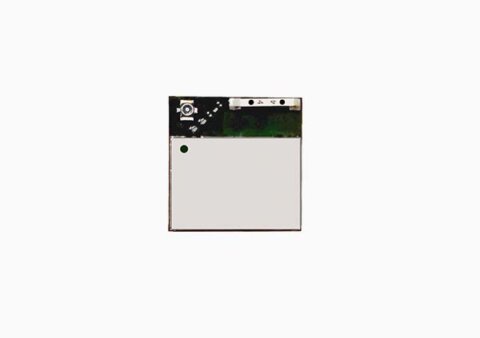
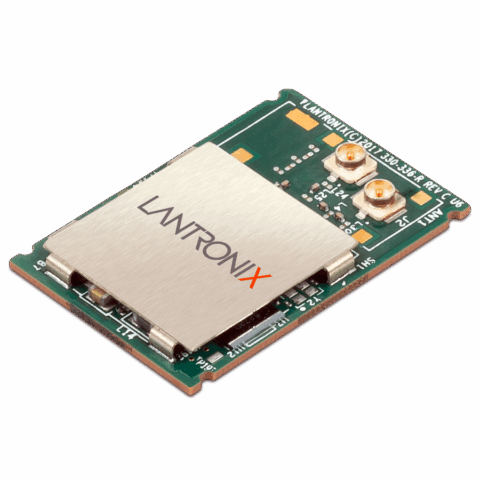
MDBT50Q Series, Bluetooth 5.4, LGA module; nRF52840 based
- Technology
- Bluetooth modules
- Partner
- Raytac
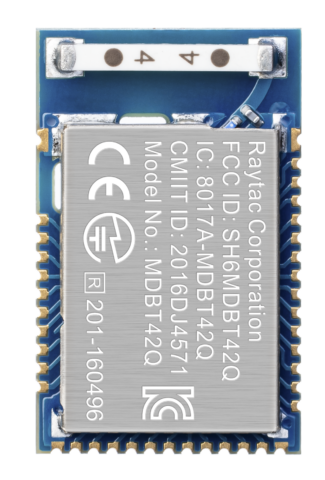
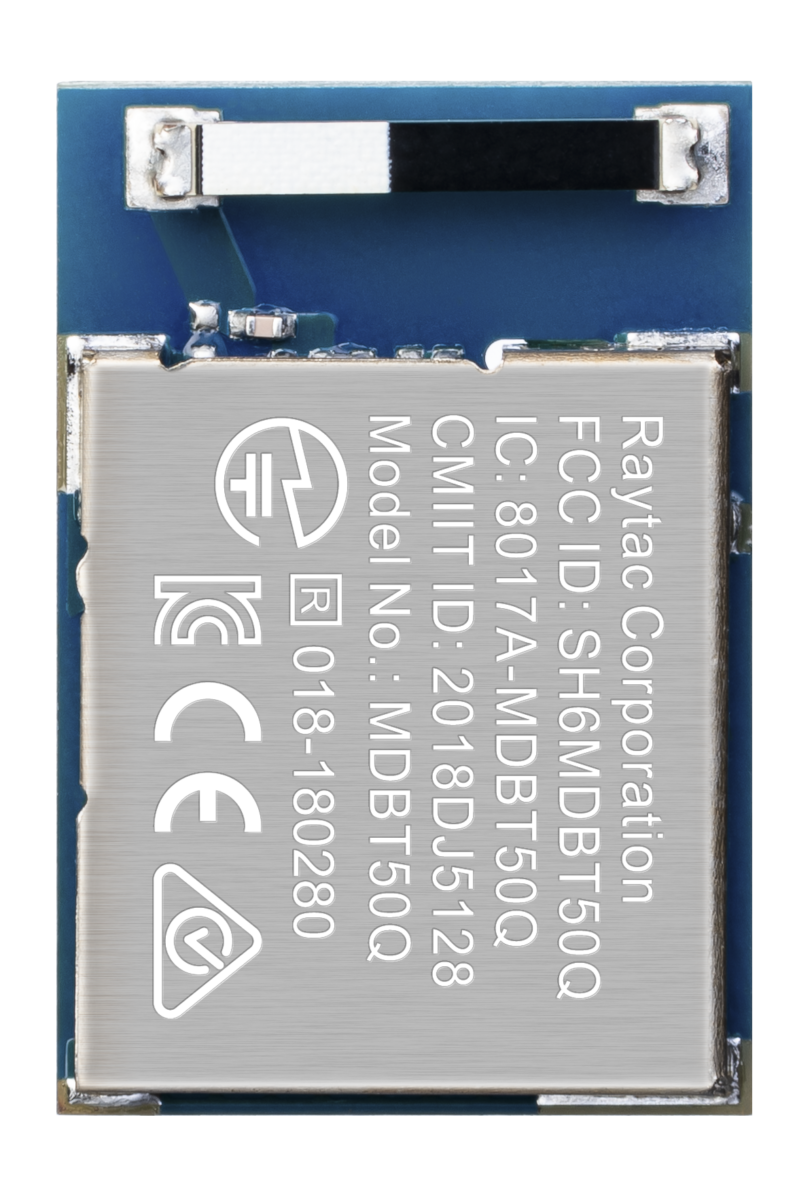
The Raytac MDBT50Q and MDBT50Q-P are Bluetooth 5.0 Low Energy (BLE) modules based on the Nordic Semiconductor nRF52840 SoC (revision 2), designed for high-performance, low-power wireless applications.
These modules integrate a rich set of interfaces—including GPIO, SPI, UART, I²C, I²S, PWM, ADC, NFC, and USB—enabling easy connection to a wide range of peripherals and sensors.
Range features
A high level overview of what this range offers
- Multi-protocol 2.4 GHz wireless – Bluetooth® 5, IEEE 802.15.4, and proprietary RF
- High RF performance – up to +8 dBm TX power, receiver sensitivity down to –103 dBm (BLE long range)
- Flexible data rates – Bluetooth 5 (2 Mbps, 1 Mbps, 500 kbps, 125 kbps), IEEE 802.15.4 (250 kbps)
- ARM® Cortex®-M4 (64 MHz) with FPU, 1 MB Flash / 256 KB RAM
- Hardware-accelerated security – with ARM TrustZone® CryptoCell-310 and AES encryption
- Rich peripheral set – USB 2.0 FS, SPI, QSPI, I²C, UART, I²S, PDM, PWM, ADC, NFC-A
- 48 GPIOs – with EasyDMA for low-CPU data transfers
- Advanced power management – 1.7–5.5 V supply, on-chip DC/DC & LDO, ultra-low sleep current
- Nordic SoftDevice™ – ready with concurrent multi-protocol support
- On-air compatible – with Nordic nRF52, nRF51, nRF24L, and nRF24AP series
Downloads
for MDBT50Q Series, Bluetooth 5.4, LGA module; nRF52840 based
What’s in this range?
All the variants in the range and a comparison of what they offer
| Model | MDBT50Q-1MV2 | MDBT50Q-P1MV2 | MDBT50Q-U1MV2 |
|---|---|---|---|
SoC | nRF52840 | nRF52840 | nRF52840 |
Size (mm) | 10.5 x 15.5 x 2.2 | 10.5 x 15.5 x 2.0 | 10.5 x 15.5 x 2.05 |
Antenna | Chip | PCB | u.FL connector for external antenna |
RAM | 256K | 256K | 256K |
Flash memory | 1MB | 1MB | 1MB |
GPIO | 48 | 48 | 48 |
Bluetooth | BT5.2/BT5.1/BT5.0 | BT5.2/BT5.1/BT5.0 | BT5.2/BT5.1/BT5.0 |
The module targets low-power wireless applications such as IoT sensors and actuators, smart-home devices, lighting and building automation, industrial monitoring, wearables, health and fitness devices, interactive controllers and location-aware equipment that benefit from Bluetooth Low Energy and IEEE 802.15.4 connectivity.
Because the chip antenna is already matched and integrated into the module, engineers only need to follow basic keep-out and ground-plane recommendations, significantly reducing RF layout complexity compared with a discrete radio and antenna design.
Yes, the module is specified for continuous operation from –40 °C up to +105 °C, which makes it suitable for equipment installed in plant rooms, luminaires, industrial enclosures and other thermally challenging locations.
With a supply range of 1.7 to 5.5 V and on-chip DC/DC and LDO regulators, the module can be powered from single-cell or multi-cell batteries, regulated 3.3 V rails or 5 V systems (with appropriate regulation), simplifying integration into existing designs.
The module exposes up to 42 general-purpose I/O pins, which can be configured for digital inputs and outputs or assigned to serial buses, timers, PWM channels and other on-chip peripherals as required by the application.
Yes, in addition to its 2.4 GHz radio, the module features USB 2.0 full-speed, multiple SPI, I²C and UART interfaces, allowing it to act as a wireless bridge, gateway or co-processor in more complex systems.
The underlying SoC supports very low System OFF and System ON sleep currents, on-chip DC/DC conversion, automated peripheral power management and fast wake-up from a real-time clock, enabling firmware to aggressively duty-cycle the radio and CPU for long battery life.
The radio has already been tested and approved for major regions including North America, Europe and parts of Asia-Pacific, so end-product testing can often focus on integration and EMC rather than full RF certification from scratch, saving both time and cost.
Yes, the module is declared RoHS and REACH compliant, which supports deployment in markets and sectors that enforce strict restrictions on hazardous substances.
The product information references companion modules in the same family that offer PCB antennas or u.FL connectors for external antennas, allowing designers to select the most appropriate RF configuration for each project while keeping a similar hardware platform.