IDC767 Bluetooth 5.3 LE Audio Module with Auracast, aptX Lossless & External Antenna
- Technology
- Bluetooth modules
- Partner
- IOT747
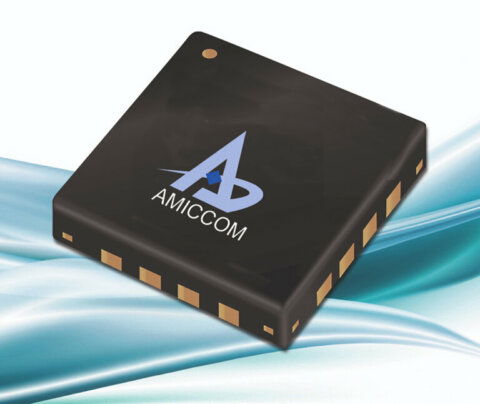
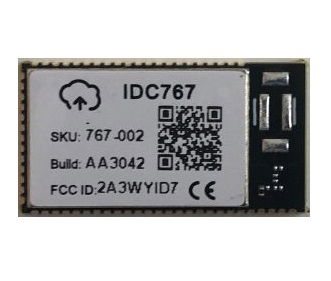
The IDC767 Bluetooth LE Audio Module is a high-performance wireless module designed for next-generation audio applications. It combines Bluetooth 5.3 Low Energy Audio (LE Audio) and classic Bluetooth audio in one unit, enabling developers to support cutting-edge features like Auracast audio broadcasting alongside traditional codecs such as aptX HD and Lossless. With its external antenna interface, IDC767 gives engineers added flexibility to optimise range or antenna placement in challenging RF environments – ideal for products that need maximum wireless coverage or are housed in metal enclosures.
This module’s small form factor (just 11.8 × 22.2 mm) and pre-certification for Bluetooth SIG, FCC, CE (RED) and other regions help streamline integration into wireless headphones, portable speakers, broadcast transmitters, and industrial audio systems. Built on the latest audio chipset platform (Snapdragon Sound™), it delivers low-latency, high-fidelity sound and can operate as either an audio source or sink. Overall, IDC767 provides a ready-made solution for engineers looking to add advanced Bluetooth LE Audio functionality and classic Bluetooth compatibility to their products with minimal development effort.
Range features
A high level overview of what this range offers
- Dual-mode Bluetooth 5.3 (LE Audio + Classic) – Supports Bluetooth LE Audio (LC3 codec with Auracast broadcast) alongside classic Bluetooth audio profiles, ensuring compatibility with new and legacy devices.
- Concurrent BLE and Classic operation – Can maintain a BLE link (for control or data) while streaming music over classic Bluetooth, offering versatile connectivity in complex applications.
- Multiple connections & roles – Capable of acting as a music receiver or transmitter, and can handle multiple simultaneous Bluetooth connections, enabling use cases like audio relays or multi-stream broadcasts.
- Ultra-low power consumption (< 4 mA streaming) – Draws only about 4 mA during music playback (and under 0.1 mA when idle/paired), which is ideal for battery-powered devices and maximises runtime.
- High-quality audio output (100 dB SNR) – Integrates a high-performance DAC/ADC (approx. 100 dBA signal-to-noise) for analogue audio output, ensuring clear, low-noise sound, plus supports digital audio output via I²S/PCM for direct interface with external codecs.
- Comprehensive I/O interfaces – Provides UART and USB interfaces for host control, I²C for peripherals, I²S/PCM for audio data, dedicated LED drive pins, GPIOs and HID support – simplifying integration with microcontrollers, sensors, or directly to a PC.
- Compact module (11.8 × 22.2 mm) – Very small footprint module that saves space in your design and can be surface-mounted, allowing easy placement even in compact or wearable devices.
- External antenna connector (IDC767) – Equipped with a connector for an external 2.4 GHz antenna, allowing greater range or optimal antenna positioning. This is useful for products in metal housings or requiring extended coverage (the sister model IDC777 uses an integrated chip antenna for convenience).
- Advanced audio codec support – Supports high-fidelity codecs including aptX HD and aptX Lossless (as part of the Snapdragon Sound suite), as well as AAC and SBC, enabling better sound quality and low latency when used with compatible audio devices.
- Pre-certified for global standards – The module is Bluetooth SIG certified and tested to comply with FCC (USA), CE/RED (EU), MIC (JP), KCC (KR), and SRRC (CN) regulations, reducing the time and cost needed for your end-product’s wireless certification.
What’s in this range?
All the variants in the range and a comparison of what they offer
| Specification | IDC767 (External Antenna) | IDC777 (Integrated Antenna) |
|---|---|---|
Bluetooth Version | 5.3 (Dual-mode: LE Audio + Classic) | 5.3 (Dual-mode: LE Audio + Classic) |
LE Audio Support | Yes – Auracast broadcast & Unicast (LC3 codec) | Yes – Auracast broadcast & Unicast (LC3 codec) |
Classic Bluetooth Support | Yes – A2DP music (aptX, AAC, SBC), AVRCP, HFP/HSP voice, etc. | Yes – A2DP music (aptX, AAC, SBC), AVRCP, HFP/HSP voice, etc. |
Audio Codecs | LC3, aptX, aptX-HD, aptX-Lossless, AAC, SBC | LC3, aptX, aptX-HD, aptX-Lossless, AAC, SBC |
Roles & Connections | Central or Peripheral; supports multiple simultaneous connections (Tx or Rx) | Central or Peripheral; supports multiple simultaneous connections (Tx or Rx) |
Antenna | External antenna (u.FL connector or similar for 2.4 GHz) – requires external antenna | Integrated chip antenna on module – built-in antenna included |
Wireless Range | Antenna-dependent (can be optimised with high-gain or well-placed external antenna) | ~25 m typical range with on-board antenna (line-of-sight to smartphone) |
Supply Voltage | 3.3 V nominal (operational range approx. 3.3 V to 4.7 V) | 3.3 V nominal (operational range approx. 3.3 V to 4.7 V) |
Power Consumption | < 4 mA while streaming audio; ~0.1 mA in connected idle mode | < 4 mA while streaming audio; ~0.1 mA in connected idle mode |
Dimensions | 11.8 mm × 22.2 mm (module size) | 11.8 mm × 22.2 mm (module size) |
Interface & I/O | UART (command/control), USB, I²C, I²S, PCM, 3× LED, multiple GPIOs | UART (command/control), USB, I²C, I²S, PCM, 3× LED, multiple GPIOs |
Audio Outputs | Digital audio out (I²S/PCM) and analogue stereo out via on-chip codec (100 dB SNR) | Digital audio out (I²S/PCM) and analogue stereo out via on-chip codec (100 dB SNR) |
Operating Temperature | –40 °C to +85 °C | –40 °C to +85 °C |
Certifications | Bluetooth SIG, FCC (USA), CE/RED (EU), MIC (JP), KCC (KR), SRRC (CN) – pre-certified | Bluetooth SIG, FCC (USA), CE/RED (EU), MIC (JP), KCC (KR), SRRC (CN) – pre-certified |
FAQs
for IDC767 Bluetooth 5.3 LE Audio Module with Auracast, aptX Lossless & External Antenna
The IDC767 and IDC777 share the same core Bluetooth 5.3 audio capabilities, but they differ in antenna design. IDC777 has a built-in chip antenna on the module, making it a self-contained solution. In contrast, IDC767 is designed to use an external antenna – it provides a connector or pad for attaching a 2.4 GHz antenna. This means the RF performance of IDC767 can be tuned by choosing a suitable external antenna (potentially giving better range or allowing antenna placement outside a metal enclosure), whereas IDC777’s integrated antenna offers convenience and a compact footprint with a typical range of around 25 m in open conditions.
The IDC767 module includes an RF port (EXT_RF pin / U.FL coax connector) specifically for an external antenna connection. To use it, connect a compatible 2.4 GHz antenna (for example, a whip, PCB, or chip antenna with the appropriate connector or feed line) to that RF port. In practice, this often means plugging in a small coaxial antenna via a U.FL socket or designing a trace to an external antenna on your PCB. It’s important to follow the module’s guidelines for antenna placement and ground clearance: keep metal away from the antenna area and provide a good ground plane as recommended, to ensure optimal signal strength and range. By selecting a high-gain or well-placed antenna, the IDC767 can achieve equal or greater range than the IDC777’s integrated antenna, depending on your needs.
This module supports a full range of Bluetooth audio profiles and codecs. On the Low Energy Audio side, it implements LE Audio with the LC3 codec, including Auracast broadcast for streaming audio to multiple receivers and Unicast for one-to-one links. On the classic Bluetooth side, it supports A2DP for stereo music streaming (as both Source and Sink), AVRCP for media control, and HFP/HSP for hands-free voice calls. The audio codecs include standard SBC and AAC, as well as advanced Qualcomm codecs like aptX, aptX HD, and aptX Lossless (these are part of the module’s Snapdragon Sound features). In summary, IDC767 can handle high-fidelity music streaming, voice calls (with wideband speech), and even simultaneous audio channels, making it suitable for everything from wireless headphones and speakers to broadcast audio systems.
Yes. The IDC767 is a dual-mode, multi-role module, which means it can function either as an audio source (transmitter) or an audio sink (receiver), or even both in complex scenarios. For example, it can receive an audio stream via LE Audio or Classic Bluetooth and then re-broadcast that audio via Auracast (LE Audio) to other devices – effectively acting as a relay. It can also handle multiple connections simultaneously. This flexibility allows one IDC767 to pair with multiple endpoints: you could stream music from a phone to the module and at the same time the module could broadcast that music to additional LE Audio earbuds. Similarly, the module can be configured as a peripheral device or as a central controller in BLE terms, so it’s very adaptable to different use cases such as audio distribution, mesh-like audio networks, or bridging between new and old Bluetooth audio devices.
The module is designed to be easy to integrate – it uses a high-level command interface called AudioAgent over a UART serial connection (and it also offers a USB interface). Essentially, your host microcontroller or processor communicates with the IDC767 via UART, sending simple text-based commands (AT-command style) or binary commands defined in the module’s firmware manual. These commands let you control all aspects of the module’s behaviour: you can manage Bluetooth connections, select profiles (e.g. switch between Auracast broadcast mode or normal streaming), adjust audio settings, etc. The module’s firmware handles the complex Bluetooth protocol details, so from the developer’s perspective you issue straightforward commands like “connect to device”, “start Auracast broadcast”, or “set volume”. This greatly simplifies software integration. Additionally, the GPIO pins can be configured for certain control functions (like indicating connection status to LEDs or waking up the host), and the USB interface can be used in some scenarios (for instance, to update firmware or even to present the module as a USB audio/HID device to a PC if needed). Overall, the IDC767 acts as a self-contained Bluetooth audio subsystem that you control via serial commands, which is well-documented in the provided Command Manual.
The IDC767 runs from a single supply voltage around 3.3 V (it can accept roughly 3.0 V up to ~4.7 V, which covers lithium-ion battery range). It’s designed for low-power operation. When it’s actively streaming music over Bluetooth, it typically draws under 4 mA of current – which is very efficient for a continuous audio stream. In idle connected mode (i.e., paired but not streaming audio), the current drops to under 0.1 mA (100 µA), thanks to Bluetooth Low Energy features. That means it imposes minimal drain when on standby. When not connected or in deep sleep, the power usage is extremely low (the exact sleep current is in the microamp range, making it suitable for always-on devices). These characteristics make the IDC767 suitable for battery-powered applications like wearable audio or portable speakers, as it can significantly extend battery life. It’s recommended to provide a stable 3.3 V supply and follow the hardware design guidelines (decoupling capacitors near the module, etc.) to ensure clean power for optimal performance.
In open-air line-of-sight conditions, the IDC777 (with its integrated chip antenna) typically achieves about 20–25 metres of range when connected to a standard smartphone or similar device. The IDC767, on the other hand, uses an external antenna, so its range can vary depending on the chosen antenna type and placement. With a well-chosen external antenna (for example, a larger whip or dipole antenna with some gain, mounted in a good position), the IDC767 can exceed the range of the IDC777 – it could reliably cover 25 m and potentially significantly more, assuming minimal interference. Moreover, the external antenna option is valuable for installations where the module will be inside a metal or signal-restricted enclosure: you can place the antenna externally or in an optimal orientation, maintaining a strong signal where an internal antenna might be blocked. It’s important to note that Bluetooth LE Audio and Classic Bluetooth are still short-range technologies, so while an external antenna can improve signal quality and range, real-world range will also depend on the environment (indoor vs outdoor, presence of walls or obstacles, RF interference, etc.). In summary, IDC767 gives you the flexibility to maximise range for challenging scenarios, whereas IDC777 offers a fixed, known range with its built-in antenna.
One big advantage of this module is that it comes pre-certified for a variety of regulatory standards. IDC767 (like the IDC777) has already passed Bluetooth SIG qualification and radio compliance tests for major markets: it’s certified under FCC rules for the US, CE/RED for Europe, MIC for Japan, KCC for Korea, and SRRC for China, among others. This means when you use the module in your design and follow the integration guidelines, you typically do not need to re-run Bluetooth RF tests or obtain separate approvals for those regions, which can save a lot of time and cost. You will simply use the module’s existing certification IDs in your product documentation. However, keep in mind that if you significantly modify the antenna configuration on IDC767 (for example, using a very different antenna than tested, or a high-gain antenna), you should ensure it still meets the regulatory limits (you might be required to do limited testing for that specific configuration). In general though, using IDC767 should streamline compliance – it lets you focus on your product’s features without worrying about the Bluetooth radio certification from scratch.
The IDC767 is ideal for any application requiring cutting-edge Bluetooth audio features in a small form factor. For instance, it can be used in wireless headphones, earbuds, or hearing assistance devices to take advantage of LE Audio’s Auracast (which could allow an audio stream to be shared among multiple listeners). It’s also a great fit for portable speakers or audio receivers, enabling high-quality music streaming with aptX Lossless and very low power usage for long play times. Another area is broadcast and conferencing systems: because of its ability to handle multiple connections and broadcast audio, you could implement tour guide systems, conference audio distribution, or multi-language broadcast in venues using Auracast technology. Industrial and automotive developers can use it for hands-free modules, intercoms or machine-to-machine audio links, where robust dual-mode Bluetooth support is necessary (for compatibility with phones and new BLE audio accessories). Additionally, the module’s UART/USB interface and HID profile support means it can serve in IoT devices that need to communicate with smartphones (like sending sensor data while simultaneously handling audio, or acting as a Bluetooth HID device such as a wireless microphone that can also send keystroke commands). In summary, IDC767 suits a wide range of consumer, industrial, and IoT audio applications – anywhere you need a ready-made Bluetooth audio solution with both classic and LE Audio capabilities.