Nanokristallijne kernen voor EMI-bescherming, stroomtransformatoren en vermogensomvorming

Nanokristallijne kernen – hoogwaardige oplossingen voor transport, energie en industrie

Nanokristallijne kernen zijn de perfecte oplossing voor EMI-afschermingstoepassingen (Gemeenschappelijke modus smoorspoelen CMC), middenfrequentietransformatoren tot ongeveer 80 kHz, stroomtransformatoren (CT) en sensoren voor reststroomapparaten (RCD).

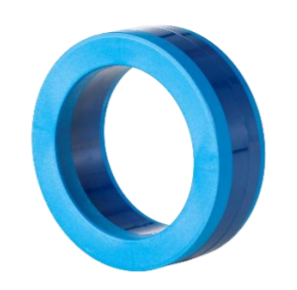
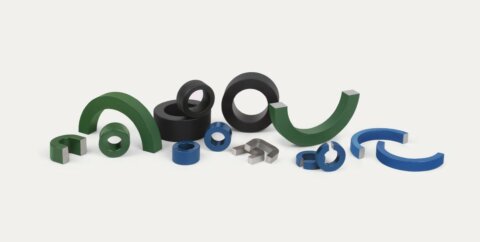
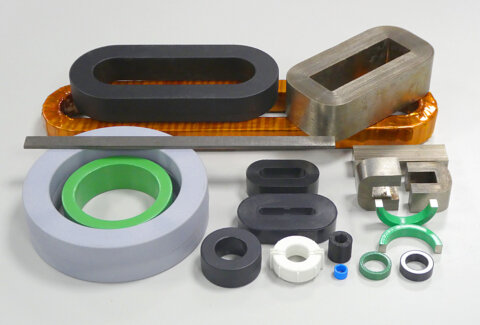
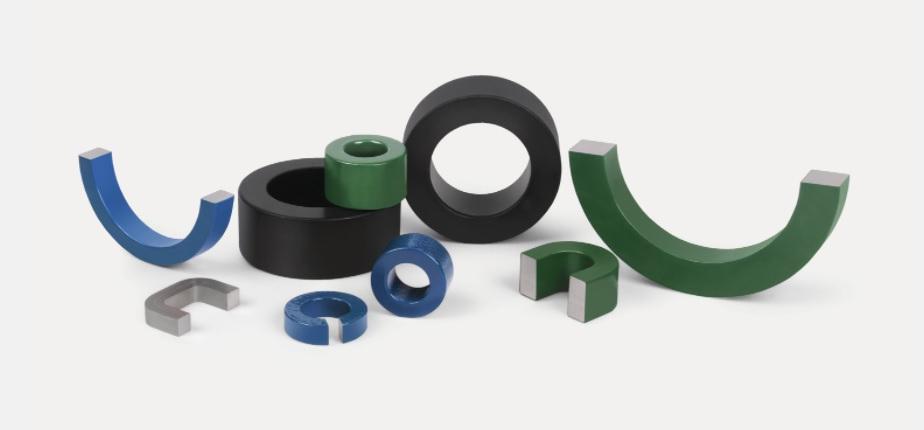
Onze nanokristallijne kernen bestrijken een doorlaatbaarheidsbereik van 5000 tot enkele 100.000 en hebben een verzadigingsinductie tot 1,7 T, waardoor ze weinig verliezen vertonen bij compacte ontwerpen. Wij bieden speciale hysteresislussen (R, Z) en verschillende vormen, waaronder toroïden, ovale en rechthoekige vormen, E-kernen, staven en op maat gemaakte ontwerpen van dun lint.

In ons Magnetic Products Technology Centre, waar we ons merk Acal BFi kOr beheren, helpen we u bij het selecteren van het juiste materiaal, de juiste vorm en de juiste afwerking voor uw toepassing. Ons team is toegewijd aan het snel en efficiënt ontwikkelen van producten op maat, zodat u verzekerd bent van de beste oplossing voor uw behoeften.

Wilt u meer weten over deze technologie? Probeer onze nieuwe chatbot!
Productassortimenten in Nanokristallijne kernen

Veelgestelde vragen over nanokristallijne kernen – eigenschappen, materialen en toepassingen

Veelgestelde vragen over nanokristallijne kernen

Nanocrystalline magnetic materials are metal alloys that are cast directly from the melt into an approximately 20 µm-thick foil, known as ribbon, using a rapid solidification process. The extremely rapid cooling preserves the material in an amorphous, glass-like state.

Some alloys are already used in this condition and are referred to as amorphous magnetic materials. In nanocrystalline materials, a subsequent heat treatment, in some cases applied within a magnetic field, creates a nanostructure with grain sizes of just a few nanometres.

This results in outstanding magnetic properties, including high permeability, low core losses and low magnetostriction. Iron-based nanocrystalline and amorphous materials also offer a high saturation flux density of more than 1.2 T.

The ribbon is slit to the required width and wound into cylindrical toroidal cores. Where necessary, the cores can be fixed in a different shape, such as oval or rectangular, using suitable forming fixtures.

The cores then undergo heat treatment in an inert atmosphere, in some cases within a magnetic field. During this process, mechanical stresses are relieved, the required shape is stabilised and the desired magnetic properties are adjusted.

The core is subsequently protected using a coating or bonded into a protective housing, called case. Cores may also be impregnated to improve their mechanical stability.

One of the most remarkable features of nanocrystalline materials is that a single material and pre-manufactured core blank can be given a wide range of different magnetic properties during heat treatment. These properties can even be modified again at a later stage.

Possible characteristics include:

  • Flat, linear hysteresis loops with permeabilities ranging from a few thousand to approximately 200,000
  • Round hysteresis loops with maximum permeability values of up to 600,000
  • Rectangular hysteresis loops with remanence levels of between 90% and 97% of the saturation flux density

The permeability, µ, of a material describes its ability to concentrate magnetic flux.

High permeability reduces magnetic reluctance and increases the inductance or impedance of a magnetic core. This characteristic is used in applications such as transformers, common-mode chokes and RCD cores.

However, effective permeability decreases as frequency increases. In high-frequency applications, initial permeability therefore becomes less important, while low core losses become a more significant consideration.

Lower permeability can also provide higher saturation current capability. This is advantageous in applications such as differential-mode chokes and current transformers that must operate reliably in the presence of DC current.

Amorphous strip is cast directly and is not subjected to any post-processing (such as rolling…), which means it has a surface roughness in the order of µm – a factor that is quite significant for strip thicknesses of 14–22 µm. Furthermore, the strip does not have a precisely rectangular cross-section, but exhibits shape defects that increase with increasing strip width: wedge-shaped profiles, convex or concave surfaces, grooves.

When the strips are stacked, a large proportion of empty space remains between the layers, even though the strips are in contact with one another. The proportion filled with magnetic material is referred to as the filling or stacking factor. For alloys that cast well (smoothly) and relatively thick strips, this can be as high as 90 per cent; however, for thin and wide strips made of material that tends to have a higher degree of roughness, it can fall to as low as 70 per cent.

To calculate the magnetically effective cross-sectional area – and thus the flux, inductance, etc. – the geometric cross-sectional area must be multiplied by the stacking factor. Incidentally, when specifying the strip thickness, it is crucial to know whether this refers to the geometric thickness (peak-to-peak, measured mechanically) or the average (effective) strip thickness, which is determined, for example, by the weight per running length.

The two also differ by the stacking factor factor.

Nanocrystalline materials offer a saturation flux density approximately three to four times higher than that of ferrites. They also provide higher permeability than ferrites at frequencies of up to approximately 200 kHz, together with excellent temperature resistance of up to 200°C in suitable applications.

These characteristics make nanocrystalline cores particularly suitable for compact, low-loss transformers operating within a frequency range of approximately 5–100 kHz, as well as compact, broadband common-mode chokes.

For RCD (residual current device) cores and current transformers, nanocrystalline materials are often the preferred solution because of their excellent linearity at both high and low permeability levels. Cut nanocrystalline cores can also be highly suitable for differential-mode chokes under the appropriate operating conditions.

In summary, nanocrystalline cores are particularly advantageous wherever high power density or high sensitivity is required within a very limited space, including automotive, aerospace, electrical installation and robotics applications.

This is a relatively complex subject, and the specialists at the Acal BFi Magnetic Products Technology Centre should be consulted regarding the requirements of individual applications.

The most important factors can be summarised as follows: The Curie temperature is approximately 600°C. As a result, the saturation flux density decreases only moderately as the temperature rises within the normal operating range. However, the soft-magnetic properties begin to deteriorate significantly at approximately 230°C. This temperature represents the absolute maximum, even for short periods, and must therefore be considered during processes such as overmoulding.

Permeability also changes with temperature. Depending on the permeability level and the parameter being assessed, this change may be either positive or negative. Ageing effects are particularly important when evaluating long-term stability at elevated temperatures. Under the combined influence of temperature and a magnetic field, the magnetic properties originally established during heat treatment can gradually be altered, causing them to drift over time.

The stronger the magnetic field (excitation) of the core, the lower the operating frequency and the tighter the permitted tolerances, the lower the maximum permissible operating temperature or cumulative thermal exposure over the product’s lifetime.

For example, the maximum operating temperature for high permeable, highly linear residual current device cores with typically tight tolerances is often specified as 85°C or 100°C. By contrast, common-mode chokes operating at lower permeability levels, at frequencies above a few tens of kilohertz and without a permanent DC or low-frequency bias, can operate at temperatures of 180 °C or even 200 °C, provided that a suitable coating or housing material is used.

Magnetostriction describes the interaction between magnetisation and changes in a material’s volume or shape. With the exception of certain specialised applications, magnetostriction generally has undesirable effects. The best-known example is transformer hum, which tends to be perceived as a higher-pitched whine in medium-frequency transformers.

Conversely, mechanical pressure caused by mounting or winding can alter the magnetic properties of the core and, in particular, increase its losses.

When the manufacturing process is correctly controlled and precisely matched to the ribbon material, standard materials such as Acal BFi kOr 120 can be made virtually free from magnetostriction.

This is essential for achieving stable permeability values above 100,000.

Impregnated cores can be cut to create an air gap. This reduces the effective permeability, typically to values between 2,500 and 10,000 depending on the quality of the cut, and allows the core to be assembled around a bobbin. Larger air gaps can be introduced to set the effective permeability precisely to lower values and increase the core’s saturation current capability.

Compared with powder cores offering the same effective permeability, this can also improve linearity in applications such as differential-mode chokes and flyback transformers.

Nanocrystalline and amorphous cores are wound from a thin metal ribbon approximately 20 µm thick. In its nanocrystalline state, this ribbon is extremely brittle. The cores are therefore not dimensionally stable, have sharp edges and may shed or break off small fragments. Without mechanical stabilisation or protective encapsulation, they cannot be safely transported or processed further.

Suitable protection methods include: -Plastic protective housings (core cases)

  • Metal housings for selected applications
  • Epoxy powder coatings
  • Thin Parylene coatings for smaller cores

Cores can also be stabilised by impregnation, for example using epoxy resin. This creates a solid, rigid component that, depending on the impregnation material used, may also be mechanically processed, cut or milled.

Because the core edges remain sharp, an impregnated core must additionally be wrapped with suitable insulating tape before it can be wound.

Coated cores and cores in protective housings can be wound directly using standard enamelled copper wire.

Separators may be used to provide physical separation between windings in transformers or common-mode chokes. Cut cores are generally supplied without a coating. In these cases, the windings are applied to a bobbin.

In high-current common-mode choke applications, cables or busbars are often simply passed through toroidal or oval cores rather than being wound around them.

The quality of nanocrystalline magnetic cores depends heavily on reliable and well-controlled manufacturing processes, both during ribbon production and during core manufacture. Only a small number of ribbon manufacturers worldwide can guarantee consistently high material quality and are therefore used by reputable core manufacturers.

A supplier should not be assessed solely on the basis of a small number of samples.

It is important to determine whether the supplier:

  • Has many years of experience in the volume production of cores with precisely defined magnetic properties
  • Can provide customised products
  • Has access to a stable and reliable source of high-quality ribbon material Acal BFi kOr uses ribbon material exclusively from qualified and proven partners with whom it has extensive long-term experience.